

Prime Vs Choice Beef: Which One Is The Better Buy?
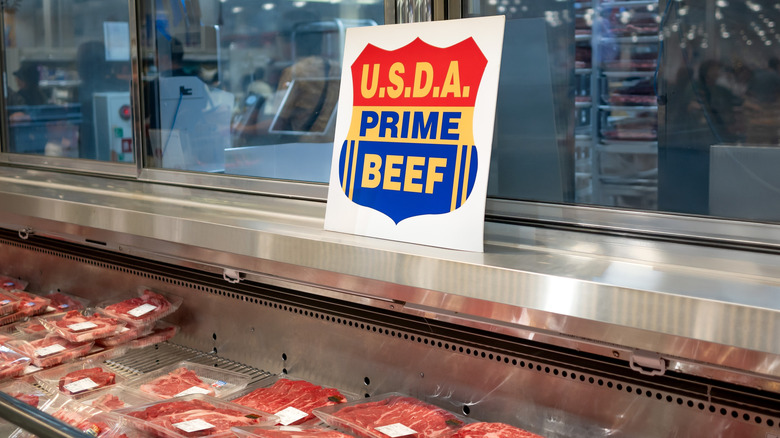
In 1916, the USDA introduced a grading system to help people make more informed choices when it came to buying beef. Yet here we are more than a century later, still scratching our heads wondering which one to buy: Prime or Choice. Will the cut marked Prime taste special enough to justify the extra dollars? If you decide to go with Choice, will it lead to regret at the dinner table? The short answer is that Prime is best reserved for special occasions, while Choice is great for everyday cooking. However, there's a bit more nuance at play. So let's understand the grading a little better so you can choose the right cut.
Prime, Choice, and Select are the three most common grades that the USDA classifies beef under. There are two main factors that go into this decision: The amount of marbling, and the age of the cattle. The more the marbling, and younger the cow, the higher the grade. Prime signifies top quality — the very best of the best. Tender, juicy, flavorful, with lots of marbling. For context, only the top 2-3% of cattle in America get graded Prime, which explains the extra dollars. This doesn't mean Choice cuts are significantly inferior though. They too come from young cattle, and have decent amounts of marbling, just not as much as Prime. In the hands of an experienced cook, Choice cuts can hit the same melt-in-your-mouth consistency. Meanwhile, Select usually signifies lean meats that will react best to low-and-slow cooking.
Two ways to simplify a tough decision
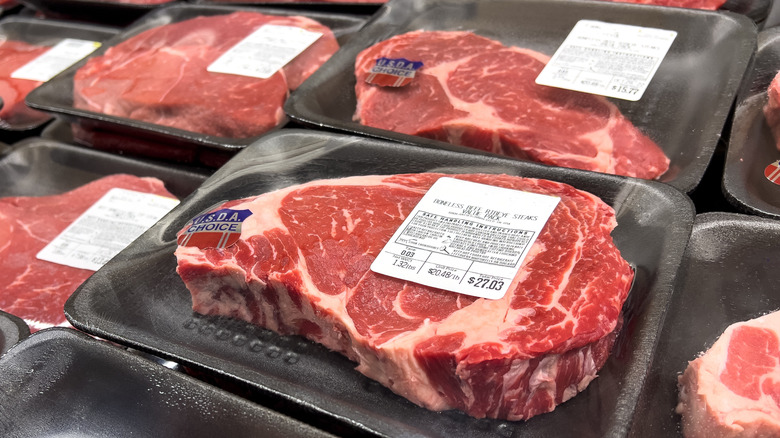
So which one is better: Prime or Choice? It depends on a few significant factors, starting with what and how you're cooking.
While buying Prime for special occasions is one way to go, here's an additional tip to go with that. Pick Prime only if you're looking to show off. We're not talking about a "look at me, I'm so fancy" kind of showing off. We're talking about showing off the cut of meat — so think steaks not stews. Steaks marked Prime have 8-13% marbling, which is essentially fat that you see in the form of thin white venus running through the flesh. These are among the best steaks to pan fry or throw on the grill with minimum seasoning, allowing the fat to melt and the meat to get a nice caramelized crust, while the inside remains pink and juicy.
You can also make your choice based on the cut of beef you're using. You'll see the biggest difference between Prime and Choice in heavily marbled cuts like ribeye or a New York strip. But if you're cooking with tenderloin, for example, it barely matters. The cut has very little marbling to begin with and stays tender because the muscle does so little work. Prime makes sense where the marbling comes into play; if you're planning to cook a beef Wellington (a British favorite with a noble history) or a filet mignon, both of which use tenderloin, going with Choice is more than good enough.
How to pick the best Choice beef cuts
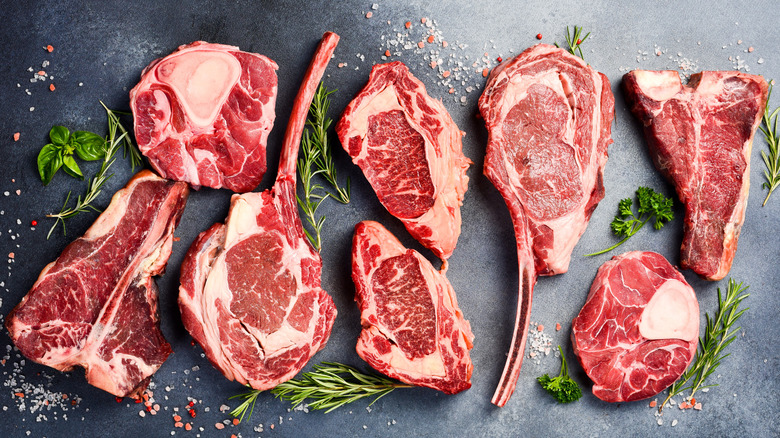
You're now armed with the correct framework to buy the right grade: If it's a special occasion, and the beef is the centerpiece of the meal, and you're cooking with a cut that has ample marbling, pick Prime. Having said that, at no point should cooking with Choice feel like a compromise.
In fact, finding the best quality Choice cuts is a great skill to develop. There's a lot of beef on that supermarket aisle that just missed making it to the top tier. Getting your hands on these is the equivalent of finding a great shirt that's on sale because of a minor, mostly irrelevant defect.
So how do you spot them? In the meat section, look for Choice cuts with the most marbling — and the right kind of marbling. Not all marbling is equal. The best cuts have lighter-coloured meat with thin, evenly distributed streaks of fat. Avoid pieces with large, chunky clumps of fat, which tend to cook up chewier.