

Once-Popular Parsnips Didn't Fail As A Vegetable — They're Just Easy To Ruin
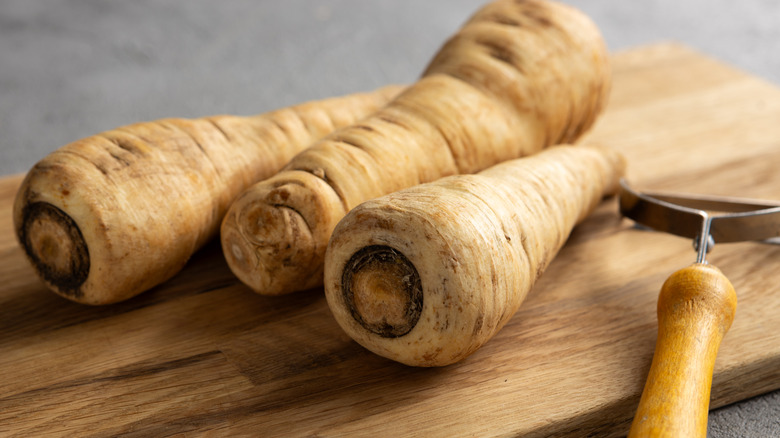
Over their centuries-old relationship with home cooks around the world, parsnips have had their moment in the sun, faded into the background, and now emerge full-circle as the underutilized underdog that deserves a comeback. Step aside, potatoes. Parsnips are long and tapered like a pale-hued carrot. But, that's about the only thing these root veggies have in common (as well as their membership in the same family as fennel and celery). Parsnips' signature sweet, nutty flavor comes from their cold-weather cultivation. That subterranean freeze is what converts the roots' starches into sugars as the veggie grows underground. This is also why spring-harvested parsnips tend to be sweetest, although parsnips can be harvested during the fall and winter months, too. Fall- and winter-harvested parsnips feature a firmer texture and earthier, subtly bitter tasting profile.
So, why did parsnips fall out of favor? For starters, the crop is challenging and time-consuming (think over six months) to cultivate. Parsnips' prolonged growing period puts the veggie at a higher risk of quality issues like rot and animal or insect interference. Meanwhile, growers are tasked with prolonged crop maintenance like weed pulling and keeping pests away. Assuming those parsnips hold up underground, growers either have to wait for the ground to thaw to harvest the vegetable, or else hack into cold, hard, frozen soil. In short, it's a drag — and the trials don't end after a successful harvest. Parsnips are wicked easy to overcook, in which case they become unpleasantly mushy and effectively unusable.
Colonial Americans used parsnips more than potatoes
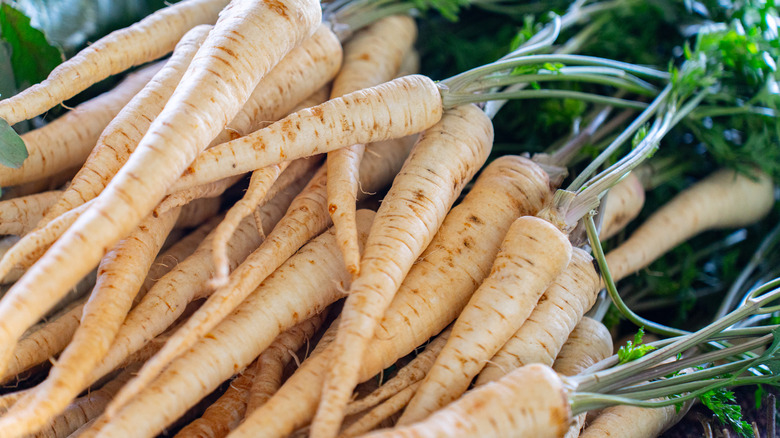
Parsnips were once a much more common vegetable in the U.S., but they've fallen out of popularity during recent decades, largely replaced by potatoes. A finicky growing period didn't stop the foodies of yore, however. Historically, early colonial North America relied on the late-season vegetable as a source of both starch and sugar. Potatoes didn't arrive in North America's New England region until the early 1700s; spuds are originally native to South America, brought to Europe by explorers during the 1500s. Parsnips, on the other hand, are indigenous to the Eastern Mediterranean, hastening their early colonial arrival with European settlers; specifically, potatoes came to the U.S. with Irish settlers who landed in New Hampshire. The veggie was even considered by the Greeks and Romans to be an aphrodisiac (ooh, parsnip cakes...).
Parsnip cakes — mashed parsnips worked into dough and skillet-fried to golden brown, not unlike a sweeter, nuttier potato pancake — were a British favorite of the 1700s, remaining popular in America through the mid-1900s as a winter dish. A 1903 recipe for parsnip cakes (via The Inn at the Crossroads) recommends they be "eaten with butter, like crumpets or scones, or with gravy, like Yorkshire pudding, with a roast of meat." Another parsnip cake recipe appears in "Vegetable Cookery," a 1944 leaflet by The Ministry of Food. Indeed, America's history with parsnips is longstanding, and centuries later, the best way to appreciate them is to cook them properly.
Avoid overcooking parsnips to enjoy their sweet, nutty flavor
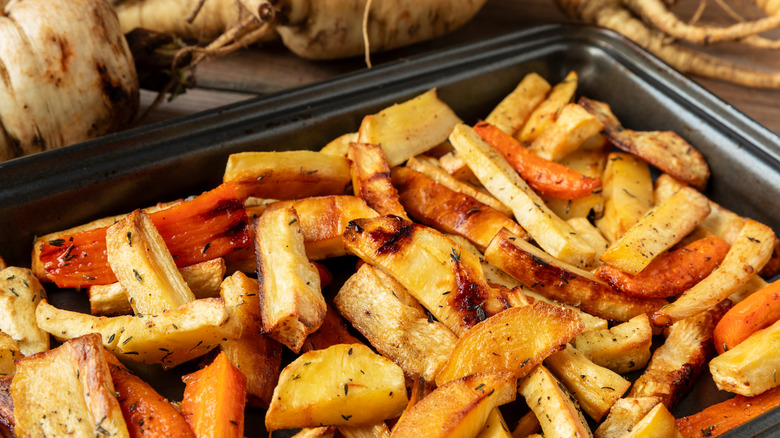
Parsnips enable versatile preparation methods. They can be roasted, mashed, pureed, boiled, sautéed, stir-fried, glazed, browned, and more. They make a dimensional soup and stew ingredient, and a great candidate for sheet-pan broiling with olive oil, cracked pepper, and fresh rosemary sprigs. Here at Tasting Table, we're loving this avant-garde parsnip crème brûlée, and this parsnip-filled agnolotti topped with julienned apple and speck ham. Whatever your preferred recipe, be sure to remove parsnips from the heat right as they begin softening to tenderness. If you're adding parsnips to a stir-fry or soup, don't add them until the last 10 minutes of the dish's cooking time. No accidental overcooking here.
At the grocery store or farmers market, look for physically smaller parsnips (these are sweeter than larger ones) with unicolored pale roots and no blemishes or sprouts. To get the most out of your fresh parsnips, dress them with counterbalancing flavors like spicy chili oil, umami miso paste, or sour tamarind. While parsnip cakes can probably be left in the past, try pairing the root veggie with celery root, shallots, and garlic scapes for a savory roasted medley. Or, incorporate sweet-nutty parsnips into an elevated risotto with smoky pancetta(a modern facelift for the traditional ingredient). Pro tip: Cutting the tough, woody center out of each winter parsnip before cooking yields a significantly sweeter, less bitter taste.