

Step Away From The Stove And Cook Frozen Steak This Way Instead
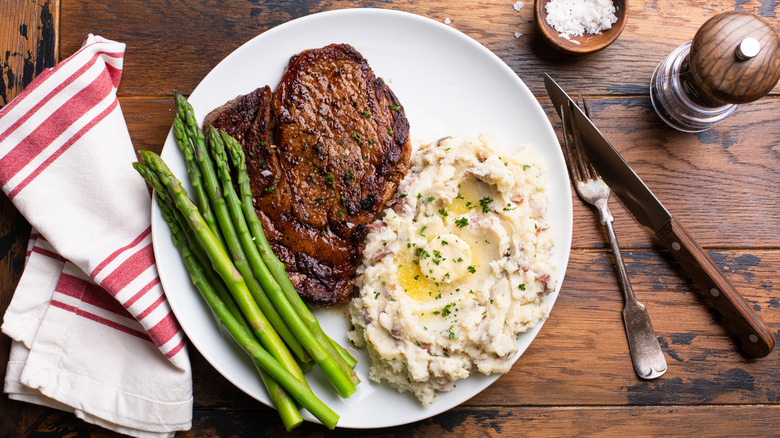
Cooking steak is an intricate art. Cooking frozen steak is a straight-up culinary gamble that constantly keeps you on your toes. From start to finish, every step must be meticulously executed, and time and temperature are always of the essence. Fast-forwarding through it all — the thawing, the patting dry, the stovetop searing — without messing up the meat is seemingly impossible, and yet, there's still a way to do it. With the help of an air fryer, cooking frozen steak has never been easier, and the result is still every bit as delectable as you'd hope.
Offering convenience without compromising flavor and texture, cooking frozen steak is inarguably one of the absolute best uses for your air fryer. As is the case with almost everything else that enters this kitchen appliance, the frozen steak only requires a push of a button and a relatively short cook time. This, fortunately, doesn't render your steak bland or dry. On the contrary, the meat still turns out perfectly juicy and tender. Thanks to its rapid, even hot air circulation, the air fryer still allows the steak to form that beautiful brown crust, much like something you would get when searing it in a pan. And as long as you properly season the steak beforehand, the flavors will be no less magnificent. Expect the same savory, herby goodness that you know and love, weaving right into the meaty base, delivered with half the usual effort.
How to cook frozen steak in an air fryer
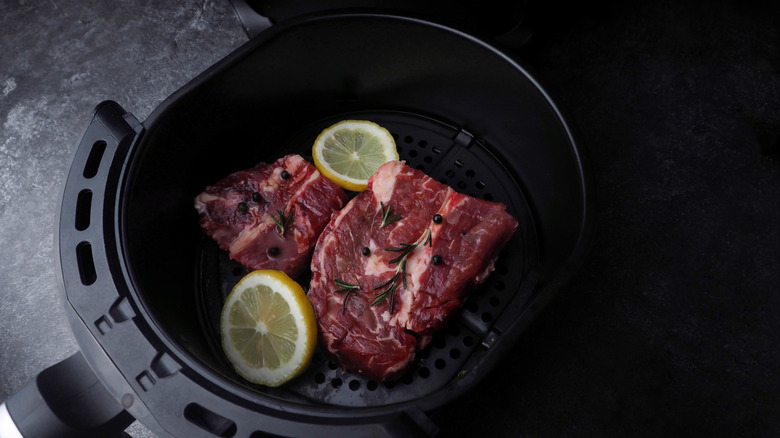
Thawing is optional when you're cooking frozen steak in the air fryer. Right off the bat, you can simply season both sides of the steak with salt, pepper, and other usual choices. These can include garlic powder, onion powder, dried rosemary, or even your own homemade first-class steak seasoning. Just make sure to use a more generous amount than usual since you're working with frozen meat. To help the seasonings really stick to the meat, coat the surface with oil beforehand. This will also help the steak sear better.
Temperature and timing still matter a great deal, and they depend on the thickness of your meat cut. The ideal meat cut is somewhere between 1 and 1 1/2 inches thick, preferably with decent marbling (or fat) to ensure maximum flavor and juiciness. This is why ribeye is such a popular choice, although other cuts of steak, like sirloin and filet mignon, are also viable. A general starting temperature for these cuts is 400 degrees Fahrenheit, but for anything thicker, you might need to reduce it to 350.
The cook time, of course, will vary depending on how well you want your steak to cook. A rare cut might take approximately 10 minutes (with an optional flip halfway through), increasing incrementally by a couple of minutes with every subsequent level of doneness. On the first few tries, consider checking on your steak at the 10-minute mark and adjusting from there. Much like with other cooking methods, the meat thermometer is your best friend, so use it to check on the internal temperature for a precise assessment.