

Should You Avoid Buying Frozen Meats At The Grocery Store?
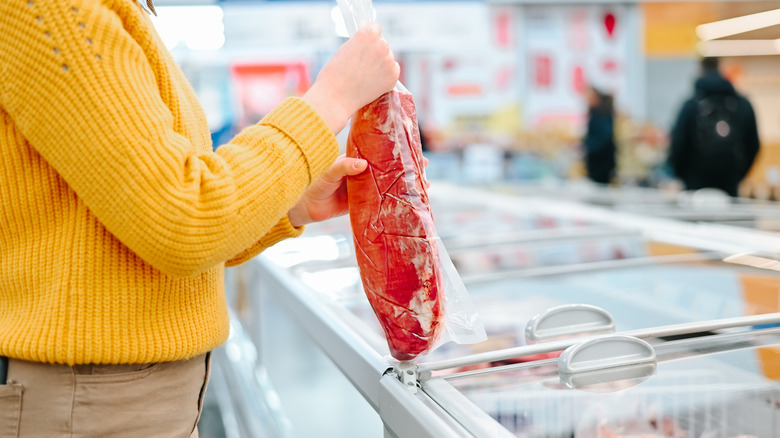
Frozen food still gets a bad rap despite how much we rely on it, and frozen meat at the grocery store probably has one of the worst reputations. While people might not fret over vegetables or baked goods coming out of the freezer, when it comes to protein, customers want the best quality available. For most people that means fresh meat — ideally coming right from the butcher counter, with frozen meat relegated to budget-level desperation. But the pros and cons of frozen meat are a lot more complicated than that, and depending on certain factors, it's not something you should be actively avoiding.
First off, from a nutritional standpoint frozen food isn't any worse than fresh, and sometimes it can be better. Like other once fresh ingredients, meat gets frozen not long after being harvested, and the process of freezing actually preserves vitamins and nutrients at their peak. Meanwhile, raw meat can be sitting around at a grocery store for days. During that time its nutritional value slowly degrades. Unless you can be sure your meat is fresh from the farm and sold very quickly, frozen meat can actually be healthier.
The exact same process applies to taste. Steak, chicken, and pork frozen at the peak of flavor will retain that same flavor once they are thawed, while fresh meat will lose its flavor as it sits out waiting to be purchased. While the freshest of fresh meat will taste better than meat that's frozen, the difference isn't significant.
Frozen meat can be just as tasty and healthy as fresh
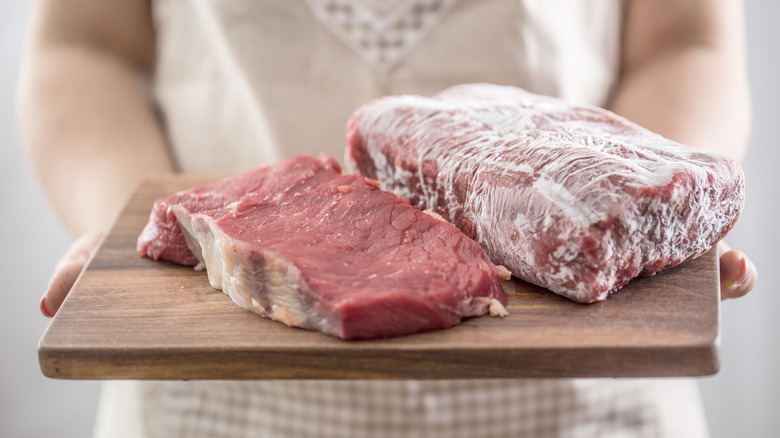
There is one important caveat to your meal retaining its quality: meat must be frozen and packaged properly. The best quality frozen meat is flash frozen, and stored in air-tight, vacuum-sealed packaging. Otherwise ice crystals can form that damage the meat and lead to many of the quality issues associated with frozen food. When ice crystals form inside frozen meat, they expand the liquid and rupture the meat's cells. This negatively affects the texture.
To avoid these issues, look for meat where the cuts are individually sealed and have been flash frozen, which will often be advertised on the label. If your meat just says "frozen," you can often spot the signs of freezer burn when products are not packaged well. Stick to meat that's frozen right, and you should barely be able to tell the difference once it's cooked. In fact you might even be impressed by how good it is.
The only other thing to concern yourself with is thawing frozen properly at home. For the best quality, always thaw your meat slowly by letting it sit in the fridge overnight or longer. Other quicker methods can be safe, but may result in a loss of moisture. Do that with well-frozen meat and what you are working with might as well be fresh.