

Can You Save A Coffee Maker After It's Grown Mold? Here's What To Do
We may receive a commission on purchases made from links.
A freshly brewed cup of coffee should be a delight — rich, aromatic, and tasting like nothing but coffee beans. If your morning cup of joe instead has an off taste or musty smell, it could be a sign that your machine is harboring mold. The thought of anything growing inside your coffee maker might make you want to throw it into the trash, but it's an easy thing to fix, and it won't even require harsh chemicals.
The steps are the same whether you have a drip machine or a Keurig. Start by washing all the removable pieces in warm, soapy water, using a brush to get into tight corners. Depending on the machine, this will be the carafe, drip tray, filter basket, and water reservoir. Dry well and reassemble.
The most important step to rid your coffee maker of mold is to use a vinegar solution to clean the inner workings of the machine. Fill the reservoir with half distilled vinegar and half hot water, then start a brewing cycle. Stop the brew halfway and leave the solution to sit for 30 minutes before continuing. Discard the solution, then run two cycles with hot water only to remove the vinegar residue. While vinegar is not a true disinfectant, it has antifungal and antibacterial properties that kill most household molds. Finish by wiping the exterior of the machine, paying attention to the buttons or other areas where bacteria might build up.
If you develop mold in a Nespresso machine, the manufacturer advises against using vinegar for cleaning, at the risk of damaging plastic parts and voiding your warranty. Instead, use a Nespresso descaling kit and follow the machine's manual.
How to prevent mold in a coffee maker
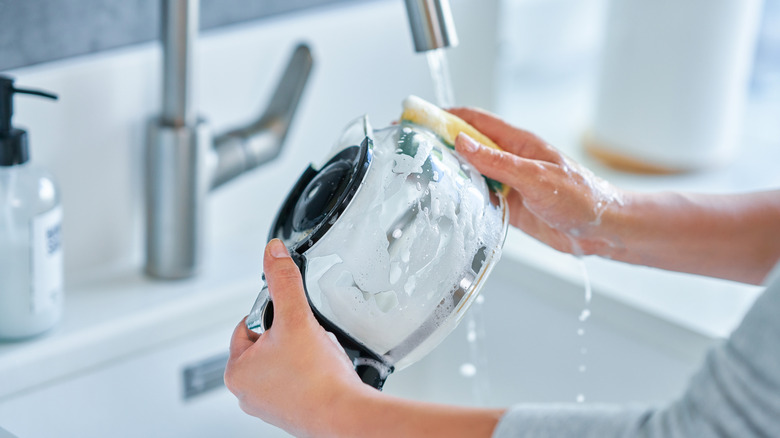
The easiest way to deal with mold in a coffee maker is, of course, to prevent it from developing in the first place. You might not want to hear it, but the harsh truth is that you need to clean at least some parts of your machine daily.
For drip coffee makers, this means emptying and rinsing the filter basket, as used coffee grounds are a fertile breeding ground for bacteria. The carafe should also be washed daily using warm, soapy water, which will remove any coffee residue that can go stale.
On a weekly basis, you should wash all removable parts and wipe down the outside. On a drip coffee maker, take the time to clean any residue from around the coffee dispensing spout. On a Keurig, clean the pod holder, as coffee grounds can end up settling here.
Even if you don't notice any signs of mold, you should clean your coffee maker with vinegar every month. This will help keep your machine in good working order and kill bacteria before they have the chance to add a bad taste to your coffee.