

Vinegar Is A Popular Choice For Cleaning Produce, But Should You Use It On Potatoes?
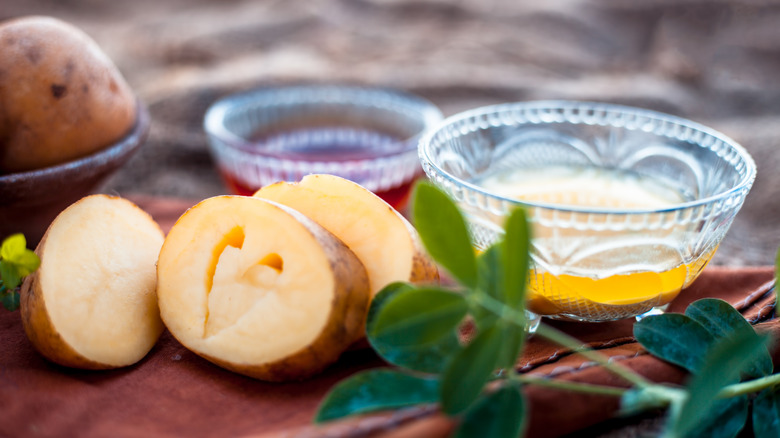
Consuming a wide variety of vegetables is one of the best ways to eat healthy, and this includes potatoes, as they're a great source of vitamin C, vitamin B6, and potassium. While it's true that there are plenty of ways for produce to pick up bacteria between growing outdoors, handling, processing, and shipping, this shouldn't be enough to scare you off eating your spuds along with other veggies. All that's required is a good wash. But should that wash include vinegar?
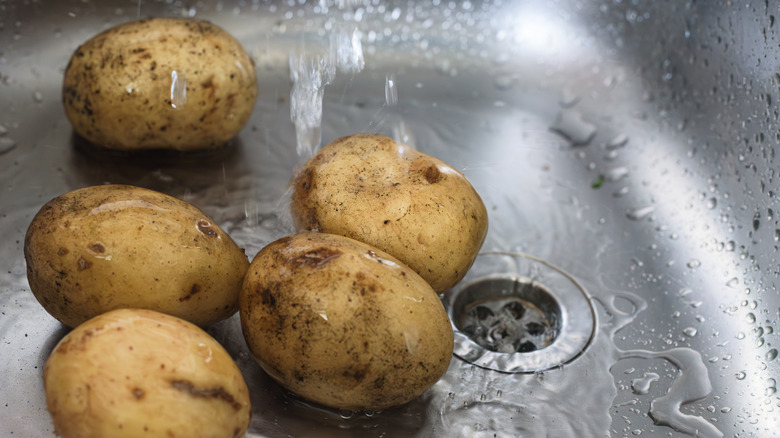
As they grow in the ground, potatoes really do need a scrub to at least remove lingering dirt and sand. Washing them with water is fine, but there are times when adding vinegar to the mix can be particularly helpful.
Let's say you've got a lot of potatoes to deal with for company, or maybe you're making a recipe that calls for many small spuds, such as new potatoes or fingerlings. Washing them all individually can be a pain, so a vinegar-water soak might be just the trick. Or, maybe you want to eat the potatoes with their nutritious but rough skin, where bacteria can hide. Using vinegar can be a good way to get them extra clean if you're worried about lingering contaminants. If you've cooked your potatoes and need to store them for a bit, using a water-vinegar solution can help keep them from oxidizing and turning an unappetizing brown.
Pros and cons of acidity
There are also some reasons you may not want to use vinegar on potatoes. While vinegar in moderation is great for cooking, excessive consumption — such as taking shots for supposed health benefits — can erode tooth enamel, inflame parts of the digestive tract, and spark acid reflux. It can also change the taste of your spuds if you don't rinse them well enough. (That's not necessarily a bad thing for fries as vinegar can help remove the earthy flavor from spuds). More broadly, if the hassle of using vinegar turns you off to eating the tubers, it would probably be better to skip it and avoid missing out on their health benefits.
Because of its acidity, many folks have taken to using wine's sour cousin as a household cleaner as well as a veggie wash, as it has been shown to kill E. coli, Salmonella, and Listeria, which can cause common food-borne illnesses. Cook's Illustrated ran a rough experiment that found that a solution of one part vinegar and three parts water killed 98% of bacteria, per NPR. But a team at the Institute of Agricultural and Environmental Sciences at Tennessee State University, which also tested vinegar use, found that rinsing and soaking produce in plain water also removed 98% of bacteria. The Food and Drug Administration recommends using water, saying there's no need to use soap or a special produce wash. Given the pros and cons of using vinegar, as well as the fact that you can just use plain water, whether you should use it or not on potatoes may simply be, well, a wash.