

Making Fried Chicken Straight From The Fridge Is Such A Big Mistake. Here's Why
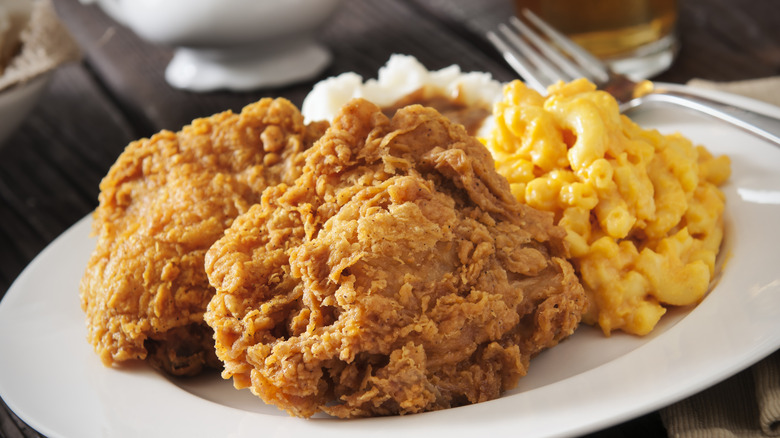
A big batch of homemade fried chicken is a surefire way to please the whole family with a classic Southern feast. But making fried chicken from scratch is not the simplest kitchen task, requiring myriad steps of seasoning, breading, and deep frying the poultry in a vat of hot oil. An error in any of these stages can turn a long-awaited meal into a disappointment, or worse, a food-safety problem. One of the biggest mistakes people make when frying chicken is taking the poultry straight from the refrigerator to the pot, risking both of these negative outcomes. For the best results, chicken should be allowed to gently warm up on the counter before hitting the oil.
Frying chicken properly — ensuring that the chicken is cooked through and the outside is crunchy and golden-brown — is already a delicate balance of the right oil temperature and cooking time, and when you use cold chicken, you are throwing a wrench into the machinery. Chicken that is too cold when it goes into the oil runs a high risk of either burning the breading or leaving the center pink and inedible. In the worst case, you might end up with both of these issues at the same time.
The amount of time that you need to rest your chicken before frying depends on the cut. Smaller boneless pieces, like chicken tenders or cutlets, will warm quickly, and 15 minutes on the counter should do just fine. For large pieces of bone-in chicken, like thighs and drumsticks, you will likely want to give them closer to 25 or 30 minutes. The necessary time will also vary depending on the ambient temperature in the room, but these numbers will give you a decent guideline to start with.
How to get a perfect cook for fried chicken
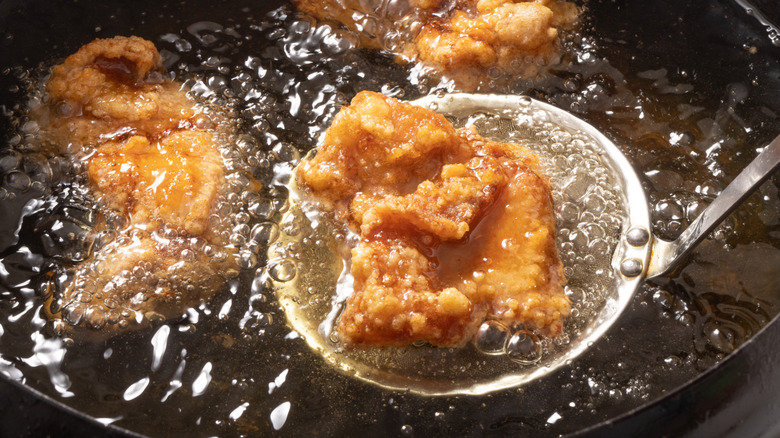
Now, there is a lot of fear around food safety for raw chicken, but no matter how warm it is in your home, 30 minutes of resting is well within acceptable food-safety practices. According to USDA guidelines, raw chicken can be at room temperature for up to 2 hours for temperatures below 90 degrees Fahrenheit, and 1 hour for higher temperatures. You don't want to leave those fried chicken pieces out all afternoon before cooking them, but a little warming time on the counter is perfectly safe, and is doubly important if it prevents you from serving up fried chicken that is still raw in the center.
Once the chicken has rested, the next most important step is to ensure that it is fried at the correct temperature. Because of how thick bone-in cuts can be, the best temperature for frying chicken is on the low end of standard oil temperatures, between 300 and 325 degrees Fahrenheit. Cooking at this temperature gives plenty of time for the heat to make its way through the meat down to the very center of even the largest chicken thighs without accidentally overcooking the breading. Again, the type of chicken you are frying will affect where in this temperature range you want to shoot for. A chicken cutlet will cook through quickly, so it is much less important that you keep a close eye on the oil temperature than, say, a batch of classic buttermilk fried chicken made from a broken-down whole bird.
What to do while your chicken is resting
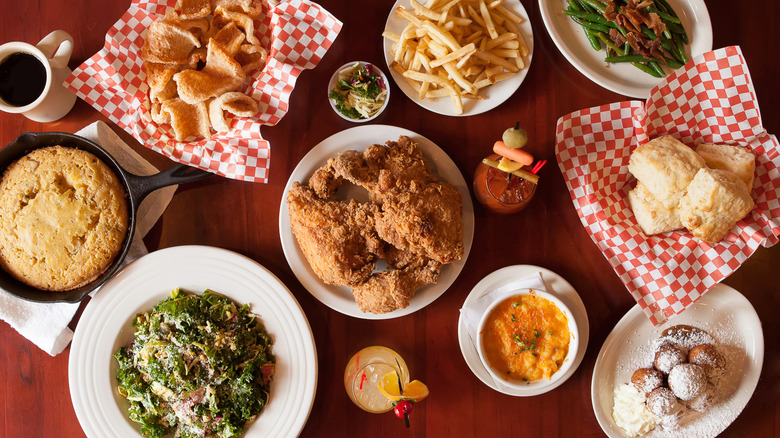
A half-hour wait to start cooking might seem like a real bother, but making fried chicken from scratch is always a labor of love. And if you are smart about how you space out the cooking, this time can be really useful, and you won't feel a delay at all. For starters, this is an excellent time for you to set up the rest of the chicken-frying process. You can get the various dredges doled out and ready for breading the poultry, seasoning the flour to perfection, preparing your cook station, and pre-heating the oil. But this is also a great time to work on whipping up some excellent side dishes for your fried chicken.
You won't have a ton of time, but half an hour is long enough to fry up a batch of french fries or fluffy hush puppies. Alternatively, since actually frying the chicken and then resting it post-cook will take a while, this is a great time to toss a pan of biscuits or a skillet of honey sage cornbread in the oven. It isn't quite enough time to stew a pot of Southern collard greens or make a pan of proper macaroni and cheese, but if you do the bulk of the work ahead of time, it is a good opportunity to warm them and get them ready for the table.
There are many secrets to making the best fried chicken, and this is definitely one that you want in your repertoire. For a crispy, golden-brown crust and a tender, juicy middle, all you're missing might be a little resting time on the countertop.