

The State With The Most Food Poisoning Cases Has Less Than A Million Residents

Every U.S. state has its own strengths, weaknesses, claims-to-fame, and cheeky eccentricities. But there's one trait none of the 50 states would be thrilled to claim: the highest rates of reported food poisonings. Unfortunately for South Dakota, it wears that mantle. For a state seldom mentioned in national health rankings, it's a bit surprising, especially given a population of less than one million residents as of 2024.
According to Trace One, which analyzed four years of finalized data from CDC's National Notifiable Diseases Surveillance System (NNDSS), South Dakota does indeed have the most foodborne illnesses in the country as of mid-July 2025, with 92.2 cases per 100,000 people. That's more than double the national average of 48.8 cases. The same report notes that Nebraska, Minnesota, and Wyoming sit pretty near the top as well, creating a cluster of high-rate states in the Northern Plains and Upper Midwest. These state rankings come from analyzing CDC NNDSS surveillance data.
It's important to note this statistic comes from infections confirmed by labs and reported to the CDC, rather than just any case of someone feeling "a bit off" after eating lunch or dining at a restaurant. Even still, most cases of genuine sickness from foodborne illness are never tested or reported. The CDC estimates 48 million nationwide cases of food poisoning every year, with 128,000 people hospitalized and 3,000 deaths. So why would a sparsely populated state like South Dakota become the so-called food-poisoning capital of America? Agriculture is the biggest piece of that puzzle.
Livestock and foodborne illness
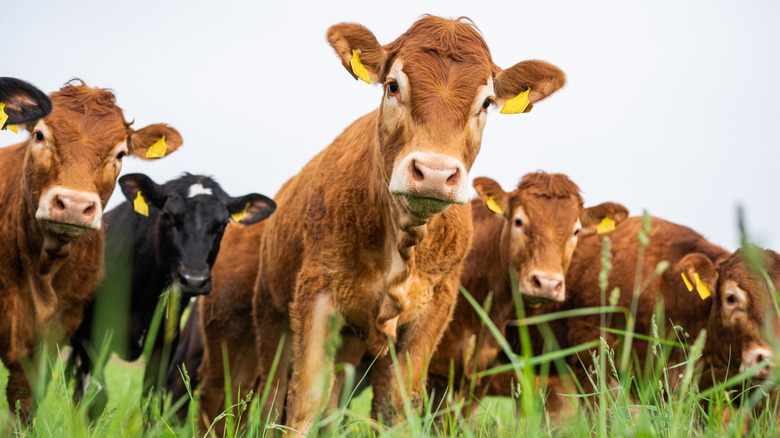
Agriculture and its related industries are backbones of America's food supply, and the economy of South Dakota's economy leans heavily on livestock and crop production. Cattle and calves, hogs, dairy, and other animal agriculture are leading commodities for The Mount Rushmore State. In 2023, the state had about 3.6 million head of cattle and calves, which works out to several cows for every resident and roughly four times as many cattle as people. It's considered a benefit on many levels, but not when it comes to food poisoning.
Public-health officials point out that people who live and work around livestock are much more likely to be exposed to germs that cause food poisoning, especially Campylobacter which happens to thrive in cattle and poultry without necessarily making the animals appear sick. In other words, "foodborne" infection in South Dakota often starts with animal contact, in barns, feed lots, animal environments, and feces-infected water supplies long before anything reaches a grocery store or restaurant.
That said, it's possible that South Dakota may just be better at detecting and reporting cases of these illnesses, which could be pushing up the numbers above states with less testing. So the takeaway is follow state and federal guidance on food safety rules; take preventive measures such as washing hands after handling livestock or poultry; keep barn clothes and boots out of the kitchen; cook meat to safe internal temperatures; don't drink unpasteurized milk, and be careful with backyard poultry and private wells.