

The Symbolic Reasons This Japanese Soup Is Eaten On New Year's Day
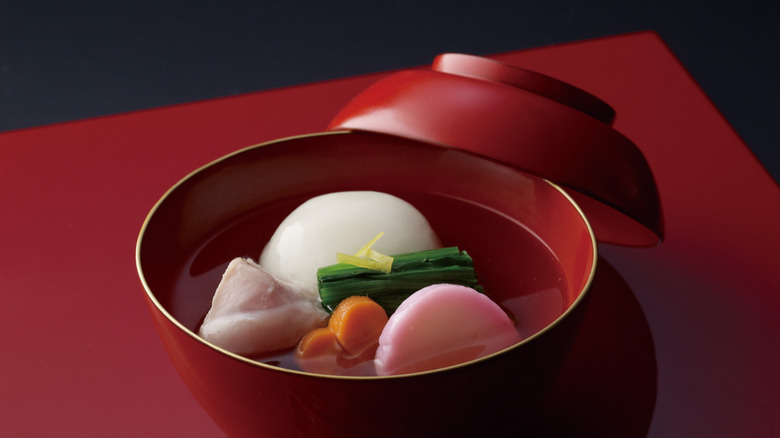
While partiers in Western countries might celebrate the New Year with champagne and caviar, traditional Japanese New Year's cuisine — called osechi ryori — encompasses a bountiful spread of dishes with unique symbolic meanings, meant to spread fortune and prosperity to those who enjoy them. One of the most famous osechi dishes is a special soup called ozoni. Tasting Table spoke to a brand representative for Kayanoya, an over 130-year-old food company founded in Kyushu, to learn all about this must-try Japanese winter food and how to make it at home.
Essentially a light-bodied soup with vegetables and mochi rice cakes, various regions of Japan prepare ozoni differently, with each ingredient representing certain wishes for the New Year. "With a history of over 500 years ... ozoni has long been associated with celebration, prosperity, and unity," Kayanoya's representative said. "Originally enjoyed by samurai and nobles during ceremonial banquets, ozoni gradually spread to common households by the Edo period and became an essential dish to welcome the New Year."
The representative noted that ozoni broths fall into two main categories: "a clear soup (sumashi), commonly found in eastern Japan, and a miso-based soup, typically made with white miso in western Japan, especially in the Kansai region." Both kinds typically use a base of dashi stock, soy sauce, and sake or mirin rice wine. Kayanoya's Ozoni Dashi and Soup Base offers these essential ingredients for Japanese cooking in one convenient, delicious package. Once the broth is ready, cooks add more ingredients that boost the flavor and auspicious meaning of ozoni.
What different kinds of ozoni represent for the New Year
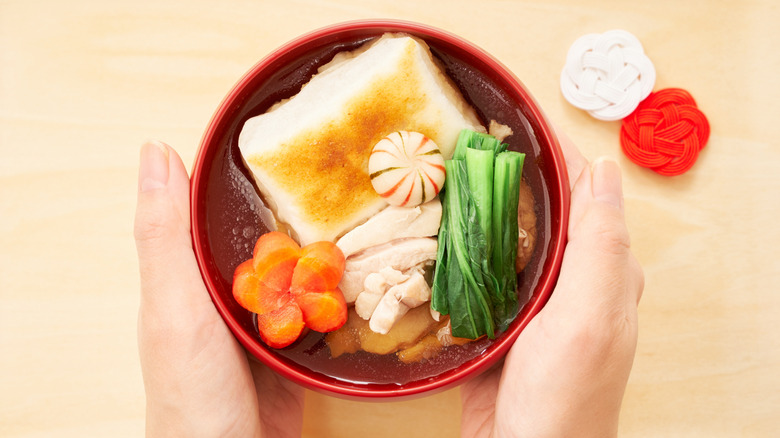
In addition to different types of mochi, ozoni includes vegetables like daikon radish, carrots, and shiitake mushrooms. From there, ingredients vary widely. Kayanoya's representative explained that in the Kanto region, ozoni was highly influenced by samurai. It uses a clear broth because "adding miso was associated with failure in competitions," as well as square mochi that "symbolized strength and ... overcoming one's enemies." Kanto-style ozoni may also include leafy greens and meat or seafood.
Meanwhile, in the Kansai area, "round-cut ingredients are used to avoid sharp edges, expressing a wish for harmony and peaceful relationships," the representative said. You'll also see taro root (which signifies prosperity) and special red carrots that are "traditionally believed to ward off evil." Even individual cities display their own ozoni preferences. The Hiroshima style includes oysters, representing good fortune, and in the Hakata division of the city of Fukuoka, yellowtail fish is added to boost one's chances of career advancement.
As for the rice cakes, Kayanoya's representative said that pre-grilled squares of mochi are common in eastern Japan, while in the west, round and soft mochi is simmered in the soup. To make a pot of ozoni, all you really need to do is put together the broth, add the cut-up ingredients at the right times to ensure they cook to the proper doneness, and garnish with ingredients like bonito flakes, scallions, or yuzu peel. You'll have a steaming bowlful of all the good fortune you want for the coming year.