

The Sink Areas You're Not Cleaning That Actually Harbor The Most Bacteria
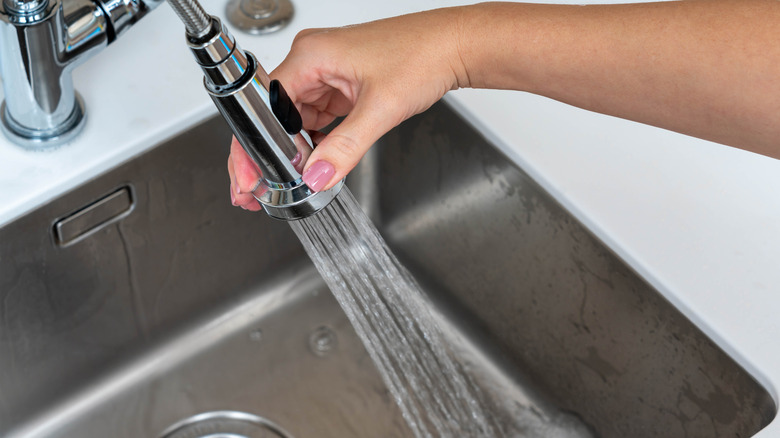
If you think you're doing enough during your weekly sink cleaning or monthly deep clean, think again. Sure, you scrub every corner and crevice of the sink basin and take the time to sanitize the drain stopper and the garbage disposal's splash guard, but is that enough? There's actually one sink area that you may not be cleaning as well as you should, and that's your faucet fixtures. It's one of those places you might not think to clean in your kitchen, but absolutely should. You may give it a quick wipe now and then, but this area is a breeding ground for bacteria because it constantly gets wet. Compared to other areas around the kitchen, the faucet fixtures attract the most moisture, keeping microorganisms alive and continually growing around the food you eat.
If you look closely, you may notice hard-water buildup, mold, or a brownish slime forming around the base of your faucet fixtures due to accumulated bacteria, minerals, soap residue, or moisture. This buildup can maybe make your water taste a little funky or slow down the water flow due to things like mineral buildup in the faucet's aerator. Just looking at before-and-after photos of a dirty faucet is enough to make you step up your cleaning routine. While most bacteria in kitchens are usually harmless, high-traffic areas like the kitchen sink fixtures can be exposed to cross-contamination from raw foods, dirty hands, and faucet water, which can keep a constant flow of bacteria around if you don't clean them regularly.
How to clean faucet fixtures
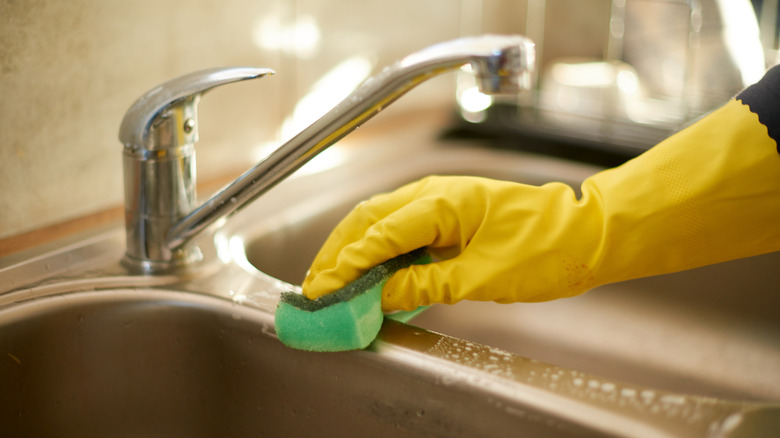
Ideally, you'd be cleaning and sanitizing your sink (including faucet fixtures) every time you use it to prep food. But that may not be feasible if you're constantly on the go. Cleaning your kitchen sink at least a couple of times a week should be enough to keep germs at bay, for the most part. All you need is some warm water, soap, and some paper towels. Just give your spout, handle, and faucet body a good wipe with soapy water to get most of that gunk off. Then, you can go over that with a sanitizer, whether that's a bleach wipe or a homemade solution using diluted bleach. One tablespoon of bleach per gallon of water is recommended. For deeper cleans, you can remove the faucet aerator to clean it and use a toothbrush to remove any buildup in those hard-to-reach spots.
If you prefer a DIY, all-natural approach using pantry staples, a combination of distilled white vinegar and baking soda creates a homemade all-purpose cleaner that can work wonders on your kitchen sink faucet and handles. The baking soda acts as a mild abrasive, helping to remove stuck-on residue, while the vinegar's acidity helps dissolve mineral buildup and stains that accumulate over time. While many mistakenly believe mixing vinegar and baking soda together makes it a more effective cleaner, it's actually best to use them separately.
To remove mineral deposits from the faucet head, you can add a vinegar cleaning solution to a small plastic bag and attach it to your faucet using a rubber band. You may leave it up to half an hour or less to avoid damaging certain delicate finishes and natural stone countertops. A little extra attention goes a long way in keeping your sink faucet cleaner and more hygienic overall.