

Why You May Want To Ditch White Sugar And Switch To Coconut Or Palm Sugar
In recent years, fat has been replaced by sugar as public health enemy No. 1, with cases of obesity and diabetes continuing to spiral. Yet the human palate craves sweetness. So it's no wonder people have been on the hunt for alternatives to the common table sugar that is associated with a wide variety of health issues.
Refined table sugar, or sucrose, has basically no vitamins, minerals, or fiber, leading to its reputation for adding "empty calories." Cooks may also want to consider sugar's glycemic index, or a measure of how carbohydrates affect blood sugar. After a meal of high-glycemic-index foods, blood sugar spikes can cause brain fog, and over time, they can contribute to diabetes and heart disease.
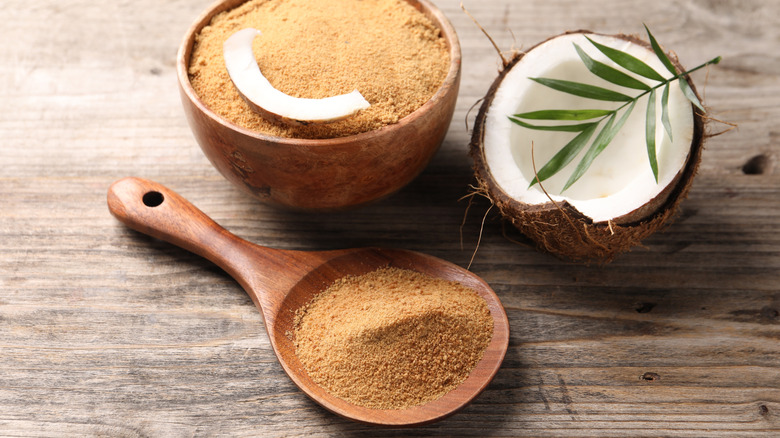
Enter palm sugar, which includes sugar made from coconut, date, and palmyra palms. Palm sugars in general contain various vitamins and minerals because they are less refined than table sugar. These sugars are also generally slightly lower on the glycemic index than white sugar. Because coconut sugar has become so popular, it's worth exploring this particular palm sweetener, which has long been used in Southeast and South Asian foods, but has only recently become more popular on health food store shelves in the West.
Nutrients and lower glycemic properties set coconut sugar apart
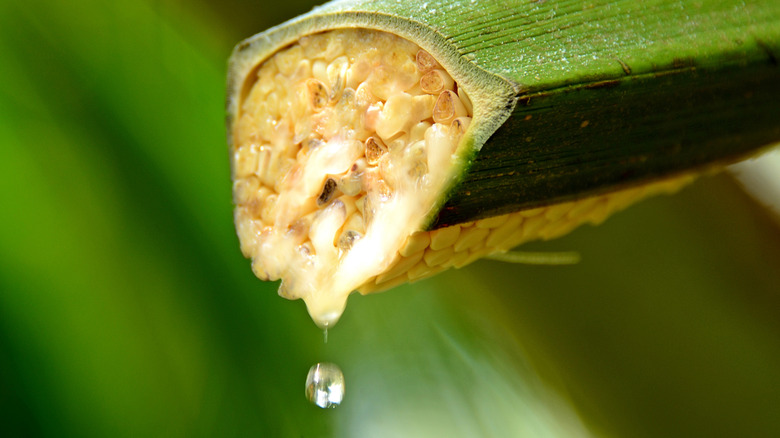
Coconut sugar comes from the nectar of coconut palm flowers before they become coconuts. Coconut sugar contains iron, zinc, calcium, potassium, and inulin, a type of prebiotic. Ellie Krieger, a registered dietitian, food show host, and cookbook author, says on a Substack post that coconut sugar's low glycemic properties are the "real benefit" of the sweetener, given that the small amount of nutrients alone wouldn't warrant a switch. She points to a 2023 study in the International Journal of Environmental Research and Public Health that says "compared to the majority of other commercially available sugars, coconut sugar is certainly a healthy sweetener."
It's largely because of its nutritional profile that coconut sugar has gained popularity among consumers despite costing more than regular table sugar. Unlike mass-produced white sugar, coconut sugar is generally farmed by traditional smallholders, contributing to its higher cost.
If you decide to splurge on coconut sugar, you can use it to take twice-baked sweet potatoes to the next level, employ it in a simple candied walnuts recipe, or keep it on hand as one of the best brown sugar substitutes. In many recipes, you can use coconut sugar with a 1:1 ratio instead of white sugar, but you wouldn't want to use coconut sugar in some delicate baked goods, and it shouldn't be confused with the coconut flakes you might use for toasting.