

Avoid Curdling Homemade Eggnog With This Simple Temperature Step
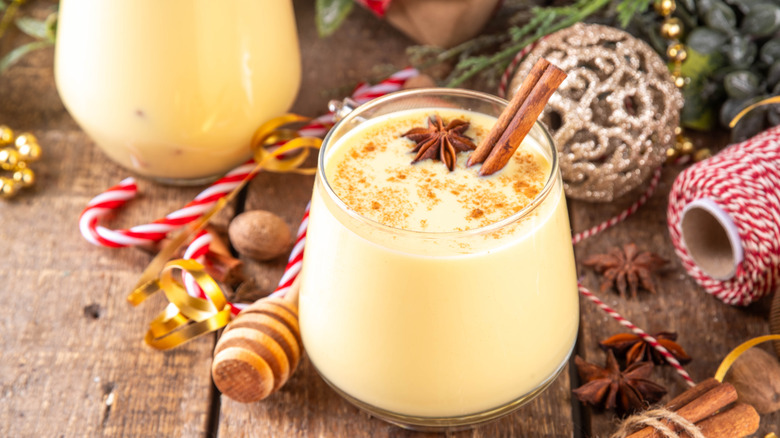
'Tis the season for all things tasty, cozy, and festive — all boxes that eggnog ticks with holiday gusto. For its fans, this beverage is the pinnacle of rich, creamy, sweet, and spiced perfection, and that's whether you add a little booze or not. Making eggnog at home is pretty easy — while store-bought options definitely have their value, especially for a busy party host, it's almost always worth it to whip up your own 'nog to your exact preferences. There are just a few key things to keep in mind, though, regarding some common mistakes people tend to make with eggnog. Chief among them is how to avoid curdling, as that's a surefire way to turn your eggnog from irresistible to unappetizing.
The reason eggnog may curdle is if your eggs go from cold to hot too quickly when you add them to your warmed milk. The extreme change can shock the proteins in the egg yolks, which causes a certain reaction: These specific proteins, known as albumins, bond with fat molecules present in the mixture, which creates solid clumps. No one wants to drink watery eggnog with big lumps, do they? But this is easily avoidable. It's just about keeping that temperature shift slow and steady, essentially allowing the egg yolks to ease into the higher temperatures of the milk. That means not rushing the actual combining process, but also ensuring that the egg yolks aren't too cold to begin with, and the milk mixture isn't too hot.
Exact steps for avoiding curdling
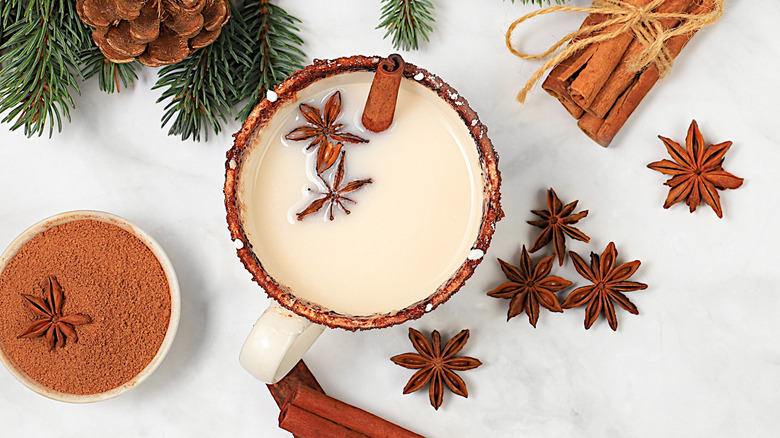
Eggnog gets its rich creaminess from egg yolks, which must be separated from the egg whites. When the egg yolks meet heat — gradually — those aforementioned proteins stretch out and form bonds with each other, which results in that custardy consistency.
First, separate your eggs and put them to one side; this allows them not to get warm, but will at least let their temperature rise a touch from what it was in the refrigerator. Then, heat your milk, cream, sugar, and spices. Let it warm up slowly, whisking continuously while over low to medium heat. Don't let this mixture reach past 170 degrees Fahrenheit to avoid that shock to the eggs; use a thermometer to be sure. Once you've checked this, add your milk mixture to those egg yolks as gradually as you can. Keep whisking the entire time to keep those eggs from cooking.
When you're done combining, and you've whisked the milk with the eggs to a smooth consistency that feels very warm, add the entire liquid back to a saucepan on the stove and bring it slowly to 170 degrees, as this is the temperature raw eggs need to be heated to in order to kill any potential bacteria. With these steps, you'll have safe, delicious, smooth, and curdle-free 'nog. And if ever you do get some curdling, don't panic. Just strain it and carry on garnishing with spices and, if desired, choosing the best rum for your festive eggnog.