

9 Old-School Breads You Rarely See Anymore
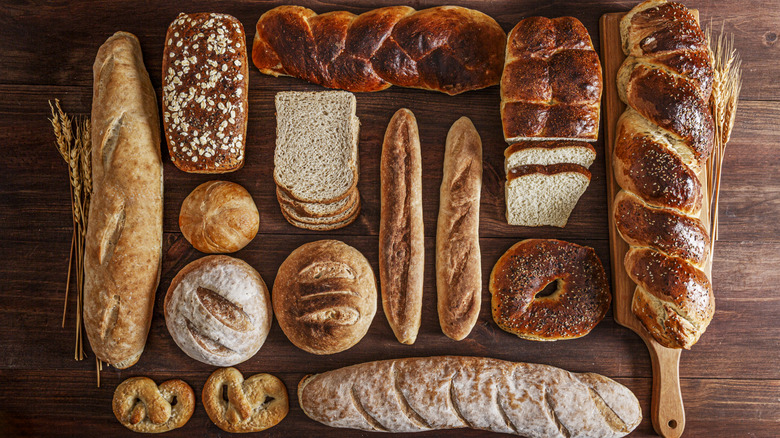
Bread is a big part of most people's daily diet. According to Innova Market Insights, nearly 1 in 3 Americans eat bread more than four times a week. It makes sense, as there are just so many meals that contain bread. Sandwiches, grilled cheese, burgers, hot dogs, simple toast — bread is everywhere.
White bread has long been a popular choice for most households across the U.S. Although now, likely due to concerns over ultra-processed foods, other types are becoming more popular. Sourdough, for example, is having a big moment. But at different times throughout history, other breads have been popular.
During the war, for example, people ate, well, war bread, and during the medieval period in England, some were forced to eat horse bread. No, it's not bread made from horses, don't panic. Keep reading to find out what actually goes into horse bread, plus many other old-school breads that you just don't really see anymore.
1. War bread
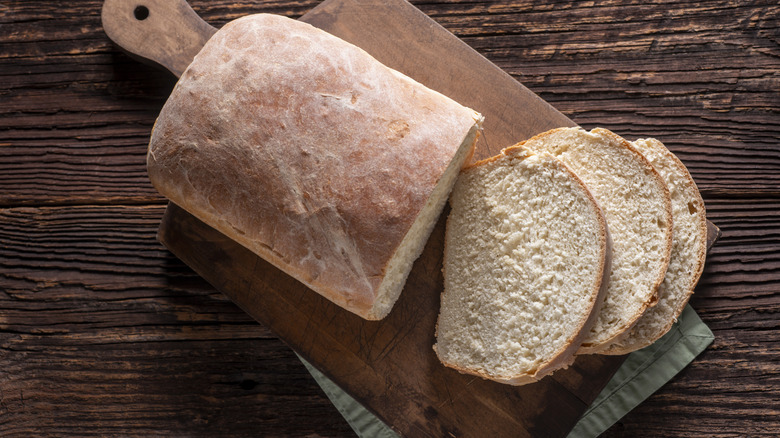
The First World War had a significant impact on the U.S. Everyday people had to make sacrifices, and this often meant going without certain ingredients that they were used to using. Instead of using standard white flour to make bread, for example, Americans were encouraged to use cornmeal instead, along with rye and wheat flour. They would combine these ingredients with boiling water or scalded milk, shortening, molasses, yeast, and salt to make war bread.
Other war bread recipes use very little wheat and rely on corn syrup in place of sugar or molasses. The lack of wheat was likely because the Food Administration needed to export supplies to Allied troops in Europe. As well as bread loaves, people were encouraged to make their own rolls using rye flour, too. Despite the lack of white flour, some who have tried war bread say it doesn't taste bad at all. It was, granted, denser than the average loaf, but still hearty and nourishing all the same.
2. Horse bread
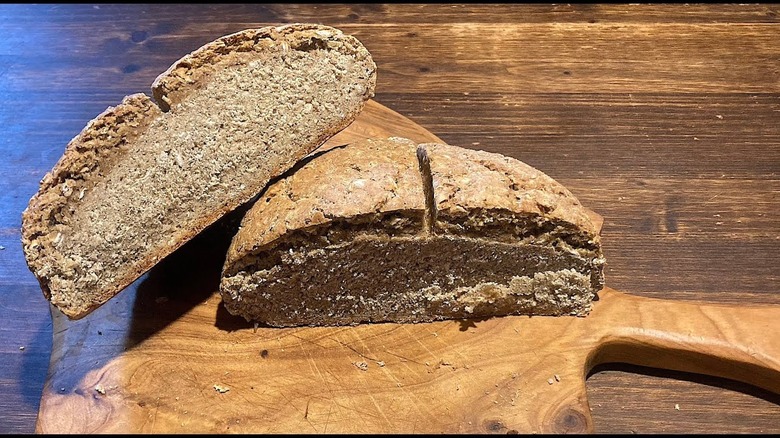
Just as the name implies, horse bread was primarily for horses. It was baked in medieval English kitchens for tired working horses, often made with a simple mix of bran and bean flour. It was a quick and efficient way of feeding the animals, and would prevent owners from having to wait around for them to eat enough grass and grain to keep their energy up. Horses needed to be taken care of as they were the backbone of society in the Middle Ages.
But horse bread, which was flat and dense, wasn't only eaten by horses. It was also eaten by people when other types of bread weren't available. In fact, many people in rural areas would eat horse bread all the time, and it became particularly important during times of hardship or famine. Richer members of society used to look down on the poor for having to eat horse bread, but it was actually relatively tasty and pretty nutritious. Nowadays, bean flour is a popular high-protein alternative to white flour.
3. Anadama bread
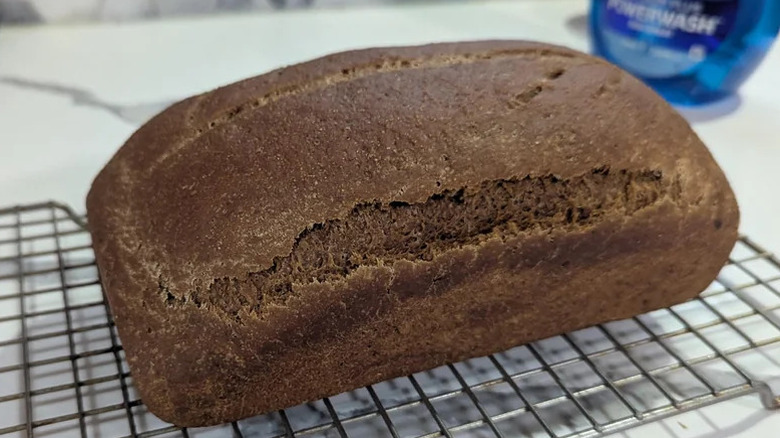
Anadama bread comes from the Boston area, but no one is quite sure exactly when it originated. The first recipe to appear in print was in 1915, but chances are it had been around for quite some time before this. There is also written evidence to suggest it was eaten throughout the 19th century, too. The recipe is simple — just water, milk, cornmeal, butter, flour, yeast, salt, and molasses. The latter lends a nice sweetness to the recipe, while the cornmeal gives it a nice firm texture.
While the exact time and place Anadama bread was created is up for debate, there is one particularly entertaining theory about its invention. The story goes that a fisherman in Gloucester, Massachusetts got so angry with his wife, Anna, for giving him only cornmeal and molasses every day, that he threw it in the oven with yeast and flour to make his own bread. That, the legend states, is where the name comes from: "Anna, damn her!"
4. Cottage loaf
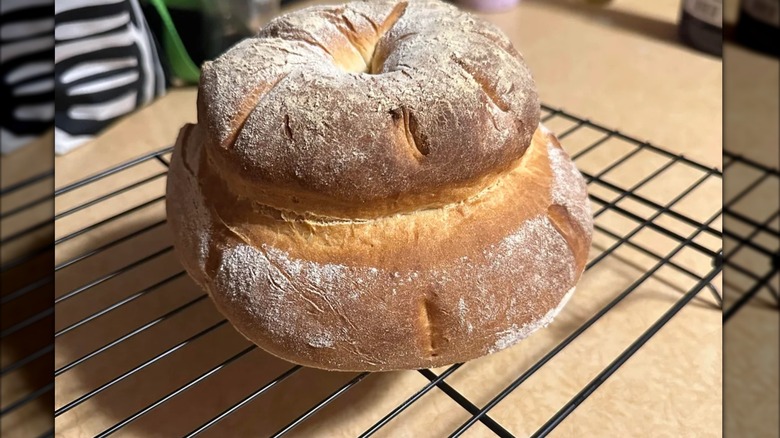
Cottage loaf is an old English bread that isn't really baked that much anymore. It was popular in the 19th century, when people used to rely on brick ovens with no shelves to cook their food. That's probably why a cottage loaf is shaped the way it is, with two round loaves stacked on top of each other. It was an essential technique for maximizing space.
The shape and brick oven cooking method are the most distinct things about a cottage loaf, as everything else is pretty much the same as a standard white bread recipe. Still, cottage loaf had many fans throughout the 19th century, many of whom probably picked up how to make it after reading the 1861 cookbook "Mrs. Beeton's Book of Household Management."
One particularly famous fan of the cottage loaf? Virginia Woolf. In fact, the famous English author and feminist used to brag in letters about her expertly made cottage loaves.
5. Corn pone
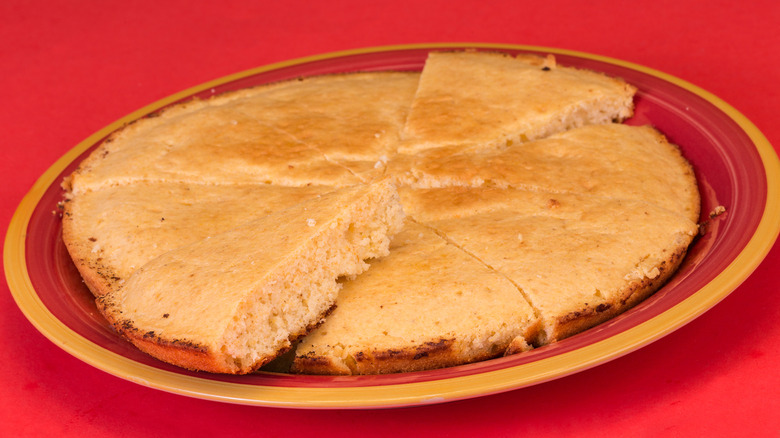
Corn pone is very similar to cornbread, only unlike the latter, the former isn't leavened with yeast or baking powder. The taste is very similar, largely because like cornbread, the main ingredient is cornmeal. This is then combined with salt, water, and fat (often bacon grease), and then either fried in a skillet or baked, like bread.
It's not known exactly when people started eating corn pone, but it's likely been around for quite some time. It's mentioned several times in Mark Twain's 1884 novel "Adventures of Huckleberry Finn," for example. But it likely goes back even further than this.
The word "pone" is likely derived from the Algonquian word for bread. The Algonquin tribe lived in present-day Québec and Ontario in Canada, but several Native American tribes spoke the Algonquian language. It makes sense that early European settlers in America may have been influenced by Native Americans to make corn pone. After all, they also learned to make cornbread from them, too.
6. Salt-rising bread
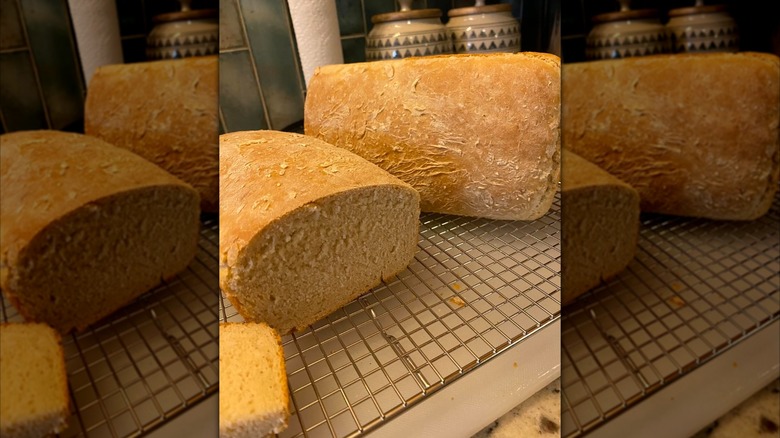
Most bread today relies on yeast as a leavening agent — but it hasn't always been this way. Before yeast was commercially produced, sourdough starters were particularly common ways to make bread. In fact, while sourdough seems new and trendy today, it is actually one of the oldest types of leavened bread. Salt-rising bread is similar because it doesn't rely on yeast to rise. The name is deceiving, because it doesn't rely on salt, either. The salt part in the name may have just come from the salt barrels that were used to store the bread.
Prepare your stomachs for what we're about to tell you. This bread, which likely originated in remote Appalachian communities in the 1700s, is leavened with the gas of the same bacteria that causes gangrene: Clostridium perfringens. That alone probably tells you why salt-rising bread isn't eaten that much anymore.
However, despite the fact it's made with bacteria, some people do enjoy salt-rising bread. This is because of its unique, pungent taste and smell, which some have compared to cheese. And if you want to try it, don't worry, no one has ever gotten sick from salt-rising bread, because the heat kills the bacteria.
7. Canned bread
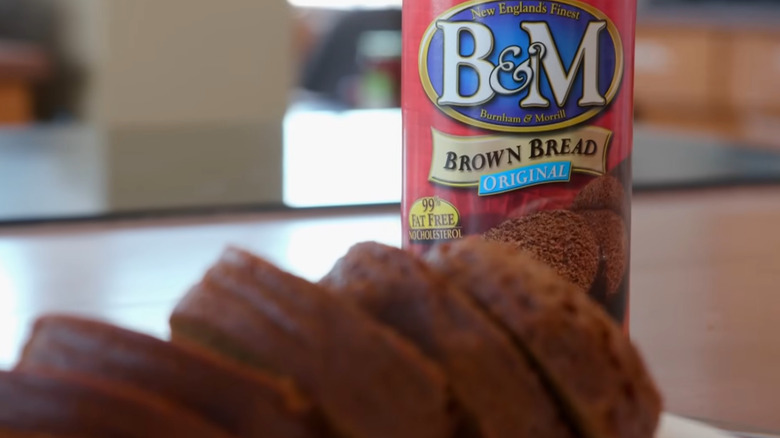
Most of us are used to buying certain things in cans. Beans, vegetables, fruit, and fish, for example, are all fairly common products to find in a tin. But canned bread? For many people, this probably sounds strange, but for those in New England, canned bread isn't out of the ordinary. In fact, many in this region grew up eating canned Boston brown bread, which was moist and a little sweet, and sold by the canned food company B&M.
Canned bread has been sold by B&M since the 1920s, but the recipe it evolved from was probably created much earlier. One commonly accepted theory is that Boston brown bread was first eaten by European settlers in the 17th century. They would make it with rye flour, wheat flour, and cornmeal, mix it with molasses and buttermilk, and then steam it over a fire.
Canned bread is hardly mainstream, but it is starting to experience a little bit of a rise in popularity. This might be linked to a more general wider demand for more affordable canned food, which has likely been spurred on by the cost of living crisis.
8. Graham bread
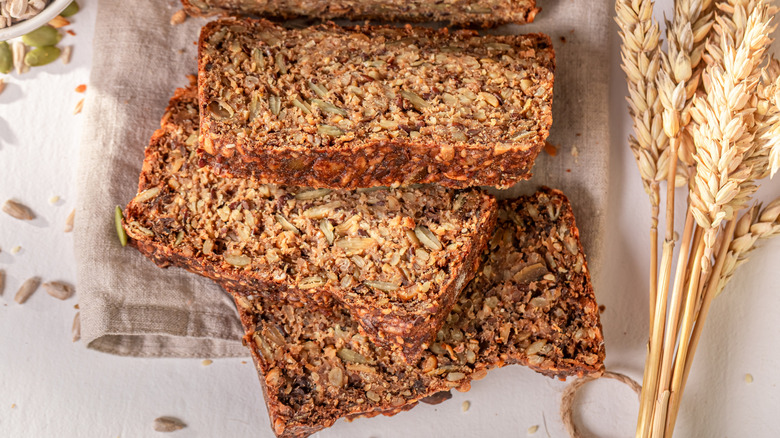
Anyone who has ever enjoyed a s'more knows of Graham crackers, the slightly sweet wheat crackers that help to keep the gooey marshmallow in place after it was toasted over the fire. The crackers got their name from Sylvester Graham, a health reformer who was passionate about vegetarianism and getting more people to eat whole wheat. He was also very against sexual desire and wanted everyone to sleep on hard surfaces, but that's a conversation for a different time.
Graham crackers are made with whole wheat flour, and as you may have guessed is Graham bread. Graham himself invented the bread, which, back in the 1800s, was made with unsifted whole wheat flour. Today, it would be made with Graham flour, which is unsifted and unrefined coarse-ground whole wheat flour. Like canned bread, Graham flour for bread-making isn't hugely popular. However, it is starting to come back into the mainstream, mostly driven by rising demand for healthier options.
9. Ash Cakes
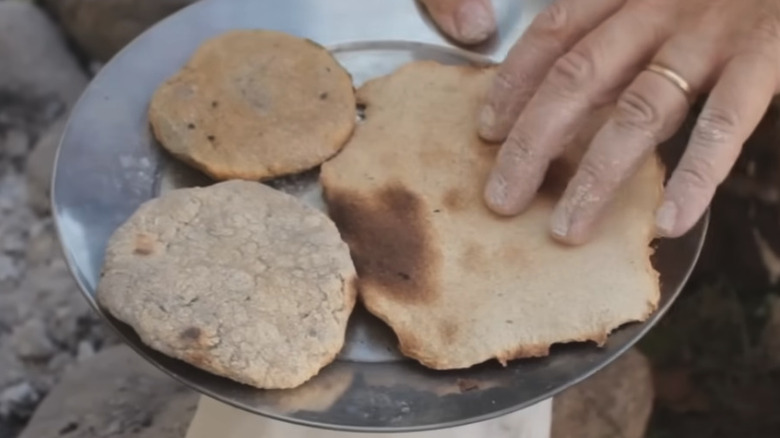
Ash cakes (also known as fire cakes) are an incredibly simple variety of bread. They're essentially small, flat, plain bread patties, made with just three simple ingredients: Flour, water, and salt. They're simple by design, because ash cakes were ultimately eaten for sustenance, not flavor. Some reports suggest that, while they were on the move, 18th century soldiers and frontiersmen would use their rations to cook ash cakes for themselves over an open fire (hence the name).
While you might assume that ash cakes would taste dull, people who have eaten them say that's not actually the case. They maintain that the fire itself imparts a nice smoky flavor to the cakes. Of course, you don't have to stick to the traditional recipe if you decide to experiment next time you're sitting around the campfire. You can also add ingredients like dried fruit or molasses, depending on your preference.