

Avoid Bitter Homemade Hummus With This Oil Trick
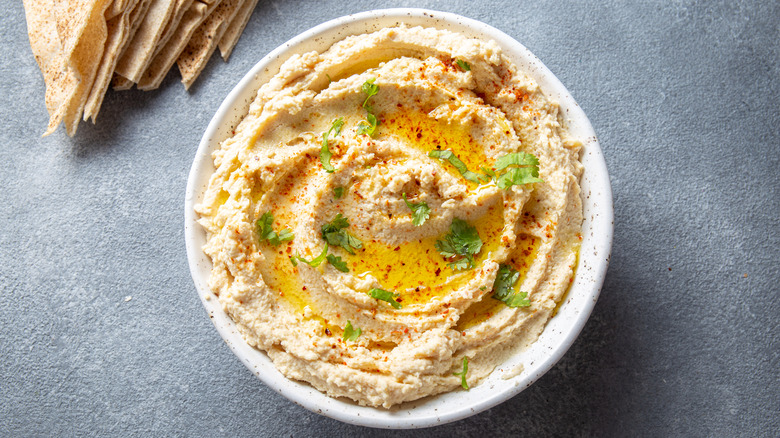
Hummus is many things — from nutty to smooth to rich — but there's one thing it should never be: bitter. And if your homemade version is, we think we may know the culprit. To better understand why bitterness occurs and how to prevent such a fate, we spoke with cooking content creator Ahmad Alzahabi (@thegoldenbalance) and Ayesha Nurdjaja, executive chef at Shuka, at the New York City Wine and Food Festival.
According to Alzahabi, adding olive oil directly into your recipe is one of the biggest mistakes home cooks make with their homemade hummus. "When you add the olive oil inside, it does alter the flavor just a little bit," often resulting in what he refers to as a "non-desired flavor profile." That bitter taste can develop for a few reasons. For starters, the olive oil can react poorly with lemon juice as the combination of the two may "cause the mixture to separate." Nurdjaja agrees, noting that "a little too much lemon juice" can be a factor in pushing hummus into bitter territory.
Olive oil can also turn bitter if your food processing blades get too hot. When it comes to making hummus at home, temperature plays a larger role than most of us may realize. Alzahabi is adamant that both your ingredients and equipment must stay cold throughout the process. His go-to trick? Add an ice cube or a little cold water to keep things relatively cool while running. Even the chickpeas themselves should be cold, as Alzahabi shares that you'll "want to get them cold in the freezer" before you "throw them into the food processor" in order to achieve the proper texture.
Do this with your olive oil instead
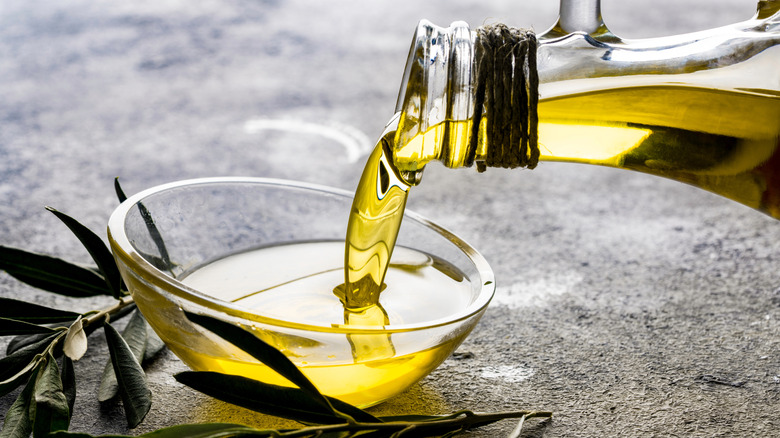
Just because your olive oil may not belong inside your hummus doesn't mean you should leave it out entirely. It's critical to wait until the very end to add olive oil to your hummus. "I personally think olive oil is a topping on top of hummus," Alzahabi says. While adding it to the recipe itself risks losing the "pure chickpea flavor" you want in a great hummus (and even introducing bitterness), utilizing it as a topping "adds an element of fat and nuttiness to the dish" that will improve both the taste and texture.
But you also won't want to use just any old olive oil. Alzahabi mentions that it's important to choose one that can "stand for itself." So, where can you get high-quality olive oil? Alzahabi recommends sourcing the ingredient from Palestine. "That region is known to have some of the best olive trees in the world, resulting in a deep green color in the olive oil." If you're looking for a specific brand recommendation, we're big fans of California Olive Ranch's Extra Virgin Olive Oil (and even named it one of the best olive oil brands).