

What Does Chive Blossom Vinegar Really Taste Like?
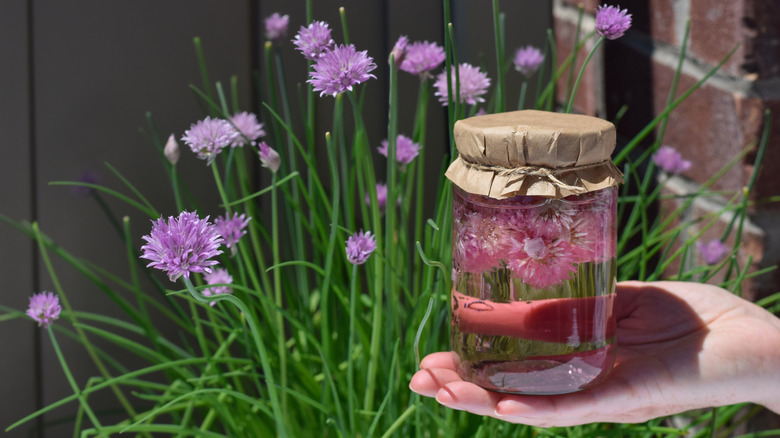
Preconceptions about vinegar abound, and rightfully so. Vinegars carry a very distinct food persona, most notably a tart intensity that transforms just about any dish. However, that sassy, bright, acidic liquid can be much more nuanced, bringing an astounding range of flavors from fruity to tangy, sweet to sour, and even vegetal undertones. As such, some vinegars defy generalization, including a lesser-known little lovely called chive blossom vinegar. The taste is hard to imagine but well worth experiencing.
The garden-like aura of chive blossom vinegar derives from a crucial part of its name: a blossom. It's a delicate purplish-pink flower that blossoms from the common chive species, Allium schoenoprasum, known for its mild onion flavor. Chives are also described as having an understated spicy, garlicky taste with fresh vegetal savoriness — and the blossoms bring that gentle flavor, along with floral tones, to a punchy vinegar infusion like no other.
The chive blossoms also carry a subtle sweetness and faintly herbal aroma, which accentuates the flavor notes. When infused in vinegar, the acidity remains, but the onion perfume rounds it out, bringing more complexity to foods than what's typical of a plain white vinegar. And it definitely cradles a lot more visual appeal, with the brilliant star-shaped petals seeping soothing rose-blush hues into clear vinegar liquid. To enjoy the full effect, steep and store in a clear jar. You'll be removing the flowers after a two-week vinegar infusion — a mostly hands-off process that's surprisingly simple.
Making and using chive blossom vinegar
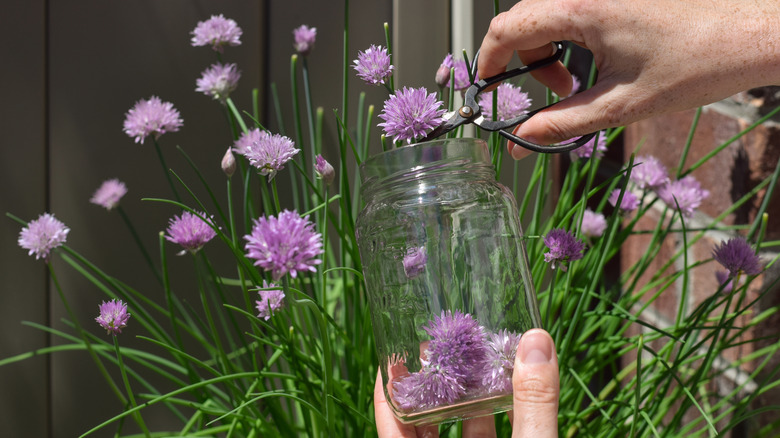
You'd be lucky indeed to find premade chive blossom vinegar, but no worries, as you can easily make that precious lavender-hued vinegar at home. The first step is getting your hands on the chive blossoms, which appear in spring or early summer, perched like a pom-pom atop each slender stalk. When in season, it's possible to find them at farmers markets or nurseries, but your best bet is to grow them in your own garden.
With flowers in hand, the actual prep time for chive blossom vinegar is only about five minutes. Remove the intact flowers from the stalk and rinse thoroughly to remove any insects burrowed in those multi-pocketed petals. Choose your preferred type of vinegar, which can be ordinary white vinegar or a more complex variety, such as rice, white wine, or champagne vinegar, or filtered apple cider vinegar. Avoid unfiltered apple cider vinegar, as the cloudy, dark liquid can mask the brilliant rosy hues and subtle flavors of chive blossoms.
Stuff a clear vessel about ⅔ full with blossoms and fill with vinegar. Then, leave the punchy potion on its own for about two weeks, resting in a dry, cool environment. For the grand finale, remove the blossoms, strain your brand-new chive blossom vinegar into a fresh, clean jar, and get ready for some fun eating. Whisk into a favorite vibrant vinaigrette recipe, drizzle over roasted veggies or salads, or create a marinade for light meats. Consider bringing that oniony tang to quick-pickled red onions or cucumbers as well.