

8 Scottish Snacks You Should Try At Least Once
Scotland is known for a few global food phenomenon, but Whisky is probably at the top of the list. The Scots have been making this beverage since the 15th century, and it is arguably their most famous export. Haggis might also spring to mind. It's a dish that tourists often feel compelled to sample, like escargot in France, but anyone who's had Scotland's national dish knows that it is less a cultural oddity than it is a delicious dish of fragrant spices that would even appeal to those without adventurous palates.
When it comes to snacks, Scotland is well-equipped. It might be outnumbered by the English in terms of famous brands, but the country has a distinct set of offerings that deserves to be appreciated on its own terms. You may not have realized it, but there are many notable foods that originated from Scotland, including porridge, marmalade, and tikka masala. But for those moments when you're peckish between meals, you don't have to resort to an English biscuit or packet of crisps; you can luxuriate in the Scottish alternatives. From tablet to butteries, here are some of the best snacks the country has to offer.
Tablet
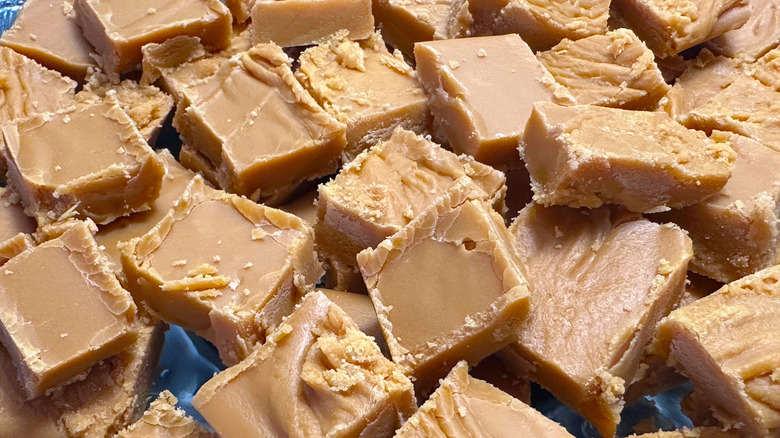
Before the iPad, there was Scottish tablet, a confection that looks like fudge but which has a grainier texture. It is deeply ingrained in Scottish culture, having appeared in print for the first time way back in the early 18th century in The Household Book of Lady Grisell Baillie. These days, you'll find it in souvenir shops in the bustling tourist areas of Edinburgh and Inverness, but it isn't just a novelty for foreigners to sample. It's a favorite confectionery for Scots of all ages and can be found in most major supermarkets, as well as at weddings, birthdays, and festive gatherings.
Tablet is easy to make at home, which has no doubt played a role in its popularity. The original printed recipe called for just two ingredients -– sugar and cream –- but these days, many recipes call for condensed milk and butter instead of cream to achieve the firm, crumbly texture that differentiates it from fudge and caramel. The most important things during the cooking process are heat and constant stirring. All the ingredients are heated gradually until the sugar dissolves, then brought to a boil. Finally, the mixture is removed from the heat and whisked vigorously before setting in a pan. Some variations are flavored with nuts, vanilla, and (of course) whisky. The results are firm but melt in your mouth — an irresistible combination for a sweet treat.
Forfar bridies
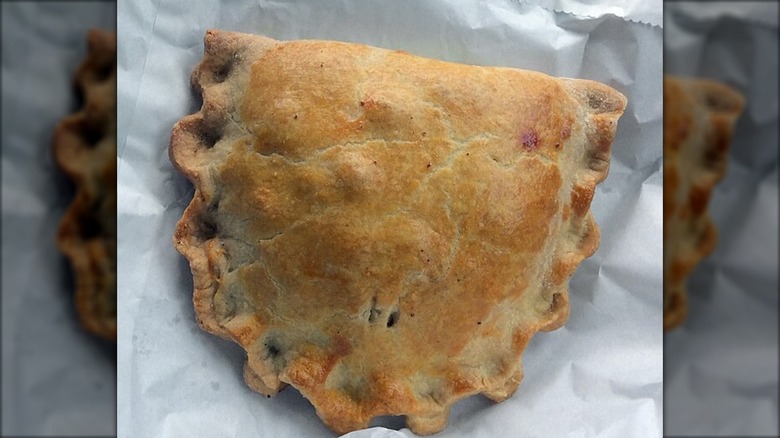
Even though Scotland is just one part of the U.K., its cuisine is highly regional. An example of this phenomenon is the Forfar bridie, a type of meat-filled pastry that is unique to Forfar, an ancient market town that sits on the East coast of the country just North of Dundee. At first glance, you might think that a bridie is just a glorified empanada or, to use a comparison closer to home, a Cornish pasty. However, bridies are specifically made with shortcrust pastry encasing a filling of beef and onions. You'll find variations on that theme around Scotland, but the truest form of this delicious snack is nothing more than those three elements.
There are two main origin stories for bridies. The first is that they were made for women on their wedding day (hence 'bridie'). The horseshoe shape of the pastries was, in this version, a token of good luck. The second, and possibly more plausible, origin story is that they were named after Maggie Bridie, a food vendor from Glamis who traveled the country with her famous pastries. Regardless of their true origin, one thing is certain: bridies are delicious and deserve at least as much renown as Cornish pasties.
Haggis bon bons
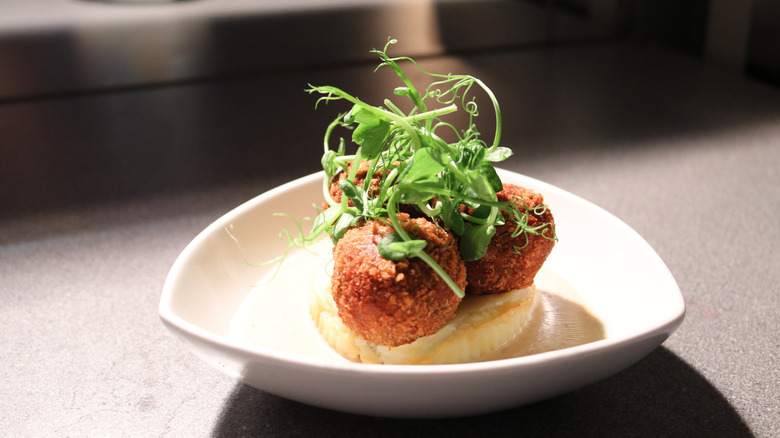
The best way to make a polarizing food universally adored is to deep fry it, and, although some of us would contend that haggis is not nearly as off-putting as its reputation would have you believe, there is no denying that fried haggis is pretty spectacular. Enter: haggis bon bons. They are made by rolling haggis into balls, coating them in beaten eggs and breadcrumbs, and deep frying them until the outsides are crispy and the insides are still soft. The results are perfect for dipping into a variety of sauces and are beloved as appetizers, snacks, and festive finger food.
Haggis is famously made with animal organs and trimmings and encased in a sheep's stomach, though the sheep's stomach has now been replaced almost entirely by artificial casing. What most descriptions of this dish miss, however, is its dominant flavor. Central to haggis's appeal is the mixture of spices, which often include everything from black pepper and nutmeg to allspice, cinnamon, cloves, and coriander.
It's for this reason that you can find vegan haggis that tastes pretty similar to the real thing. As long as the spices are there, it tastes like haggis. Haggis bon bons have all the flavor of traditional haggis but in bite-sized form. If you're serving eaters who are hesitant to eat Scotland's national dish as a main course, bon bons are the perfect entry point.
Oatcakes
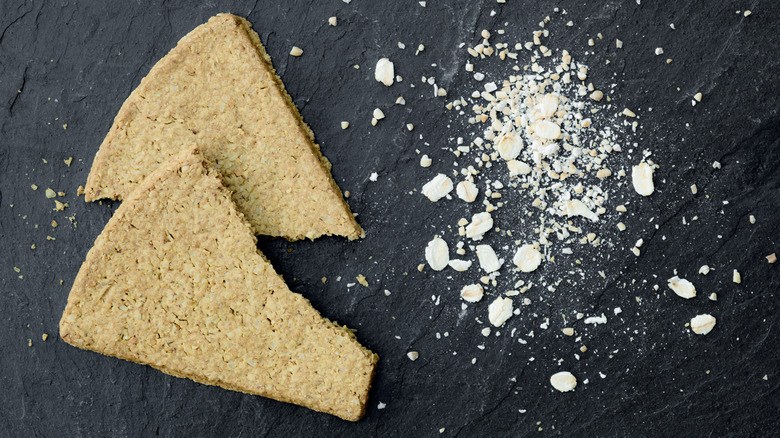
It may not be as glamorous or famous as whisky, but the humble oatcake has been a Scottish staple for far longer. Since at least Roman times, this simple flatbread made of oats has sustained Scots from all walks of life, from 14th-century soldiers to Gen Alpha kids in need of a quick snack after school. Although all brands have slight variations, most oatcakes are crumbly rather than crunchy and bend rather than snap. Despite their name, they are not sweet like most cakes. In fact, they have very little flavor unless you count "oatiness."
They are typically made with just oats, water, and fat, though you'll see recipes that include optional additions like sugar, salt, flour, and baking soda. As you'll have gathered from that ingredients list, oatcakes are extremely affordable to make, and, without the need for yeast, they are also a quick and easy alternative to bread. If you order a cheese board for the dessert course at a Scottish restaurant, it will invariably come with oatcakes, and you'll also find plenty of options when you walk down the snack aisle.
Butteries (or rowies)
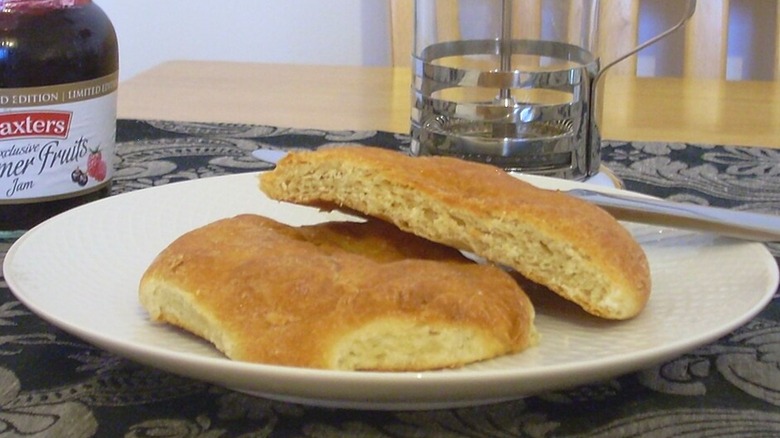
Another regional classic, butteries hail from the Northeastern county of Aberdeenshire and the city of Aberdeen (where, in an even more extreme example of hyper-regionalization, they are called rowies). Why this melt-in-your-mouth pastry has not taken the world by storm is a mystery, because it solves one of baking's most frustrating stumbling blocks. These flat, flaky squares are often compared to croissants, but they don't require the same level of pastry knowledge and painstaking work that their French cousins do. Sure, it takes several hours of resting and folding the dough to get them just right, but their flat structure and crunchy base are not the result of hour upon hour (plus a handful more) that a standard croissant recipe calls for.
Legend has it that butteries were invented to keep sailors fueled on long voyages, and it's easy to see why. To put it mildly, these bad boys are well-endowed in the calorie department, packed with butter, butter, and more butter. Incidentally, if you find a recipe calling for lard or oil instead of butter, run in the opposite direction. A buttery isn't a buttery without butter.
Scotch pie
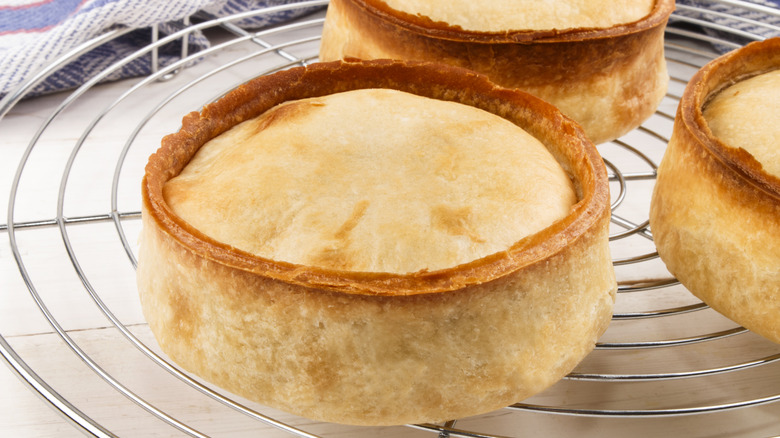
Those familiar with U.K. cuisine will know that in this country, pies are almost always savory. Scotch pies are no different, and luckily for those who have struggled in the past with pastry (who hasn't?), they're easier to make thanks to the sturdy, hot water crust. They're traditionally made with minced mutton, and by traditionally, we mean for approximately 500 years, because that's how long this recipe has been kicking around in Scotland. These days, beef is also a popular option.
The specifications for Scotch pies food are surprisingly particular. In The Meat Pie and Sausage Roll Regulations of 1967, they are described as being "a meat pie composed of a shallow cylindrical pastry case not exceeding 5 inches in diameter." It goes on to specify that the pies are made with minced mutton, beef, or a combination of the two, and that they also contain cereal, water, salt, and seasonings.
That said, there is a variation on this dish that goes well outside these strict boundaries. Macaroni pie is a Scottish classic, bearing all the hallmarks of a standard Scotch pie but containing macaroni and cheese rather than meat. If you are still in any doubt as to the merits of the humble Scotch pie, we will leave you with this. They are so delicious that, in the Middle Ages, they were banned by the Church of Scotland for being too decadent. If that isn't a compliment, we don't know what is.
Tunnock's teacakes and caramel wafers
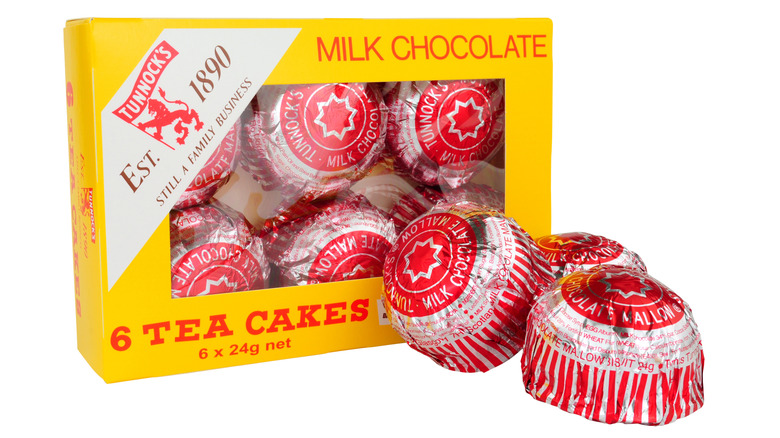
Although many of the most popular U.K. snack brands are based in England (including Walker's crisps, Cadbury, and even the Scottish-sounding biscuit makers McVitie's), there is one that is proudly, even stridently, Scottish. Tunnock's was founded in Uddingston, just a stone's throw from Glasgow, in 1890. It was originally a family-owned bakery, but in the 1950s, it began to produce its own products. Caramel wafers were first, followed by the now-famous teacakes a few years later.
If you don't know what a teacake is, you're not alone. They vary so greatly that they could be anything from a mildly sweet bun to Tunnock's teacakes, which are comprised of a biscuit base covered in a thick cloud of marshmallow and coated in milk chocolate. The caramel wafers are equally decadent, consisting of alternating layers of wafer and caramel covered in milk chocolate. Part of the appeal of Tunnock's is its steadfastly retro branding. Its products are packaged in bright red stripes, harkening back to their 1950s roots. The teacakes are even packaged in striped foil rather than plastic. There might be a dizzying number of options for chocolate-covered biscuits out there, for Scots, Tunnock's is cozy, familiar, and downright patriotic.
Walker's shortbread
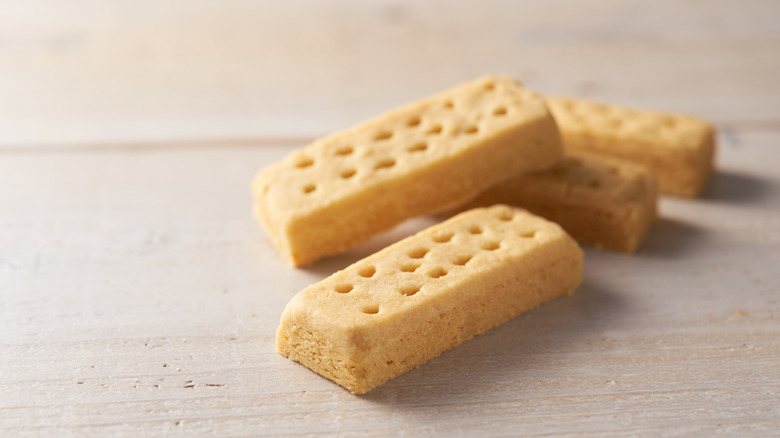
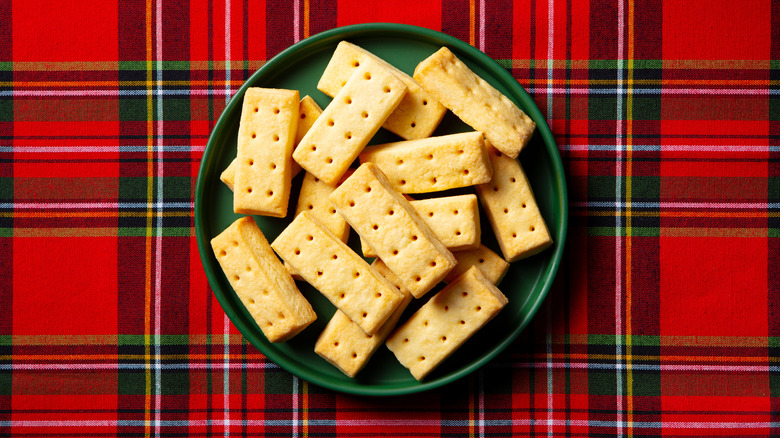
Along with whisky, shortbread might be Scotland's most famous export. What's not to love about this utterly buttery biscuit? They date back to the 12th century when they were made by sweetening and twice-baking leftover bread dough. Over time, they evolved into their own from-scratch recipe rather than as a gussied-up by-product of another food. Yeast was replaced with butter, and the recipe of butter, flour, sugar, and salt that we know today was established by the chefs for Mary, Queen of Scots in the 16th century, who drew upon French baking techniques.
Of all the countless Scottish shortbread brands on the market, the most famous inside and outside the country is Walker's. Established in 1898 in the Speyside town of Aberlour, just East of Inverness, Walker's now sells its products all over the world in its distinctive tartan packaging. Its signature creation, traditional Scottish shortbread, is made with just four ingredients –- flour, butter, salt, and sugar. If you aren't planning to make your own, it's the next best thing and thoroughly Scottish.