

The Yemeni Sauce That Will Take Rice And Beans From Bland To Bold

Rice and beans is a meatless, nutritious meal for simple dining across the globe. But let's be honest: On its own, the pantry-staple combo can get boring pretty quickly. Fortunately, there are plenty of ways to ensure that doesn't happen. We've got a list of 14 ingredients for leveling up rice and beans, compiled by plant-based chef and recipe developer Caroline DiNicola — one of which may forever change your perception of spicy food. It's a Yemeni hot sauce called schug, also known as zhug or zhoug.
Schug stands out as a feisty, herb-packed, green sauce that marched across the Middle East, then spread into worldwide kitchens on its own merit, with little or no marketing required. The ingredients rest on their own laurels, with slight variations per recipe, but most containing, at minimum, hot green chiles, cilantro, garlic, and warm spices blended into a fragrant soft paste. As DiNicola explains, there's room for experimentation, but those spices typically include cumin, black pepper, caraway seeds, coriander, and cardamom, which "leave a deep and rounded flavor lingering on the tongue."
Of course, those green hot peppers, often jalapeños, hold a powerful presence in schug. In our Tasting Table recipe for schug, adapted from chef Michael Solomonov, the heat comes from serrano peppers — exactly 20 of them to heat up your palate. They're tempered by the typical aromatic spices, along with garlic, salt, lemon juice, and vegetable oil. It's all blended together with either a food processor or traditional mortar and pestle.
What schug brings to the flavor party
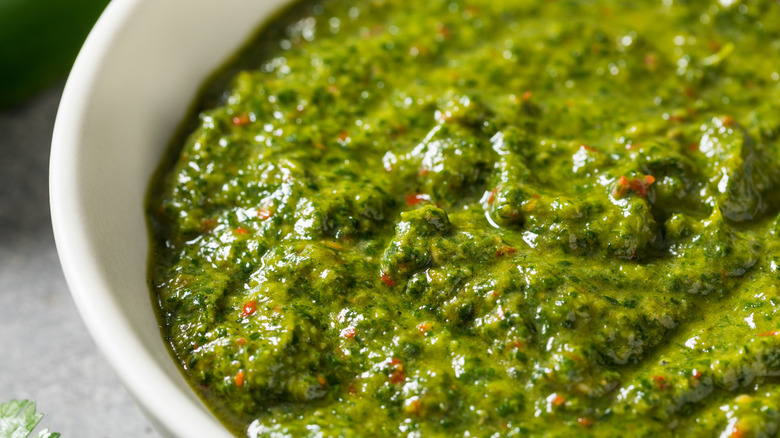
Origin stories for sauces can get hazy, but it's generally accepted that schug has deep roots in Yemen, migrating to Israel via Yemeni Jews in the mid-1900s. As such, it holds a solid spot in falafel stands and kebab shops wherever they appear. Schug is almost impossible to ignore, as it transforms anything it touches — especially something as simple as rice and beans.
While the rice-and-beans combo is well-loved for its mild nutty flavor and high protein, it does need some brightening up. That's something schug easily brings to the starchy party because "it's bold, with a range of flavors hitting almost every category," according to DiNicola. That includes the acidity of fresh lemons; earthiness of fresh herbs; a layer of complexity from the cumin, coriander, and cardamom; and the tingle of capsaicin from the peppers.
Once you snag a jar of schug, or make your own, it's likely to slide into all kinds of meals. Try drizzling it over a bowl of chickpeas and rice, perk up standard hummus or yogurt, or spoon into breakfast egg dishes. It pairs excellently with grilled vegetables or fish, as well meats, including this recipe for grilled Cornish game hen with z'houg. Look for the sauce in Middle Eastern shops, find the spice mixture in grocery spice sections, or order online. If all this talk of spicy sauces has you craving more, check out our list of 15 international hot sauces and what makes them unique.