

A Tillamook Chef Says These Cheeses Aren't The Best Choice When Making Mac And Cheese
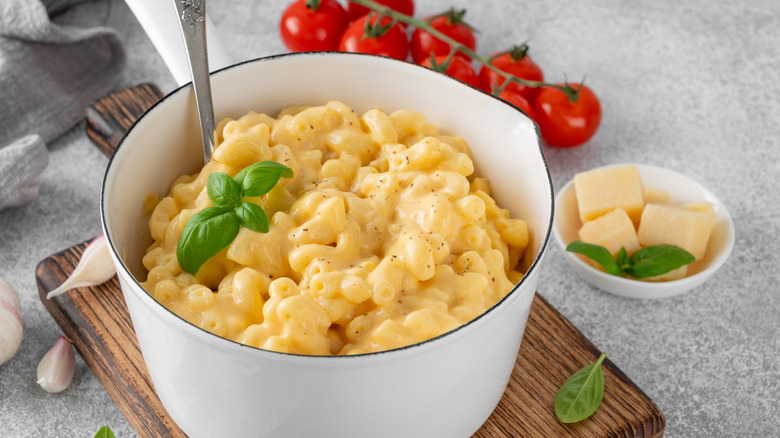
Mac and cheese is usually a pretty foolproof dish, but there are a few ways to make things go wrong. You could overcook the noodles, add too much liquid, or burn everything, of course, but there's something else you need to look out for: using the wrong cheese. We asked Josh Archibald, the Executive Chef of Culinary Development at Tillamook County Creamery Association, for his expert advice on making the best mac and cheese possible. Archibald says that while any cheeses can work, there are some you should veer away from if you want the best results.
"The biggest thing to keep in mind is moisture content and meltability," he explains. "Cheeses that have been aged for a year or more, like extra-aged cheddar, Parmesan, or other hard grating cheeses, tend to have lower moisture and higher salt, which means they don't fully melt into that smooth, creamy sauce you're looking for." Rather than becoming the creamy mac and cheese that you desire, it can become clumpy or grainy in the high heat.
While you don't need to completely avoid cheeses like Parmesan if they're your favorites, it's better to think of them more as finishing cheeses rather than the main course, according to Archibald. "I fold some in at the end for added depth of flavor or sprinkle it on top before baking to create a browned, crispy, nutty crust," the chef explains. "They're fantastic for flavor, just not ideal as the primary 'melter' in the sauce." Instead, turn to some other cheeses for a meltier pull.
What cheese to use for mac and cheese
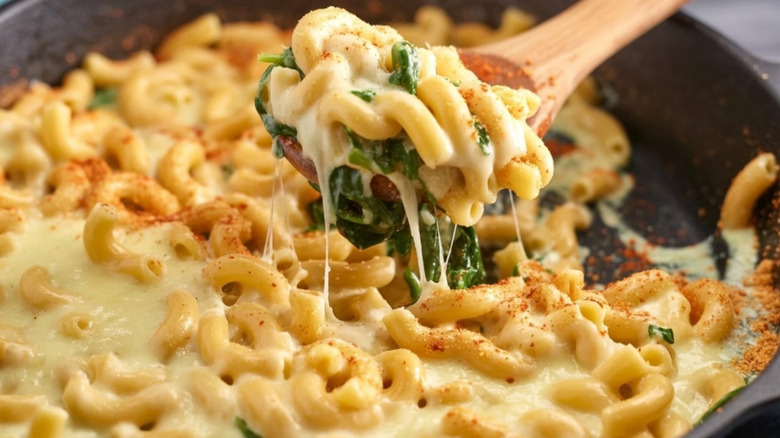
When selecting a base for restaurant-worthy mac and cheese, try to aim for softer, more processed options that can be easily cut or pulled apart, like cheddar, American, or gruyere. You want something that doesn't have an overpowering flavor, and if you're especially worried about separation, look for sodium citrate in the ingredients list. If you're feeling overwhelmed, just stick with cheddar. "Cheddar is the iconic and classic choice most of us crave; it delivers that perfect balance of stretch, gooey melt, and bold flavor," Archibald reveals. "If you're looking for even more melt and a lower melting point, our whole milk mozzarella slices or Monterey and Colby Jack slices are great options."
Additionally, you can also mix and match to create more flavor. A spicy Colby Jack will add some heat to a softer flavor like mozzarella, while a smoked gouda will amp up a cheddar. Chef Archibald likes to use sharp yellow and medium white cheddar together, especially for a creamier mac and cheese. "The blend delivers bold cheddar flavor while still melting smoothly, and we finish with [a] cheddar jack blend for an extra layer of richness," he notes. "If you're aiming for more of a dramatic yardstick cheese pull, go with whole milk mozzarella or our lineup of jack cheeses." Archibald explains that the "lower melting points and elastic textures are perfect for achieving those long, photo-worthy stretches," and will enhance your mac and cheese more than any aged cheeses ever could.