

The Dishwasher Step That Makes Cloudy Glassware Look Like New

We may receive a commission on purchases made from links.
When you run your glassware through the dishwasher and pieces still come out cloudy or foggy, it could be because your home has hard water. Over time, hard water deposits can build up on the glassware. You can wipe these deposits off with a dry, soft cloth, but repeated exposure to the high temperatures of your dishwasher and the chemicals in the detergent can cause permanent glassware etching and damage.
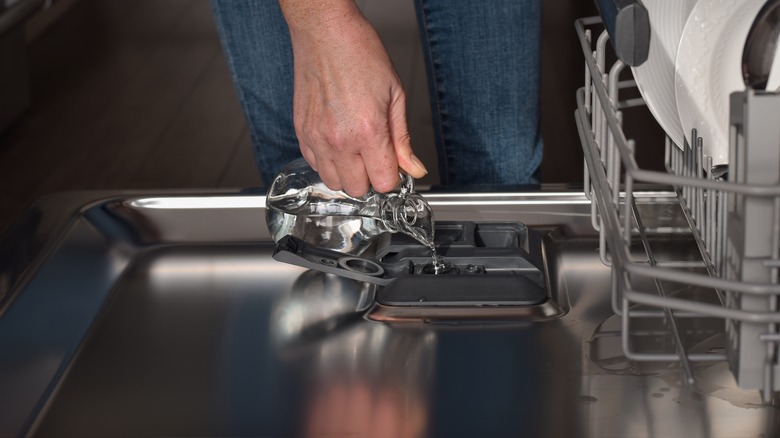
If you're having trouble restoring cloudy glassware, using vinegar in your dishwasher can make wine glasses and drinking glasses look like new once again. Distilled white vinegar is a powerhouse cleaning agent. It can be used to eliminate odors and kill germs, clean your dishwasher filter, and restore cloudy glasses.
Simply fill an eight-ounce, dishwasher-safe cup or mug with cleaning vinegar. Place it right-side-up in the top rack of your dishwasher. Load your dishwasher and add your dishwasher detergent and rinse aid as normal. Then run the appliance through a normal cycle and let it complete its full drying cycle before opening. When you unload the dishwasher, you should see clean, clear, and sparkling glassware.
Just take care when using vinegar in your dishwasher. Read your appliance manual before adding vinegar to your dishwasher, and only use it once or twice per year. White distilled vinegar has a pH of 2-3 so it can damage certain dishwasher components like the gaskets and hoses after prolonged exposure.
Preventing cloudy glassware
The best way to protect your dishes and dishwasher is to prevent cloudiness before it happens. The most common reasons glassware becomes cloudy are exposure to extremely high heat, using too much dishwasher detergent, not using rinse aid, and forgetting to clean your dishwasher filter.
Cleaning the filter is a dishwasher maintenance task you might be overlooking. If it looks dirty or clogged or has a foul odor, it's time to clean it. If you can take apart the fine mesh screen and plastic components, it will help you get into the crevices and remove all traces of food, debris, and bacteria. Start by washing the filter in warm water with mild dish soap. Use a soft brush or toothbrush to gently scrub at the screen and plastic parts. If it is particularly dirty or smells funky, let it soak for 30 minutes in a bowl of warm water and baking soda. Then rinse it and replace it. You should clean the filter every month to prevent clouding and soap scum.
Other ways to prevent cloudy glassware are to use a rinse agent like Finish Jet Dry and use less detergent, especially if you have soft water. If possible, set the water temperature to under 140 degrees Fahrenheit, and don't use heavy-duty or sanitizing settings. Always wait for a full load before washing, as half-loads aren't as efficient and may cause soap scum buildup.