

The Tiny Seafood Delicacy Within Oysters That George Washington Couldn't Get Enough Of
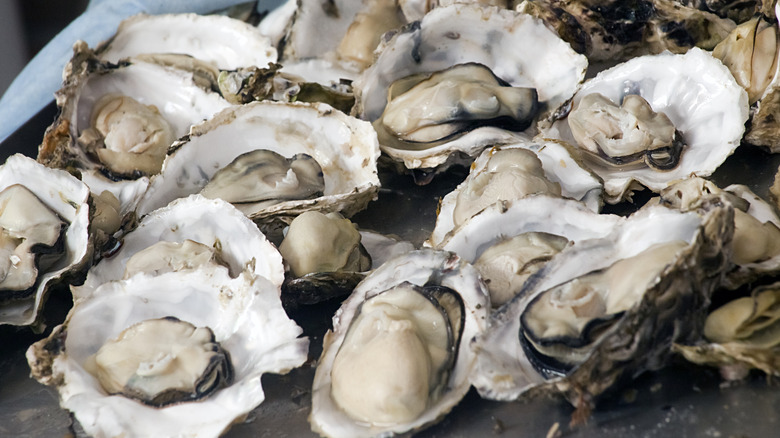
Did George Washington really enjoy munching on pea crabs, the diminutive, soft-bodied kleptoparasitic crustaceans that live rent-free inside oysters? There's something strangely appealing about this lore, especially when you remember he supposedly had a mouth full of wooden false teeth. He purportedly enjoyed them in his oyster stew, where they probably offered some textural intrigue (giving new meaning to the idea of "oyster crackers"!), and there's a story of a hostess who went to great lengths to harvest enough to measure a serving of the dime-sized animals for his dinner. As with many myths about the founding fathers and their supposed culinary preferences, the rumor has legs, but the truth is as murky, and slippery, as the brackish water from whence the miniature crabs come. While there aren't any reliable primary sources that prove his proclivities, the creature at the center of the tale is definitely real, and worth examining.
Sometimes called the "redneck's toothpick," pea crabs are tender eating, with the mild meatiness of a miniature soft-shell crab. Early American diners treated them like deep-sea treasure, with a 1907 New York Times article on the creatures describing them vividly, almost lovingly, as, "one of the sweetest and quaintest viands known to man ... with all the sweetness and delicate salt savors of the entire crab family concentrated in its tiny body," and offered preparations such as crabs sautéed in butter and wine, or "fried in much the same manner as one would fry whitebait", or perhaps a mound of them served under pink-tinted mayonnaise on bibs of lettuce. Cookbooks of the era went even further, calling for the tedious acquisition of dozens of pea crabs in a single dish, molded with cream, truffle, chicken and more crab into ornately sculptural Edwardian centerpieces.
Waiter, there's a crab in my shellfish
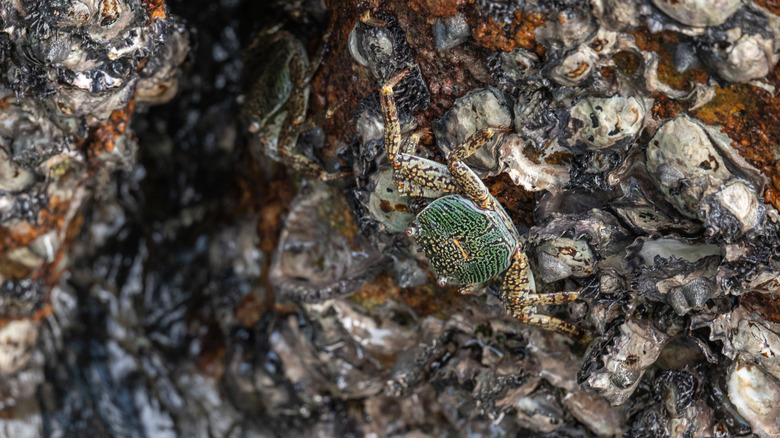
Pea crabs aren't random squatters, but long-term tenants whose leases begin in the larval stage. Females enter an oyster, or a mussel, as babies and stay tucked among the gills for life, eating whatever plankton the oyster filters in. Males roam freely through the water, and so do develop harder shells. Because of this, diners most often meet the soft, translucent females, the ones prized in older recipes and still beloved by a handful of coastal cooks. Their delicate structure is due to the oyster's sanctuary; no need to brace against waves or predators with tough outer armor.
The crabs are categorized as parasites, but there isn't strong evidence that they harm their hosts, and actually may indicate a healthy, biodiverse ecosystem. Some even argue that the two organisms share a symbiotic relationship, with the bivalves providing protection while the crabs keep other parasites and sundry flotsam at bay. A single oyster can host multiple she-crabs, which honestly sounds like a happy little household, where everyone is doing their part. Bivalves pull water through their gills to both respire and feed, filtering and retaining plankton as it passes through; when the water is healthy and rich with enough even tinier animals, there's usually plenty of food for the oyster and the tiny freeloaders tucked into its folds.
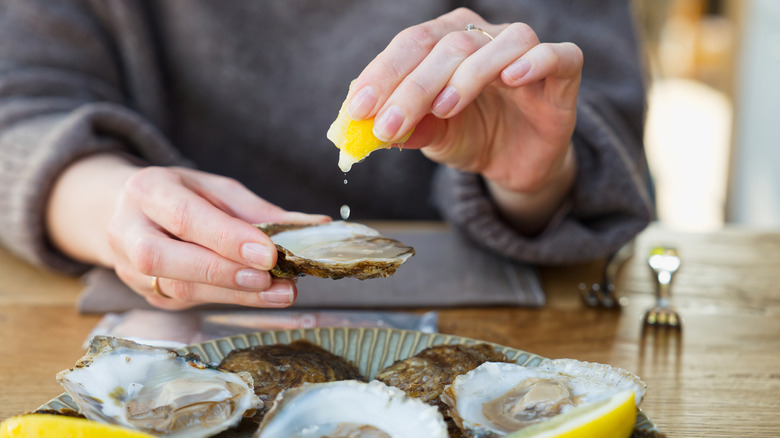
Professional shuckers will usually remove them because customers panic at the sight, even though anyone who eats raw oysters is already participating in a food chain with many ... moving parts, lack of a complex central nervous system or no. Chefs often describe the crabs as delicious, but modern diners encounter them so rarely that unless they shuck oysters at home, the tradition has mostly faded from view.
Food myths accumulate around charismatic animals
It can help to contextualize pea crabs along with other soft-bodied seafood traditions, because many cultures enjoy foods that arrive alive or nearly so. There's the "dancing" icefish in Japan, the warm, embryonic eggs in the Philippines, or the squirmy tentacles of Korean sannakji. A stray pea crab is cute by comparison. Cooked, it's just a sweet little morsel. Raw, it tastes like the concentrated essence of the sea itself. None of this makes it required eating, and if you do find a pea crab in an oyster, just eat it or don't. If you feel like sifting through the flaps and gills of many, many oysters, you might collect enough to make a dish, maybe a good soft-shell crab recipe.
We might want oysters to behave like sealed objects, as if they arrived through a hermetically-sealed portal instead of an estuary. A pea crab breaks that illusion, because it's creepy-crawly evidence that our food is raised in complex currents. The ocean is a living ecosystem full of larvae, plankton, mud, filter feeders, fish poop, and the occasional ambitious opportunist (or cooperative co-habitator, depending on who you ask.) Pea crabs are just fellow residents of an underwater neighborhood, carried to the table by the same tide that brought the oyster. The psychological angle is that controversial little creatures like this amplify whatever someone already feels about oysters, the excitement, curiosity, revulsion, delight. That ambiguous volatility shapes the reaction. Someone who loves unusual or playful foods will tend to embrace the crab as a bonus, whereas someone with a more orderly sense of seafood might recoil. These little encounters just crack open the truth that taste highly subjective, built layer by layer, much like a pearl, from childhood, daredevil impulses, and textural tolerance.