

7 Sodas That Are Only Popular In The Midwest
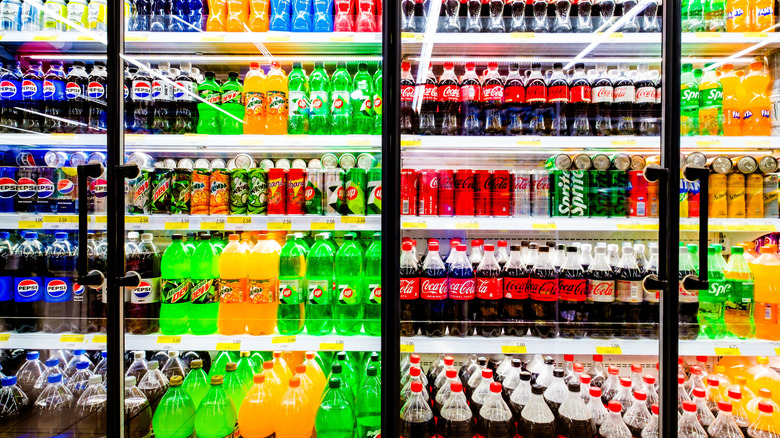
There's something pretty charming about the Midwest's relationship with soda. Maybe it's the long winters that make people reach for anything fizzy and cheerful, or perhaps it's the region's talent for taking ordinary things like cheese curds or county fairs and turning them into cultural touchstones. Soda is no exception. In the Midwest, fizzy drinks aren't just refreshments; they're tiny time capsules of community pride, quirky nostalgia, and a very particular kind of regional stubbornness that insists, "No, actually, our version is better."
While the rest of the country grabs whatever's stacked at eye level in the supermarket, Midwesterners have a soft spot for the small batch, the hyperlocal, and the slightly eccentric. There's a whole world of sodas brewed in modest facilities that look more like a well-organized garage than a massive bottling plant. These drinks are sometimes made in limited runs, passed around by word of mouth, and only found if you happen to wander into the right county gas station, or know someone whose cousin passed by the right grocers.
Part of the novelty lies in how unapologetically regional these sodas are. They don't pretend to be national celebrities. They're for the farmers markets, the state fairs, the diners with sticky menus, and the adults who vaguely remember having a bottle as a kid. The following sodas are little reminders that not everything needs to be global to be loved. And when you get your hands on one, it's all about tapping into the Midwest's knack for keeping its traditions alive.
Faygo
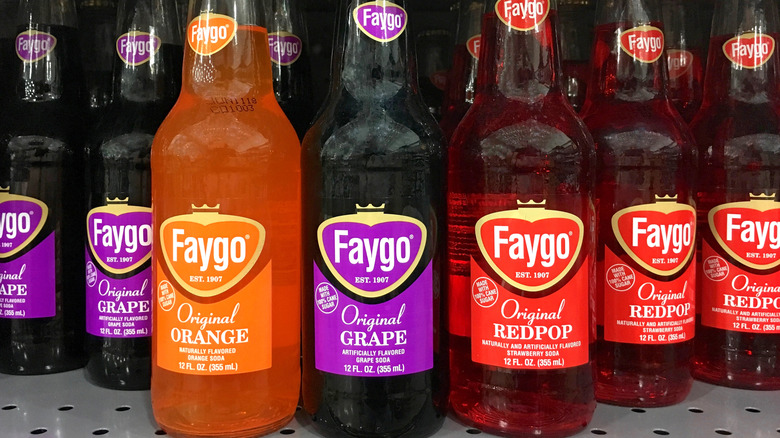
Faygo is the type of local soda story that reads like a small-town legend transplanted into a city. Two immigrant brothers experimenting with cake frosting flavors somehow parlayed that kitchen curiosity into a regional obsession. Founded in Detroit in 1907 by Ben and Perry Feigenson, the brand kept its Midwest roots even as its lineup swelled from a few simple flavors to dozens of eccentric options.
What makes Faygo feel quintessentially Midwestern isn't just geography — it's the way people talk about it. Longtime fans treat certain flavors as seasonal relics or roadside treasures, and there's a genuine subculture of collectors and flavor hunters swapping tips on where to find rarities. Reddit threads and other online communities are full of enthusiastic, slightly defensive takes ("you haven't lived until you tried X") and frequent updates about where bottles can still be tracked down outside the region.
Flavor-wise, Faygo leans into bold, nostalgic profiles. It carries everything from its classic cherry-spiked Rock & Rye soda to the candy-ish, strawberry-flavored Red Pop, and food writers and roundups regularly single out a handful of varieties as cult favorites. That eclectic menu is part of Faygo's charm. It's unapologetically specific, an atlas of Midwestern cultural quirks in liquid form. So, while it's not a national supermarket staple across the nation, Faygo's endurance comes from being locally loved, continually pursued, and reliably weird.
Towne Club Soda
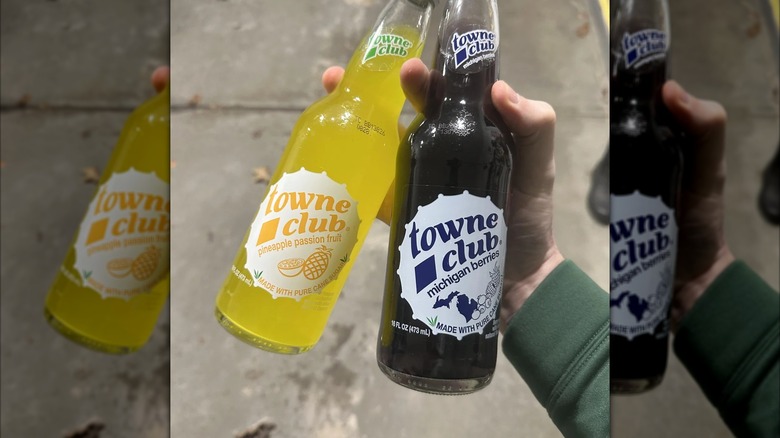
If Faygo is Detroit's sweet and nostalgic soda heart, then Towne Club is its offbeat, flavor-adventurous sibling. Born in the mid-1960s, Towne Club carved out a niche as an affordable, hyper-regional pop that leaned into variety in a way that big-name colas didn't. Originally sold through the company's own pop shops (or pop centers) — small local stores where you could take a wooden crate and literally pick and choose from dozens of flavors — it wasn't just about the drink.
Over the years, Towne Club didn't just stick to the usual suspects. Its flavor range is impressively eclectic. You'll find everything from classic cola, ginger ale, and root beer to Detroit-proud nods like "Honolulu Blue" cream soda (yes, that's a Detroit Lions color), tropical punches, and more. Online, particularly on Reddit, fans speak of this soda brand with real fondness. Some continue to reminisce about returning cases of bottles, picking mixed flavors in their wooden crates, and debating what limited-run flavor was the most nostalgic. The cherry soda gets particular love, with some saying Towne Club's Michigan Cherry, featuring actual juice, is among the top bottles for taste and quality.
While it had its ups and downs over the decades (pop center locations closed in the '80s and saw a brief resurgence in the '90s), Towne Club persevered and went from returnable glass to resealable plastic bottles under its current owner, Intrastate Distributors. All of this gives Towne Club an old-school charm, grassroots legitimacy, and longstanding ties to its community.
Green River Lime Soda
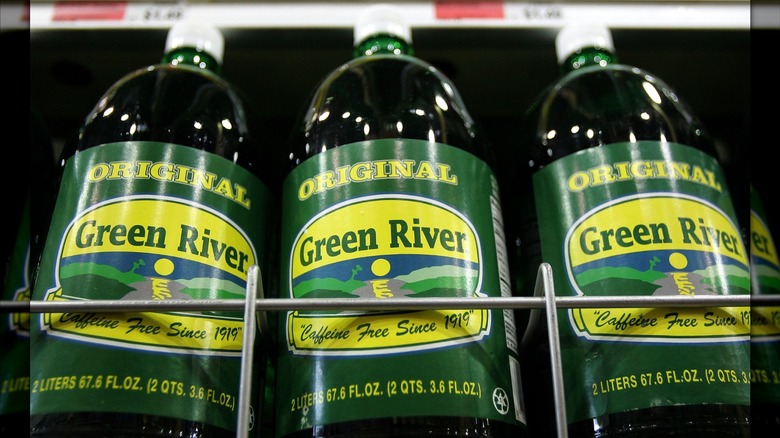
Midwestern soda has a neon mascot, and it's called Green River. This lime-flavored, bright-green soft drink traces its roots back to Davenport, Iowa, where a candy store owner named Richard C. Jones whipped it up around the year 1916 to bring in traffic for his ice cream parlor. A few years later, he sold the soda's recipe to a brewery in Chicago called Schoenhofen Edelweiss, which started bottling it just as Prohibition kicked in. What began as a clever survival tactic for a brewery became, over time, a cult-favorite soda across the Midwest.
Green River's zingy lime flavor is its trademark, but devotees will repeatedly point out that something more than straight-up citrus is in there. A whisper of vanilla or syrupy sweetness sets it apart from your standard lemon-lime pop. It's about more than flavor. Longtime fans remember cracking open a bottle after delivering newspapers, getting it at old-school diners, or seeing it in aisles on St. Patrick's Day, when its bright-green hue feels especially festive.
Despite its age, Green River has never fully disappeared. Today, it's kept alive by Sprecher Brewery, which now carries the brand. Under its watch, new (albeit seemingly limited) variants that give the classic profile a playful twist, like cherry-lime and raspberry-lime, have been released. To many Midwesterners, one sip of Green River brings back soda fountains, neon signs, and summer days that always tasted like lime.
Vernors Ginger Ale

Some sodas, like Detroit's Vernors Ginger Ale, feel as though they belong to a place. Concocted in 1866 by pharmacist James Vernor, it started as an experiment blending vanilla, ginger, and spices. The unverified origin story is that, before Vernor went off to serve in the Civil War, he'd tucked the mixture in an oak barrel; by the time he returned, the aging process had transformed it into a bold, creamy, and uniquely tangy soda. That combo of patience and experimentation helped Vernors carve its place as one of America's first major ginger ales.
What distinguishes Vernors is its unique flavor. Instead of the neutral, crisp ginger ales sold nationally, Vernors offers a sharp ginger bite while leaving a lingering warmth. For generations of Midwesterners, it's more than a soft drink — it's a memory marker. The internet is full of stories remembering Vernors as everything from being a comforting childhood treat to being a mixer for ginger ale-based classic cocktails, remedies for upset stomachs, and arguments about subtle differences in flavor depending on where it's served from (a glass bottle, can, or fountain).
But Vernors' longevity also speaks to its Detroit provenance. The brand rode out decades of shifting tastes and industrial consolidations, not to mention soda fads, and yet it has remained a regional staple — a synonym for Midwestern tradition and local pride. The opening of a bottle today is less about quenching thirst than taking a sip of Michigan history and nostalgia.
Sprecher Fire-Brewed Root Beer
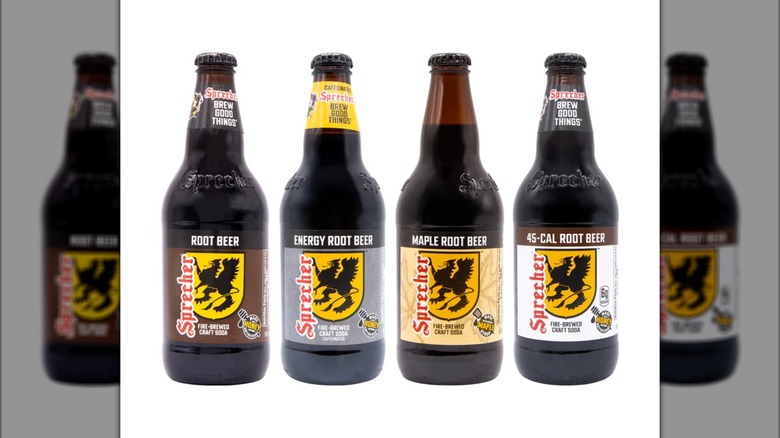
Sprecher Fire‑Brewed Root Beer is probably what you'd get if root beer could wear a sweater and crack jokes by the campfire. Born out of Milwaukee, Wisconsin, the Sprecher Brewing Company has used a rare, old-school, fire‑brewing method since its founding in 1985 by Randy Sprecher.
Rather than steaming its brew kettles, Sprecher brews its sodas over an open flame, which slowly caramelizes the sugars and intensifies the flavor into something richer. What gives Sprecher's root beer its truly distinctive character, though, is the use of real Wisconsin honey as a sweetener rather than relying solely on refined sugar or artificial sweeteners. That raw honey, combined with carefully selected ingredients like vanilla, botanicals, and other classic root beer flavorings, lends the drink a silky-smooth finish. Fans in online communities praise Sprecher for that depth. A Redditor who visited the brewery said the root beer straight from the tap tasted smokier and bolder than in bottles — details one can attribute to the flame-brew process. But not all feedback is glowing; some Reddit threads suggest newer batches don't quite match the flavor of the past, hinting at subtle shifts in recipe or perception.
Sprecher's root beer began almost as a side hustle. It was originally made so kids visiting the brewery could sample something while exploring. Over time, though, it became a breakout hit, reportedly outselling Sprecher's beer, and is now available in cans — including a 16-ounce version — to reach soda fans far beyond Milwaukee.
Blueberry Breese
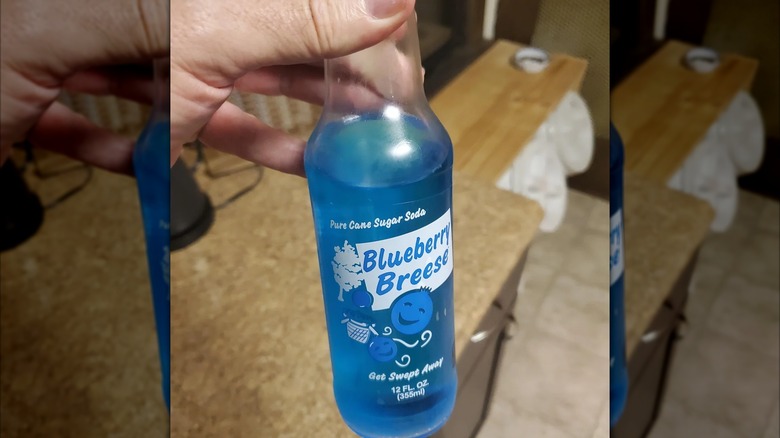
With a hometown pedigree few sodas can match, the sky‑blue, cane‑sugar-sweetened Blueberry Breese was born right in Breese, Illinois. Since 1936, Excel Bottling Company has been brewing its signature lineup in returnable glass bottles in this small Clinton County town. One of the last independent, family-owned soda bottlers in the U.S., Excel has since kept its decidedly old-school charm intact over the decades.
Blueberry Breese is part of Excel's "Taste of Breese" line, developed to deliver bright and flavorful caffeine-free sodas with a touch less sugar. Current owners say the blueberry flavor comes from real fruit extract, balanced by some citrus notes that help keep it lively rather than overly sweet.
Fans on Reddit and specialty‑soda forums rave about its electric blue color and retro minimalism. Other soda enthusiasts claim they can still find glass bottles around southern Illinois and the St. Louis area — sometimes even returning to the Excel plant to curate a selection. What makes Blueberry Breese especially appealing is its almost handmade feel. It's not churned out by a faceless corporation, but crafted in a small-town bottling house using vintage equipment. Choosing it feels like taking part in a piece of Illinois soda heritage.
1919 Root Beer
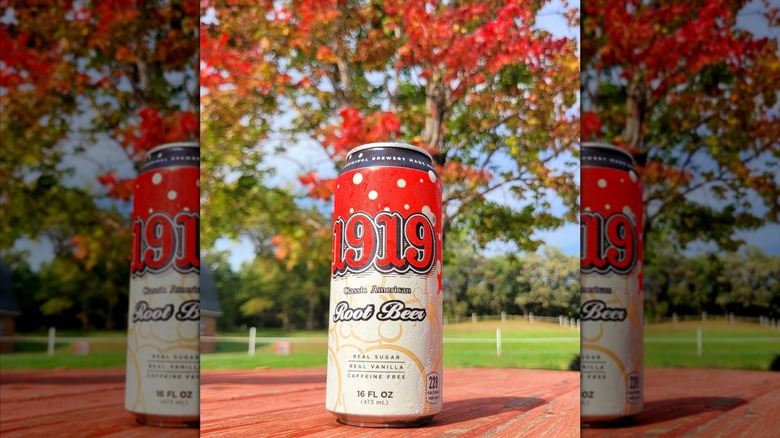
Certain sodas seem as though they should be enclosed in a time capsule. Though this soda didn't launch until decades later, the name 1919 Root Beer refers to the start of Prohibition, a period when breweries throughout the United States were legally required to shift the entire production to beverages that were alcohol-free. Made in New Ulm, Minnesota, by the family-owned New Ulm Brewing & Beverage Company in collaboration with August Schell Brewery, this soda is manufactured in small batches rather than using mass-production methods.
Of course, 1919 Root Beer's flavor is distinctive due to its use of real cane sugar and vanilla, resulting in a smooth and creamy texture. Fans online comment that it's an incredibly balanced root beer with a simple flavor profile. Others have described the taste as akin to a canned root beer float.
Distribution is usually regional, concentrated in the Upper Midwest, and largely shipped directly through beer wholesalers to preserve its quality. As it has origins in smaller-scale production and local traditions, it has not yet become a household name across the nation, but it still commands a devoted following among those who grew up with it or came across it in the area. To the folks behind 1919 Root Beer, it's less about flashy branding but more about the quiet persistence of a small Midwest soda that holds onto a flavor that feels distinctly local and quite historic.