

Avoid Using Diet Coke When Adding Soda To Your Pot Roast — You'll Thank Us Later
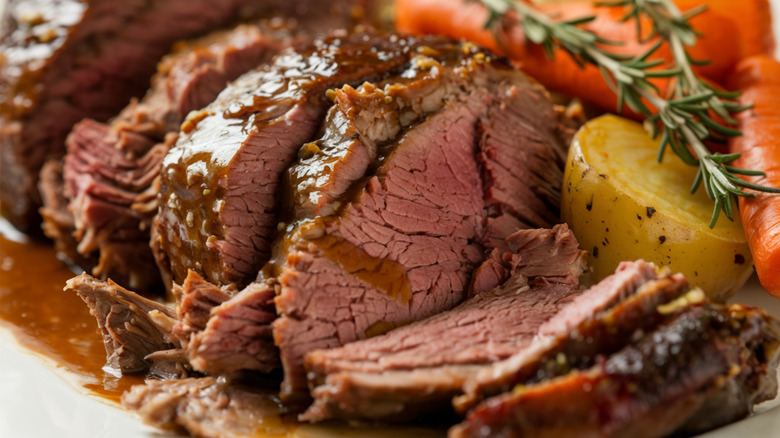
Everything is added: meat, root vegetables, and broth. That is, almost everything; it's time for the finishing touches, and you know just the trick. In a stroke of culinary genius, you reach for a can of soda, thinking your pot roast will taste better with this fizzy addition. Hold fire, though. Which type did you grab? Unfortunately, the lack of sugar in Diet Coke could be sabotaging your pot roasts. Regular Coca-Cola is always preferable.
If you haven't already heard, soda is the secret to a tasty pot roast. The trick primarily relies on the Maillard reaction, in which proteins react with sugars to create browning and enhance flavor. This caramelizes the crust and locks in tasty juices as the meat tenderizes. Since a 12-ounce Coca-Cola contains 39g of sugar, and a Diet Coke contains zero, the issue is self-explanatory.
Diet Coke might "taste sweet," but that's because of aspartame, an artificial sweetener. Aspartame doesn't withstand heat, essentially rendering the drink useless for cooking. Leave those cans of Diet in the pantry and, instead, concentrate on memorizing the ideal cuts of meat to tenderize with your favorite soda. It's got to be the only time it's advisable to choose the sugariest option, right?
How do other ingredients in soda affect your pot roast?
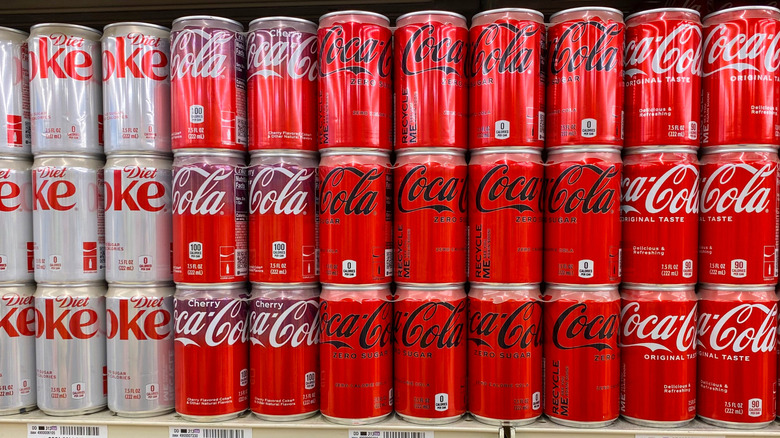
Adding sugarless soda might be one of the biggest mistakes everyone makes with pot roasts. Still, it's important not to oversimplify things. There are a few properties that soda adds to meat, hence why Diet Coke occasionally manages to achieve something, even if it's lackluster. Firstly, that sweetened flavor adds another dimension to your meal. Secondly, soda is carbonated and contains phosphoric acid, which influences your pot roast.
Looking at the ingredients is one of the best tips you need when cooking with soda; these little details matter. Carbonation kicks off the show. Dense connective tissue and muscle fibers can be tricky to penetrate and break down. The bubbles in soda come from carbon dioxide, added as carbonated water. This mildly acidic ingredient is fantastic for attacking the meat's surface, denaturing proteins, and essentially opening the door for other ingredients to perform more effectively. Phosphoric acid amplifies that overall acidity and imparts a slight tang. As the meat continues to soften, this additive also keeps bacteria at bay (coincidentally, this is why soda works so well as a meat marinade). Sugar might be the main "party trick," but that splash of Coke does more than people realize.