

The Chemical-Free Way To Clean Your Kitchen Floors Is In Your Pantry Right Now
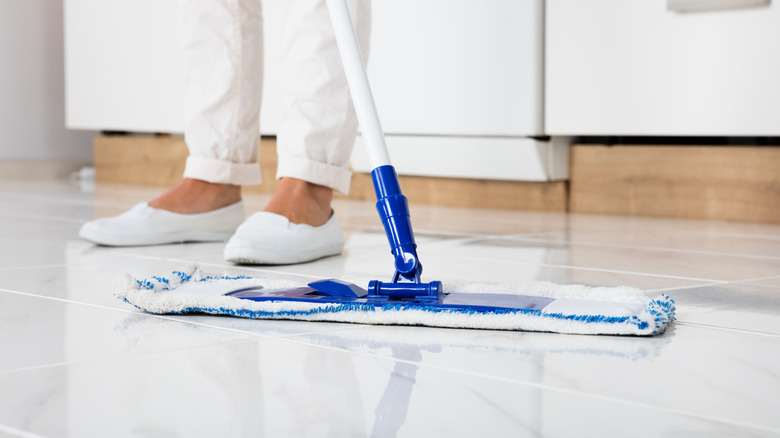
It's easy to toss store-bought cleaning agents into your grocery cart and similarly simple to use them on kitchen floors. Just spray, pour, or mix per directions, and you're on your merry way to fresh, clean floors. But is that really the case? The words "fresh" and "clean" take on new meaning when considering what's actually inside that bottle of store-bought detergent, including mysterious chemicals and words you can't pronounce. Fortunately, some simple, affordable alternatives do exist, and they're likely in your pantry already.
To explore the possibilities, Jill Koch, creator of Jill Comes Clean, shared some insights with Chowhound on making eco-friendly kitchen-floor cleaning solutions with everyday ingredients. Those chemical-free components couldn't be simpler: baking soda, vinegar, castile soap, and lemon juice. They're all non-toxic and multifunctional, ready to use mostly on their own for various purposes. Koch explains that "baking soda is mildly abrasive and great to sprinkle on floors before mopping for a little extra scrubbing power," while also helping to deodorize the area.
Castile soap is one of simplest and most useful agents for cleaning kitchen floors, requiring only water as a mop-mate. It's made from vegetable oil — often olive oil — which explains the namesake nod to renowned olive-oil soaps from Castile, Spain. When mixed with warm water, it's perfect for removing underfoot grime and germs on just about any surface, according to Koch. It is important, however, to avoid using too much water, which can warp wood or laminate surfaces.
Vinegar and baking soda, but never together
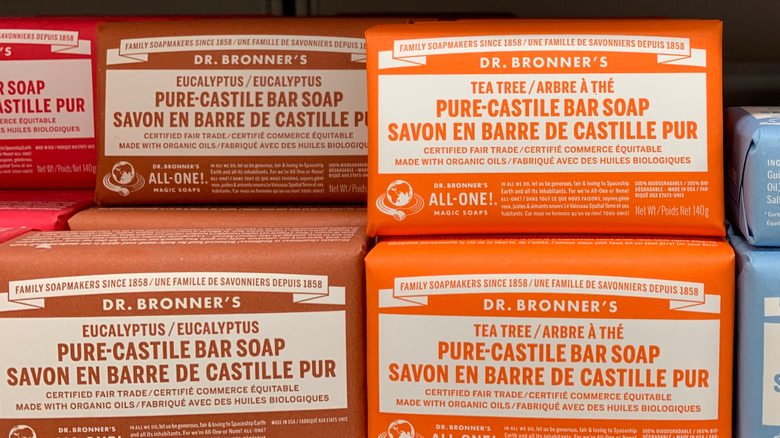
Mother Nature equips us for clean kitchen floors. In her conversation with Chowhound, Koch calls vinegar a deodorizer that can sanitize kitchen floors, noting that lemon juice works equally well — though both are more suitable to linoleum floors than ones made of wood, tile, or stone. A separate tip from our article on two ingredients for cutting kitchen floor grease is to first wash your floors with soap, and then follow up with a vinegar rinse to remove any remaining soap scum. But never mix the two, because the alkaline in soap and the acid in vinegar can neutralize each other.
Koch cautions that mixing vinegar with baking soda can be troublesome as well, explained by a similar bit of science: Baking soda is a base and vinegar is an acid, so when mixed together, they neutralize into water and carbon dioxide, then fizzle out and lose their cleaning power. It's fine to use them both separately on floors, just not combined. She also notes another dangerous duo, cautioning to "avoid peroxide and vinegar, as it can create peracetic acid, which is corrosive and irritating and can damage surfaces."
On its own, vinegar truly is a multipurpose wonder whiz. For more ideas, check out our 16 vinegar hacks for a cleaner kitchen. And consider more chemical-free options for your home, including citrus peels for fresh-smelling kitchen floors.
Static Media owns and operates Tasting Table and Chowhound.