

Gas Vs Induction: Which Stove Is More Affordable In The Long Run?
Big appliance purchases can feel as heavy as the machines themselves. When you're comparing gas and induction stoves, the financial question is crucial: What does it cost right now and what will it cost to operate over the years?
The lowest priced gas stove may be a bit cheaper (between $350-$700) on the front end, with the cheapest induction stoves starting at about $1,000. Many homes already have the gas hookup required, so installation is basically just connecting the tubing from the stove to the one that sticks out of the wall. Induction stove price ranges vary, a lot, and might call for an electrical upgrade to a 240-volt outlet (which electric stoves also require) if the kitchen doesn't already have one. That part alone can add a few hundred dollars of upfront expense.
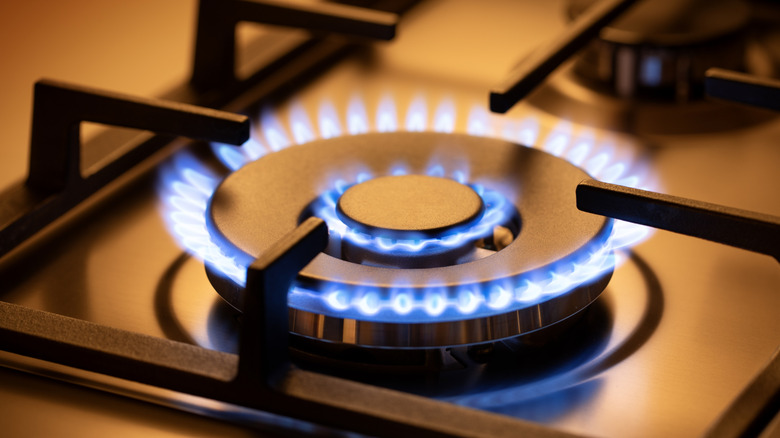
Where induction starts to pull ahead is in day-to-day efficiency. Because the heat from fire dissipates quickly with distance, gas burners lose most of their heat to the air around the pan, so they're only about 40% efficient. An induction burner routes its energy directly into the metal of the cookware through an electromagnetic field instead of heating the air around it as well, so it uses far less power. Many induction ranges boast around 85-90% efficiency. They waste less, so they cost less per use.
In some areas, electricity is the more expensive utility; in others, it's gas. If someone only cooks twice a week, they may never "pay back" induction's upfront costs. But if the stove gets used daily, the efficiency difference will show up on utility bills.
Now we're cooking with...

Culturally, gas still has a hold on people and many professional chefs wouldn't consider cooking without an open flame, with some even preferring a wood-fire. But restaurant kitchens also have ventilation systems that home kitchens don't. There's also the environmental side, which is important to consider. Gas stoves leak methane even when they're off and recent independent studies show they release nitrogen dioxide when they're on, at levels that would violate outdoor air-quality standards. That pollution impacts our health and planet, and is a factor to consider, especially when compared with induction stoves that do not emit combustion emissions at all.
Affordability becomes much clearer once you zoom in on the details of your own kitchen use. If you're someone who cooks every single day, especially long simmers, like what bone broth or chili require, induction's efficiency can pay off faster. If you're moving into a rental with an existing gas hookup and you mostly make pasta twice a week, the math is different. People renovating an older home with a perfectly functional, quirky vintage range may not want to replace it at all. And someone who lives in a region with cheap electricity will land in a very different spot than someone where electricity spikes throughout the year. Basically, figuring out the "cheapest" stove requires a nuanced stroll through a personalized pros and cons list, because it's going to be the one that fits you, specifically.