

Add This Pantry Staple To Your Beef Stew And You'll Never Turn Back
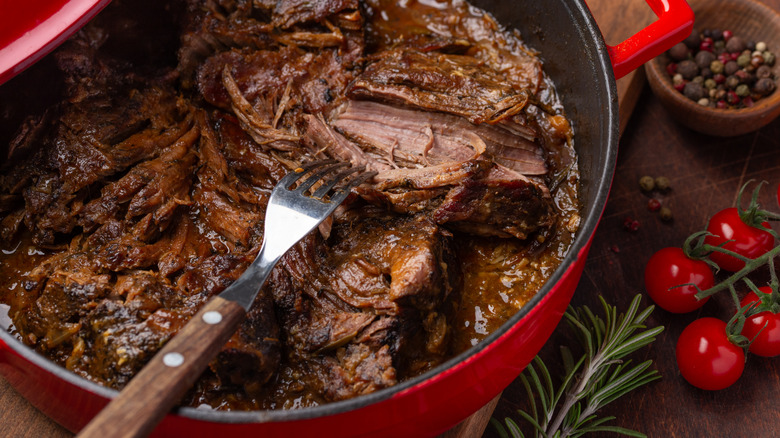
A good beef stew should taste balanced and slow, the kind of richly-developed flavor that feels layered. The trick to getting that kind of depth is something most of us keep on hand for just such an occasion: the humble tomato paste. In canned or tube-form (there is a difference), this densely-concentrated pantry staple has been doing the work for centuries in kitchens from Provence to Palermo. French daube, Italian Stracotto alla Fiorentina, and even some Irish beef stews all utilize tomato paste to round out the flavor of tough cuts and balance the fat of heavy braising liquids.
Tomato paste is concentrated tomato, reduced until nearly all its water has cooked off, leaving behind natural sugars, glutamates, and acids. When it's added to hot fat, those sugars caramelize and the glutamates bond with the browned bits on the bottom of the pan. Just a few minutes of stirring until the paste darkens from bright red to rust creates a base that's richer than stock-water alone. The acidity then balances the stew's fat, keeping it savory without being flat and greasy.
Long-braised beef absorbs those caramelized flavors slowly, with a spoonful of deeply-pigmented paste bringing a complexity of color and brightness to the whole pot. The stew tastes deeper and more satisfying because every element has been coaxed to its best version. Basically, tomato paste pulls the whole thing together.
Build the base
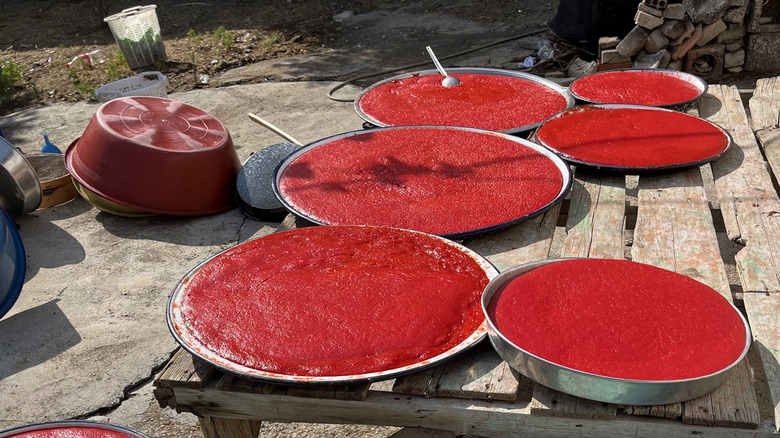
But wait, don't add it in at the end! Tomato paste should meet the pan before the broth ever does, because it needs to caramelize. But it also needs an attentive, gentle hand, because the high sugar content can cause quick scorching. After searing your beef and sweating the mirepoix or soffritto in the rendered fat, stir in a tablespoon or two-ish of paste per pound of meat. Work it through the aromatics until it turns brick-colored and starts to smell sweet and nutty. That's the magical chemistry of the Maillard reaction at work, caramelizing the sugars and changing the paste's raw acidity into round, cooked depth. Right before it starts to burn and stick, deglaze with wine or stock, carefully scraping up the browned bits from the bottom with your trusty wooden spoon.
A splash of Worcestershire or soy sauce at this stage adds another layer of umami, while a splash of vinegar can bring sharp tanginess. You might be surprised but, for the same reason they taste good with the marinara on pizza, anchovy paste or fish sauce will add a world of flavor to your stew and boost the flavor profile. They won't taste distinctly fishy, but will disappear into the sauce while deepening its savor.
Once you've built that foundation, the rest of the stew almost finishes itself. Add the seared meat back to the pot with broth, herbs, and root vegetables, and let the mixture settle into its slow simmer. By the time the stew has simmered to done, the paste is gone from sight but not from the heart of the flavor. It leaves a steadiness behind the kind that makes the sauce cling, and the meat feel fully cooked in every sense; your stew becomes more than the sum of its parts.