

Take Advantage Of A Sunny Kitchen And Grow This Medicinal Herb

Have you ever rambled through your kitchen, noticed brilliant gleaming sunlight, and wondered why you can't grow more herbs and spices at home? The good news is you certainly can, and not just the easy options like basil and oregano. One in particular may surprise you, especially as it brings both culinary and medicinal value to your home — it's the thick, knobbly ginger plant, officially known as a rhizome. Growing ginger indoors ensures steady availability throughout the seasons, while providing an earthy and spicy food source.
However, ginger isn't just for adding zest and flavor to sweet and savory dishes. It's known for a wide range of medicinal properties, including anti-inflammatory and anti-nausea effects. It also contains antioxidants and can support digestion. Putting all that at your fingertips, rain or shine, can be a game-changer in your repertoire of kitchen tricks. Ginger is surprisingly easy to grow indoors, especially in sunny locations like kitchen and dining-room windows.
When planting from scratch with healthy ginger rhizomes, choose ones with visible buds or "eyes." They would preferably be organically grown, since many supermarket versions have treated roots to prevent sprouting. Soak for a day, then pick a warm location for the initial growth period. After sprouting occurs, move the ginger to a sunnier spot. Make sure the soil has good drainage, and keep it moist but not water-logged. Fertilize it occasionally with natural components like fish emulsion or high-quality compost. Now you're just waiting to harvest the bounty.
Harvesting your healthy indoor ginger
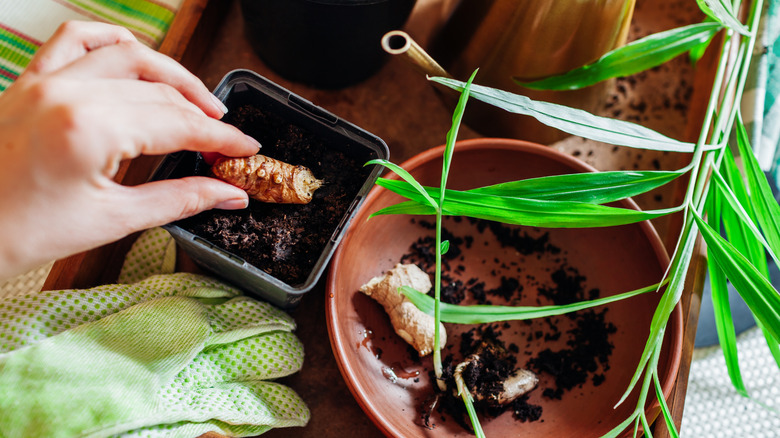
As explained Tasting Table's discussion of herbs to grow for a cozy indoor tea garden, harvesting ginger is easy. Since the ginger rhizome grows horizontally and near the surface of the soil, you can simply reach in and snip off pieces whenever you need them. There's no need to wait for an official harvesting period. If you do want the whole shebang at one time, wait until the foliage begins to yellow and die back, which often happens around 10 months after planting, give or take.
After a full harvest, gently rinse the rhizomes, then allow them to air-dry for a couple of days, if possible. They should last in the refrigerator for two to three weeks when unpeeled, but feel free to freeze them for up to six months. Some folks advocate for peeling fresh ginger before freezing, which makes it easier to use when needed. Even better, freeze large chunks, then remove and grate into smaller portions before refreezing in ice cube trays or pre-portioned containers such as Souper Cubes.
You can also put a few rhizomes aside for planting later, after you've used all your first harvest on tasty foods and health-enhancing home remedies. Place the chosen next-gen ginger rhizomes in a paper of cloth bag, and store in a cool, dry environment until it's their time to shine.
Cooking with homegrown fresh ginger
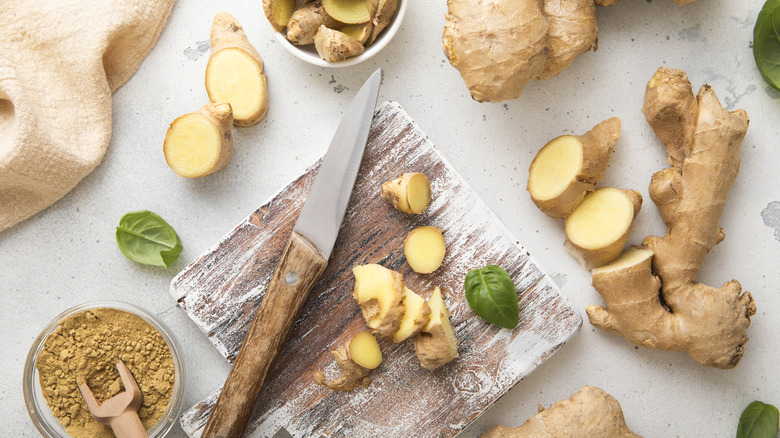
At least 12 types of culinary ginger exist, but whichever variety you're growing indoors can transform meals into flavor-blazing culinary masterpieces. Because fresh ginger is readily on hand, you'll soon be whipping it into all kinds of foods. Ginger pairs beautifully with stir-fry ingredients such as garlic, scallions, vegetables, meats, mushrooms, or tofu. It shines in cold or warm soups, including carrot-ginger or coconut-ginger soups, as well as in marinades for chicken or fish.
Rice and gingerare natural companions, elevating ordinary casseroles to extraordinary one-pot meals. Just infuse white, jasmine, or basmati rice with grated or sliced ginger while it cooks, and then add veggies and meat. Ginger glazes are excellent choices for seafood, particularly when paired with lime for coating shrimp or salmon. There's also an age-old Cantonese custom of "blooming" ginger and scallions with hot oil before drizzling them over white fish or chicken.
Many baked goods get a zingy burst from ginger, some favorites being ginger cookies and muffins. You can also stir some of your grated fresh or frozen ginger into bundt cakes, crumbles, or even cheesecakes. Then there's the pure luxury of homegrown ginger in hot tea. Slip a thin, roughly 1-inch slice of fresh ginger into hot water, let it steep, and enjoy tea like never before. Add honey, lemon, cinnamon, turmeric, or other spices if desired. For more insights and ideas, check out some Tasting Table tips for cooking with ginger.