

The Maximum Amount Of Time You Should Ever Keep Spices On A Shelf
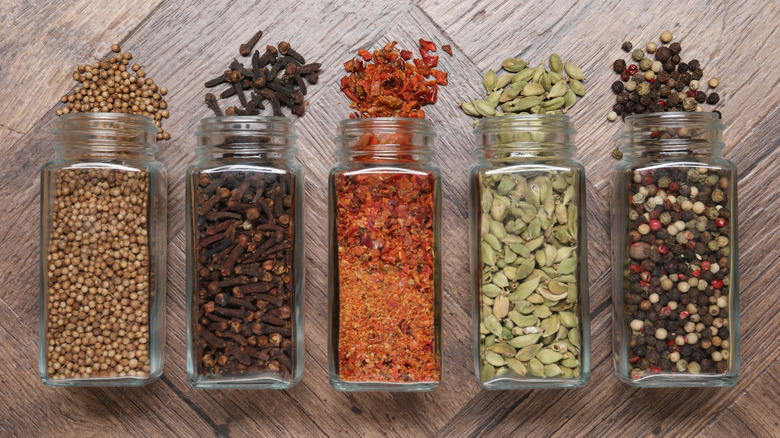
When hunger kicks in but fridge contents are low, a packed pantry can really turn things around. The right spices and seasonings can jazz up a boring bowl of rice or frozen vegetables, but only if the spices are fresh.
The joy of shelf-stable items is their longevity. Canned and jarred goods will have a stamped "Best By" date, but it means just that — best by that date, not rotten the moment that day passes. As long as there's no outside interference like water, pests, or mold, the same goes for dried spices. They don't necessarily spoil, but they certainly lose flavor and potency over time.
We spoke with McCormick Executive Chef Hadar Cohen Aviram about this, and she said it all comes down to the spice itself and how it's stored. Some whole spices, for example, can last up to four years, whereas when spices are ground, shelf life shrinks down into the two- to four-year range. Even these timelines are based on proper storage, namely, a cool, dark place. "You may see a faster decline in quality if the spices are stored in different conditions, like hot and humid," Aviram points out.
Some spices last much longer than others
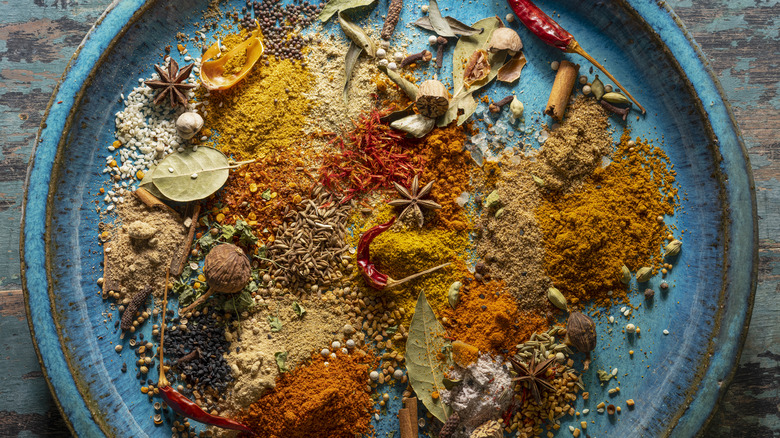
These varying expiration windows are all rooted in science. "Spices are full of volatile oils that release when ground," Aviram explains. "Which is why the lifespan of ground spices is lower than that of whole spices, which can often last an additional 1-2 years when in a sealed bottle." Leafy herbs, on the other hand, are far more delicate, making them prone to a faster decline. Jars of whole parsley, basil, and oregano will peak in flavor after one to three years.
Chef Lior Lev Sercarz, owner of New York's fabled spice atelier La Boîte, notes that even though spices don't go bad, per se, their aroma and flavor are what make them worthwhile. When we spoke with Sercarz at the 2025 New York City Wine and Food Festival, he recommended relying on your trusty senses to monitor your spices. "Keeping track of when you bought them, just using them up, smelling them, those are easy steps to follow to make sure that they're good," he shares.
Prevent a bland-tasting pantry with proper storage
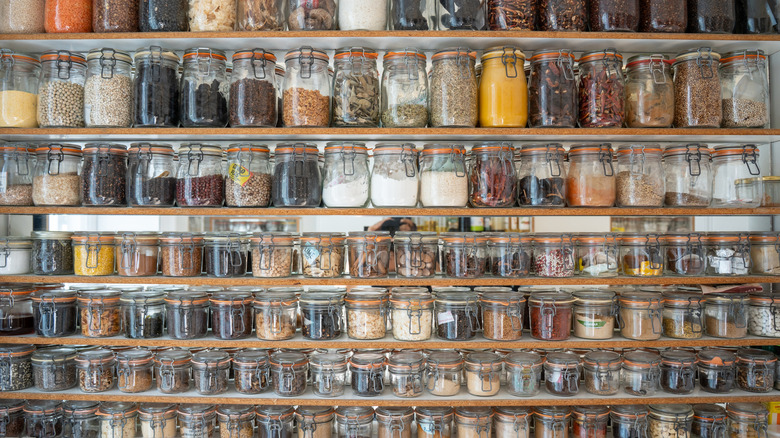
One of the biggest storage mistakes folks make in the kitchen is stockpiling spices just above the stove. While comfortably within reach when cooking, it's cutting your spices' shelf life short. "Flavor deterioration is primarily caused by light exposure, moisture, temperature, and heat," says Aviram. In addition to avoiding direct light, over the stovetop is a big no-no for any spice. "This repeated heat will lessen the longevity of both whole and ground spices," she warns.
Aviram and Sercarz are in agreement — keep your spices in clear view. Aviram goes for stacked shelves or a lazy Susan to keep her spices organized, whereas Sercarz focuses on never overcrowding his pantry. The cabinet can fill up quickly with random spices we only need for that one special recipe, so try to resist good deals and only buy what you need at a time. If you can't remember when you purchased that dusty jar of tarragon, let your nose do the work. If a spice doesn't smell like much, it won't taste like much either.