

Some Restaurants May Seem Sneaky When Using Fancy Menu Descriptions, But They Can Serve A Purpose
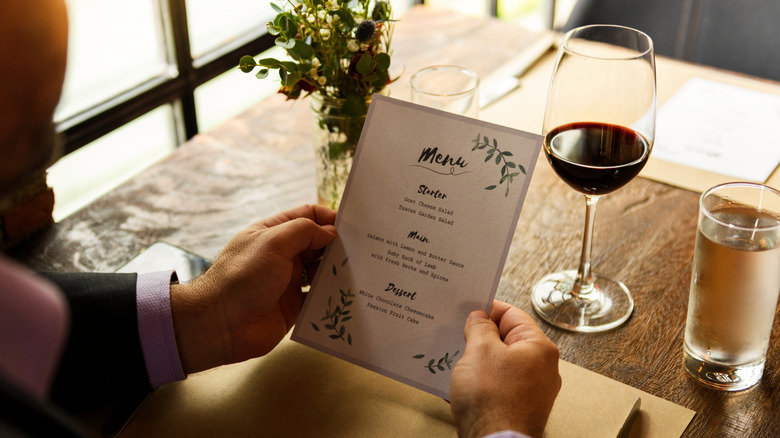
If you've ever stared at a restaurant menu, overwhelmed by a sea of flowery language describing items like seared scallops, pasture-raised rib eye, and charred organic kale in what seems like excruciating detail, we feel you. However, according to Frankie Weinberg, Restaurant Manager and Co-Owner of Good Catch Thai Urban Cuisine and Pomelo in New Orleans, menu descriptors like these actually may serve an important purpose.
Mostly, they add clarity and intrigue. "Too often, restaurants miss out on the opportunity to briefly describe some element of the process in making a dish that would have made it sound more enticing," the expert restaurateur told Tasting Table. Though it may appear to be a marketing tactic, fancy menu descriptions can help paint a better picture of the dish you'll be ordering, instead of leaving its preparation, sourcing, or other cooking aspects ambiguous. Without such detail, you're basically left choosing between what Weinberg compares to selecting "chicken or fish" on a plane. By adding seemingly fancy descriptors to menu items, restaurants are actually doing diners a favor via the gift of more detail.
"For example, a basic chicken dish would sound more appealing by describing it as 'house-roasted chicken,'" explains the restaurant manager, who also teaches Management Professor at Loyola University. He adds that highlighting the cooking process (a simple one, at that) indicates key details of the meal. Instead of wondering if what you're ordering includes outsourced, pre-cooked rotisserie chicken, you can rest assured that it was at least cooked in-house.
Other considerations to keep in mind when reading a menu
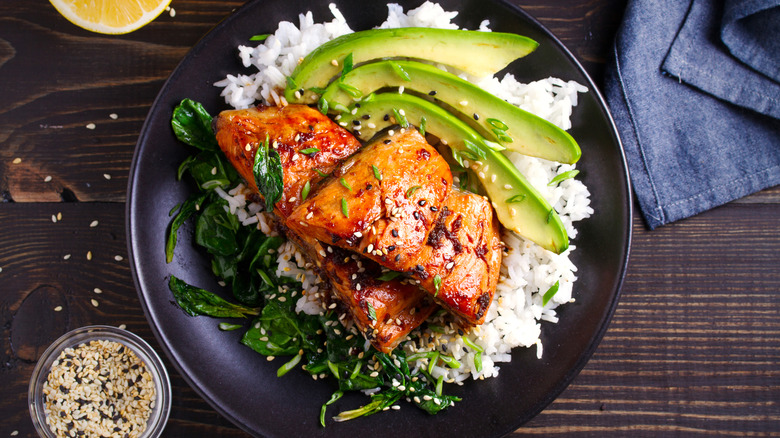
Thoughtful menu descriptors, when done right, can help you choose a dish with ease. For instance, the Spicy Salmon Tsuke described on the menu at Good Catch lists exactly what you'll get, along with tasty preparation and flavor indicators: "sashimi-grade marinated salmon, chili sauce, mint, dill, fried shallots." Menu descriptors can be especially helpful when ordering local fish at a seafood restaurant, seeking specific quality standards, or choosing creative seasonal menu options.
On the flip side, Weinberg notes that "generic labels such as 'fish' instead of labeling which type of fish it is, or offering a generic geographic label" could be possible red flags. The restaurant may be trying to keep things simple or minimalist, but in the process, it leaves you wondering what you're really ordering. Dining at a restaurant that puts a little more effort into the menu descriptions can facilitate a clearer food selection process, making the experience more enjoyable overall.
Menu verbiage can also help you identify shady restaurant practices like mislabeling or misleading descriptions. If a restaurant menu uses a lot of buzz words or fancy language that doesn't match its aesthetic or value offerings, it may be cause for suspicion. A restaurant trying to sell a basic Caesar salad as "artisanal" when it clearly comes with standard greens and a side of basic bottled-type dressing is definitely a bit sneaky. But overall, menu descriptions should be purposeful, not superfluous.