

Cook Roast Beef The Same Way As Rotisserie Chicken And You'll Never Go Back
We may receive a commission on purchases made from links.
Roast beef is an iconic centerpiece of a festive dinner table, a treat reserved for a special occasion and the ultimate dish for a U.K.-style Sunday roast dinner. It's also one of those things that seems so simple to make, yet can be tricky to get just right. There are some key mistakes that people make when cooking roast beef — from underseasoning to overcooking and choosing the wrong cut of meat — that might deter cooks for fear of runining an expensive cut of meat. But if you're feeling bold and want to try a cooking method that will take your roast beef to the next level, a rotisserie is the way to go.
Whether you have a standalone rotisserie oven (like this multi-purpose oven with rotisserie function), an attachment for your grill (such as this basic electric rotisserie attachment model for gas grills), or even a spit attachment for your oven (like this ingenious self-rotating oven gadget), slow roasting a nice cut of beef will guarantee it cooks evenly on all sides, remaining juicy on the inside and developing a lovely seasoned crust on the outside.
First, pick the best cut of beef for the job, one that is symetrical and cylindrical in shape and has a good amount of marbling. The shape will make it easy to thread into the spit and cook evenly, and the marbling — the streaks of fat within the meat — will melt as the beef cooks, keeping it moist and flavourful. Basically, the fat allows the meat to self-baste as it slowly rotates. A cut that fits the bill is beef rump, which will stay juicy and tender as it slowly cooks, but similar cuts like ribeye, sirloin, and rump cap, known as picanha in Brazilian rodizio (which literally means rotation) steakhouses, will do marvelously as well.
How to cook rotisserie roast beef for best results
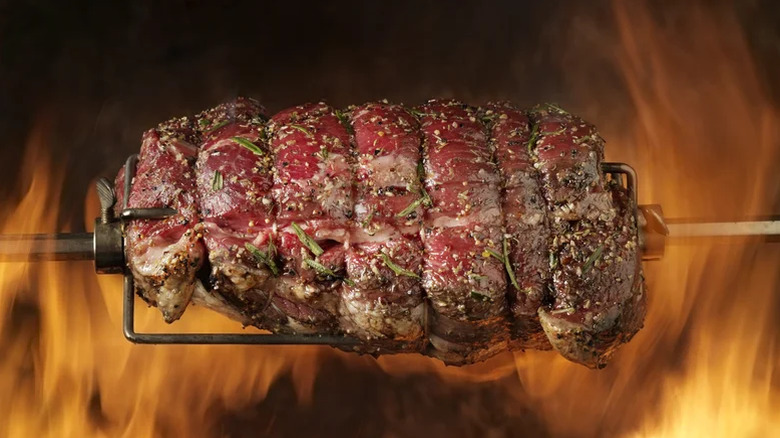
To achieve the right size and shape of the meat, you can use kitchen twine to tie it together. Do marinate the meat if you want, or simply season it with a rub, but be judicious in the seasoning. The meat should be flavorful, but the succulent beef flavor shouldn't be masked. A simple rub made with salt and pepper, and a couple of your favorite seasonings for roast beef such as rosemary, thyme, mustard, or garlic, is enough.
The trickiest part of the process, but perhaps the most important step, will be skewering the beef. To make things easier, make an incision at both ends of the meat so the spit goes through the center to balance the weight of the meat evenly. If the meat is wobbly on the spit, it will not roast evenly as the rotation will be disrupted. Slide the beef onto the spit and clamp it well before setting the rod into the rotisserie; then, test the rotisserie to ensure it turns evenly. For rotisserie ovens, or oven gadgets, be sure to follow manufacturers instructions. If you're cooking outdoors on a charcoal or gas grill, place the beef away from direct heat to prevent overcooking, but be sure the heat remains consistent.
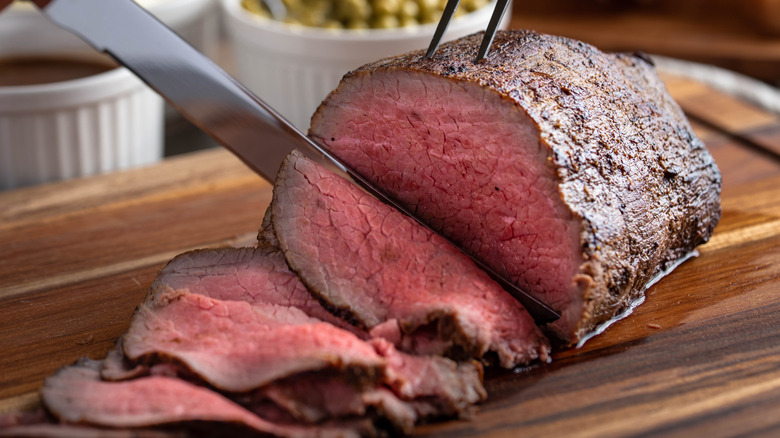
Cooking times will vary depending on the size of the meat, so check the temperature regularly using a meat thermometer, about every 30 to 45 minutes. Aim for an internal temperature of 125 to 130 degrees Fahrenheit for medium rare. Lastly, let the meat rest for 20 to 30 minutes before carving so it retains all its juices. If you're lucky to have a rotisserie set-up, this will soon become your favorite way to cook a roast beef.