

Why You Should Alert Restaurant Waitstaff Of Incorrect Orders Even If You're 'Fine' With The Mishap
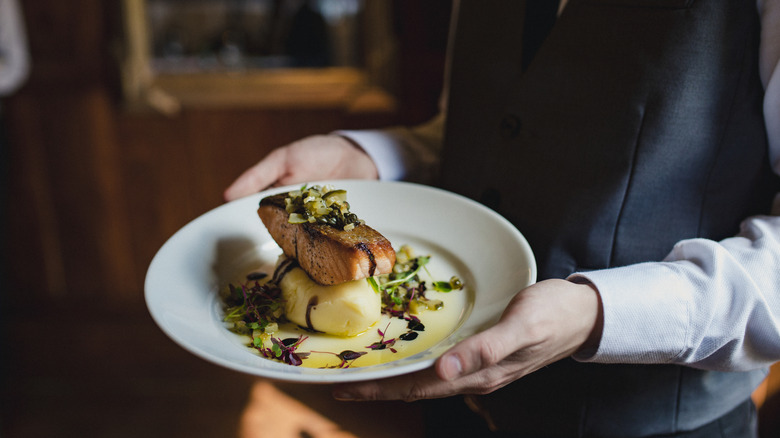
Dining out, particularly at a high-end eatery, can be a treat you've saved up for. It's a chance to take a break from cooking and have someone else serve and clean up after you, putting a bigger dent in the wallet for some folks than others. It's great to have expectations for service and quality when you're paying for it, but even the best restaurants make mistakes. If a mistake is egregious, it's a no-brainer to call out the issue. But it's also important to alert your server about smaller mishaps, and there are a few reasons why. We spoke with Frankie Weinberg, restaurant manager and co-owner of Good Catch Thai Urban Cuisine and Pomelo (not to mention a management professor at Loyola University) in New Orleans, to get an expert opinion on speaking up to waitstaff, even if you're fine with the error.
"Both servers and chefs rely on accurate feedback from customers in order to correct issues or errors before they become systemic ones," says Weinberg. "Informing the staff about a mistake in an order helps the team to put the right processes into place so that they can avoid repeat mistakes, which would not only leave customers unsatisfied but can also be quite costly." Indeed, your input can ultimately help to ensure that both your current and future dining experiences are top-notch. Direct communication with your server benefits everyone and will likely eliminate any bad feelings that could potentially occur, such as a post-dining review on social media.
When you should speak up to your server and when to stand down

Let's face it, none of us wants to be "that guy" — the nit-picky, hard-to-please diner who seems to be looking for reasons to complain. Most of us don't want to rock the boat. Some things customers may worry about include making the server or chef angry, how to politely follow etiquette when sending food back, and food waste if the meal is sent back. However, Weinberg says speaking up gives the restaurant staff the chance to acknowledge and improve operations.
"If the kitchen team does not know that the wrong dish was served, they won't be able to trace back to the root cause of the issue," he explains. In terms of food waste, Weinberg has some good news. "Servers can be trained to inform customers that they are not wasting food by sending an incorrectly prepared dish back," he adds. "Rather, they are helping the restaurant in the long term to minimize future instances of potential waste."
So, when should you consider voicing concerns about your meal? There are several signs you should send a dish back at a restaurant. First and foremost, anything that could potentially be harmful to you should immediately be addressed. If you have received an ingredient you're allergic to or if your dish is undercooked and has the potential of causing food-borne illness, send it back. Sometimes a poor menu description is enough to send a dish back, and if you think you can improve service, the restaurant will likely thank you for the feedback.