

According To Inflation Data, Here's What Grocery Prices Could Look Like In 2050
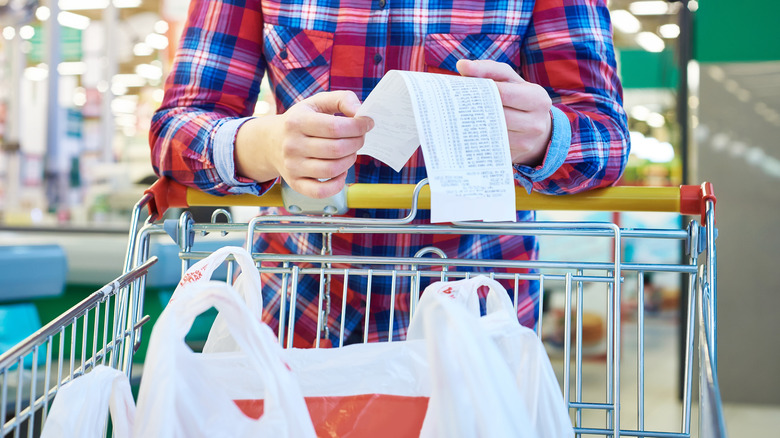
Prognostication is hardly an exact science, but you can use history and trends to make predictions. For instance, average annual inflation over the past 10 years has been about 3% in the United States. There is some variation in predictions, but the USDA also believes consumer food prices will rise about 3% next year. If we use that as a baseline and project to the year 2050, we can estimate what prices might look like. This is all speculation, of course, and while we could be way off, we might also be underestimating future prices.
According to the CPI inflation calculator, at 3% inflation, $100 today will be worth about $209.38 in 2050. At the grocery store, where food inflation is very real, that's going to take its toll. If prices increase at this level, a $4.68 box of Kellogg's Corn Flakes at Walmart will cost about $9.80 in 2050. You'd probably spend $3.14 to get a gallon of 2% milk to go with it, but in 2050 that will cost about $6.57. Eggs that cost $2.24 today will be $4.69, assuming nothing else bumps the price gain. Ironically, that's close to 1950s prices when eggs cost about $5 after adjusting for inflation.
It's no secret that prices go up year over year and there can be unpredictable reasons beyond inflation. Just in the last few years, we've seen how the COVID-19 pandemic, supply chain issues, and tariffs on foreign goods can affect our grocery bills. So what might this all look like on a larger scale?
The cost of living now and later
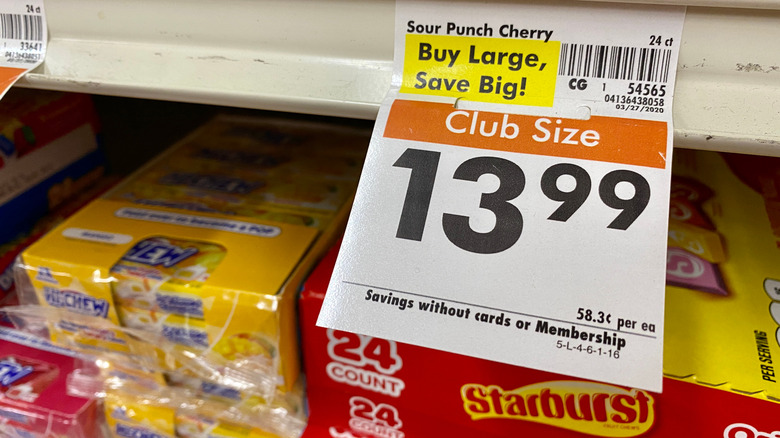
In 2025, the U.S. poverty line sits at $15,650, according to the US Department of Health and Human Services. That's how much one person hypothetically must earn to be able to afford their basic needs. With the rate of inflation, that will rise to $32,767 by 2050. That's per person. For a family of four, it's $31,200 today. In 2050 that will rise to $65,325. Historically, wages do not increase with inflation at anywhere near the level they need to, which means 2050 prices could be hitting wallets hard unless things change significantly.
According to the USDA's Thrifty Food Plan, which is a cost-effective outline of what it might cost to feed yourself effectively, a family of four spends about $999 per month on groceries. That is the bare minimum to ensure proper nutrition. That would be $2,091 per month in 2050.
Where you live obviously has an effect on how this all works. Data from Instacart shows that the average cost of groceries in Maine is over $200 higher than in Ohio. And we know that you can probably get cheaper oranges in Florida than you can in Alaska. How you shop and where you shop has just as much to do with what you shop for.
None of us truly know what the future holds, and we're all going to hope for the best. But it doesn't hurt to be practical and learn lessons from the past. Things will get more expensive, and we may need to change how we shop to adapt.