

This Is Why Champagne Goes Bad, And Here's The Right Way To Store It
We may receive a commission on purchases made from links.
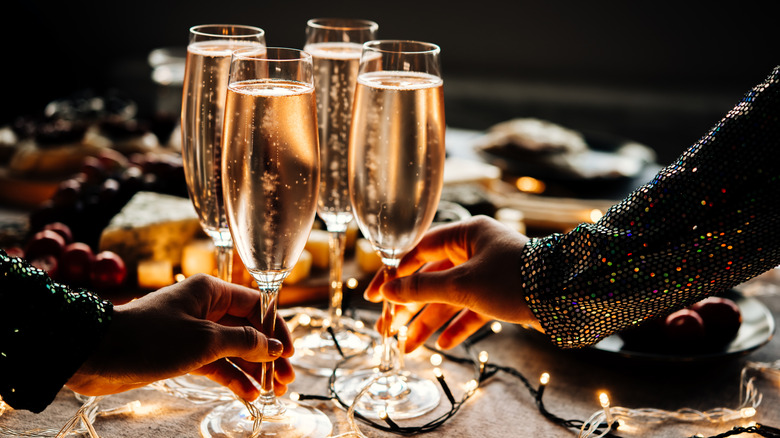
When it's time to pop the bubbly, all we're focused on is the celebratory atmosphere. But as the occasion comes to a close, we're sometimes left with a half-full bottle of Champagne. Many wonder whether Champagne can go bad and how to properly store it. We spoke to an expert on the topic, Gabriel Corbett, who is AGM and Head Sommelier at two-Michelin-starred JÔNT.
"Champagne absolutely can go bad!" he told us. "With faults like cork taint or poor storage conditions can lead to off flavors in the wine." Cork taint is a term used to describe an off-smelling wine that's been contaminated with a trichloroanisole molecule, also called TCA. It gives off a musty, corky smell that's very unpleasant and alerts you to the fact that the wine has gone bad, losing its quality and intended flavor profile. Cork taint usually develops before the bottle even makes it to you, but it's still important to recognize it and understand that Champagne is not an unspoilable beverage.
Corbett's best advice for keeping Champagne fresh is that "once you open the bottle of Champagne, you should just drink it!" A bottle is simply meant to be consumed in its entirety for the best experience. "If you don't have a bottle stopper that can latch to the neck of the bottle there isn't an effective way of keeping the bubbles," he continued. "The old 'spoon in the neck of the bottle' trick doesn't work at all."
How to store Champagne to extend its shelf life
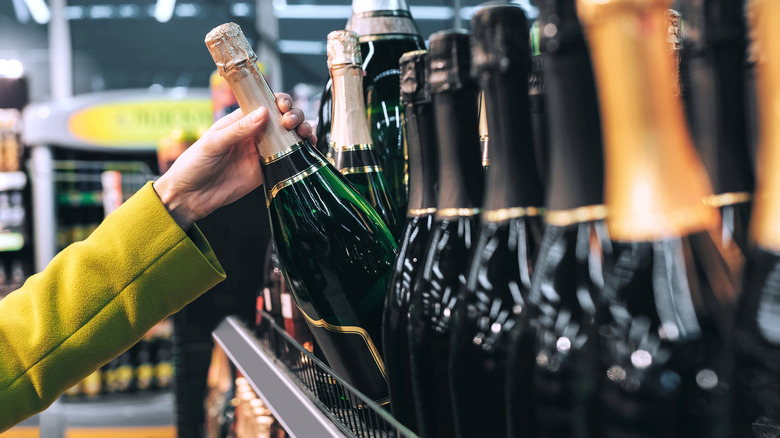
"If you want to cellar Champagne for an extended period," Corbett said, "I would recommend that you store it in a wine fridge or somewhere cool and away from light." Ideally, the place you're using for storage would have a temperature between 50 and 60 degrees Fahrenheit, and the bottles should be laid horizontally. Darkness is an important factor, too, because "UV light can cause discoloration of the wine and excess heat will kill the wine before you get to enjoy it," Corbett explained. Most sparkling wines should be opened within two or three years, but if you're holding onto a bottle of vintage Champagne, those can be stored for several decades.
Once the bottle is opened, try to finish it as soon as possible — as Corbett already mentioned, Champagne is at its best when enjoyed immediately. That said, it will likely still keep up to three days if you're using a sparkling wine stopper, which can preserve some of the bubbles. For example, the KLOVEO Champagne Stopper is an Italian product selling on Amazon for $25.99 with over two thousand 5-star reviews. Alternatively, you could transform the leftover bubbly into a delicious cocktail or use it up in our 30-minute Champagne chicken recipe.