

Plant Garlic This Fall For Fresh Bulbs Next Summer

Summer is a hive of activity in the garden, with many popular fruits and vegetables reaching maturity and becoming ready to harvest. The majority of these crops would have been planted in the spring, ensuring that the last days of winter have well and truly passed. Garlic is a little different: It needs planting in the fall.
Not only does garlic have a long growing period, around 8-9 months, but it also needs a spell of cold weather in order to grow to its full potential. This exposure to cold is known as vernalization, which sends plants into a dormant state in order to stimulate flowering or growth when the warmer weather arrives.
For garlic, this cold exposure has an even more important role. Extended periods below 50 degrees Fahrenheit trigger the genes that help split garlic into its individual cloves. Without this, the garlic will still grow, but could possibly come out of the ground as one giant clove.
Although garlic requires cold temperatures during winter, come spring it needs a spot with full sun and good drainage. For garlic to get cold enough, it has to be outside, but if you're limited to indoor space, you can still grow garlic shoots in pots for a milder flavor than bulbs.
If you miss the fall planting timeframe, all is not lost. You can buy what's known as spring planting garlic or spring garlic seed from garden centers, which have been kept at cold temperatures to mimic the vernalization process. Spring garlic still needs to be planted as early as possible in the season in order for it to have time to mature.
The timeline for growing and harvesting garlic
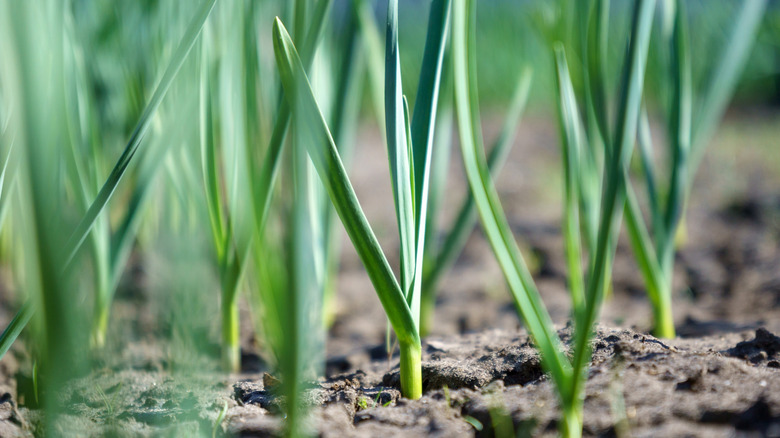
Garlic grows from single cloves, so in theory you could use cloves of supermarket garlic, but those have often been sprayed with retardants to prevent sprouting. It's better to buy seed garlic from a nursery. The key benefit is that you get a variety of garlic suited to the climate in your area.
Each garlic clove should be planted with the pointy side facing up, at a depth of around 2 inches and with 6 inches of space on all sides. The planting should be done 3-6 weeks before the first frost, which will allow the garlic to establish roots before it enters vernalization. If you don't get frost in your area, aim to have them planted by November.
Around May or June, the first curly shoots should emerge from the ground. These are known as scapes and should be pruned off to divert growing energy towards the bulb. Scapes can be used to add a milder garlic taste to dishes or turned into tasty vegetable fries, so that nothing goes to waste.
Knowing when to harvest garlic can be more of a vibe than an exact science, but there are signs to look out for. Around June or July, the leaves will grow straight, and the three at the bottom should have turned brown — though some say to look for an even split between brown and green leaves.
The only way to know for sure is to dig up a bulb, and if the cloves fully fill their skin, it's ready to harvest. Unlike other vegetables, garlic can't be used straight away. It needs to be left to cure in a cool, dark spot for three to four weeks before it's ready to add to your cooking.