

Your Fridge May Be Harboring More Bacteria Than You Realize – Here's A Simple Fix
We may receive a commission on purchases made from links.
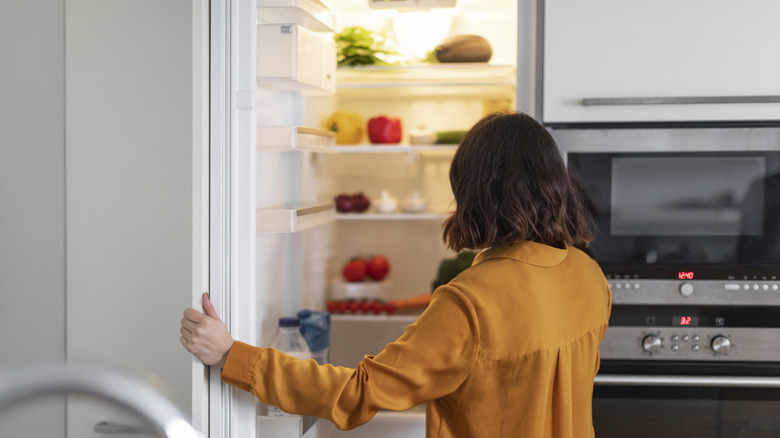
Most people trust their refrigerator to keep their food safe and ready to use. Yet there is one refrigeration safety tip you may be overlooking that could be affecting the shelf life of your food, increasing the risk of bacteria growth, and worsening your potential of picking up a food-borne illness: leaving the door open too long, or opening and closing it too often.
Your fridge may be harboring more bacteria than you realize due to frequent or prolonged internal temperature fluctuations. When you open and close the door too frequently or leave it open for too long, the internal temperature gradually rises to the point that the fridge's cooling mechanism has to work overtime to bring the appliance to the recommended temperature. Depending upon how long this takes, there's potential for bacteria to grow and multiply.
According to the U.S. Department of Agriculture, the temperature range at which bacteria can grow most readily is between 40 and 140 degrees Fahrenheit. The recommended temperature for your refrigerator is 37 degrees Fahrenheit, but anywhere between 37 to 40 degrees Fahrenheit is safe. You can help maintain that temperature by limiting the amount of time you leave the door open and avoiding a risky mistake when closing your refrigerator door.
Other tips for reducing the risk of bacteria in your fridge
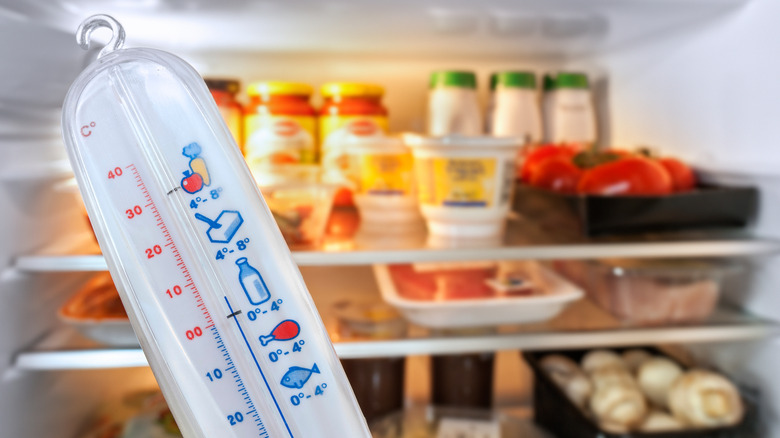
Every home cook needs to know food safety tips to prevent food-borne illness and food spoilage. The ideal conditions for bacterial growth which leads to both are a temperature above 40 degrees Fahrenheit, a relatively high moisture content, nutrients on which to feed, and a neutral pH level. In those conditions, bacteria can multiply as quickly as every 20 minutes. If your fridge doesn't have a digital temperature panel or if the thermometer is broken, buy a reliable fridge thermometer like the Rubbermaid refrigerator thermometer on Amazon. The warmest place in your fridge is the door, so put the thermometer on a middle shelf near the front of your fridge for the most accurate reading.
In addition to being mindful about how long the fridge door is open, you can significantly lower the risk of harmful bacteria growth by keeping your fridge clean and organized. Spills create moisture, which can increase bacteria presence. It's important to clean them quickly and not let them sit. Also, don't fill your fridge too tight with food or containers, as it needs proper air circulation. You can also reduce the amount of time you need to keep your door open by organizing things in clean, sealed bags or containers so they're easy to find. Of course, you should make sure you're cleaning out your fridge regularly and getting rid of food that is past its expiration date or that seems rotten or unusable.
Finally, if you're putting leftovers in the fridge to save for later, keep in mind that anything left out on your counter or stovetop for longer than two hours likely has bacteria growing in it. Before storing hot leftovers, they should be chilled as quickly as possible — you can do this by dividing them up into smaller containers that will cool faster in the fridge.