

Why Raw Honey Crystallizes Faster Than The Processed Kind
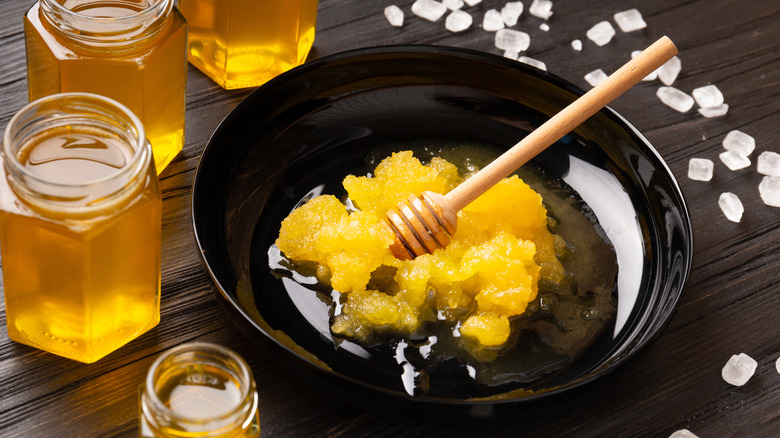
Honey can last for what seems like forever, but if you've upgraded from processed to raw honey, it's not going to keep from crystallizing indefinitely. The secret to honey's longevity is based on how little moisture is part of the sugar mixture — only about 18% – coupled with its high glucose and fructose levels that act as a preservative to prevent honey from expiring. Even though old honey won't make you sick, quality and flavor (even texture) can degrade, so it's best to consume it within a year. However, if you've noticed bottles of raw honey break down and crystallize even faster than your standard honey bear, you might be wondering what's happening. To find out why raw honey crystallizes so quickly, we decided to ask an expert, Eloy De La O, Director of Quality at Sioux Honey.
As De La O explains, "Crystallization is a natural process in honey." While it will happen to any variety, it tends to impact raw versions faster because, according to De La O, "Raw honey is rich in pollen, enzymes, and other micronutrients, which contribute to a faster rate of granulation." Crystallization is actually the downside of such a low water content as it struggles to hold all the sugar and keep it liquid. The glucose will naturally work its way out the water over time, which is why honey separates and crystallizes. And, unlike all those particles that would get filtered out in processed honey, raw honey encourages granulation and makes it even harder for the water to hold everything together.
Raw honey has pollen, enzymes, and particles that solidify into granules more quickly
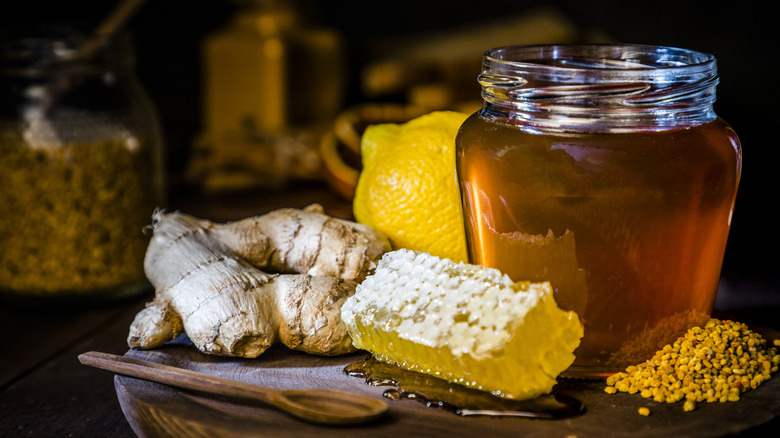
Thankfully, there is nothing wrong with crystallized honey. De La O tells us, "While crystallized honey may have a grainier texture and be less liquid, it remains perfectly safe and usable." Not only will it not make you sick, the honey can actually add a pleasant crunch when used as a condiment on baked goods.
If you really want that smooth, liquid honey De La O says, "Granulated honey can be restored to its liquid form by placing the container in a warm water bath until it liquefies — be sure to remove the cap before heating." You may need to stir it, and it could take up to 45 minutes to re-liquify. To accelerate the process, use hotter water that is closer to boiling and be more attentive when stirring to prevent scorching.
Of course, the easier thing is to keep raw honey fresh and uncrystallized in the first place. The process is inevitable, but there are ways to slow down granulation. As De La O recommends, "Store smaller containers of honey, such as table servers, at room temperature (60 to 70 degrees Fahrenheit)." If you have too much honey, he adds, "Pour a manageable amount into smaller table server containers for everyday use, and keep the remaining honey in the freezer. Freezer temperatures preserve honey and prevent granulation." However, if you buy from a really good raw honey brand, it probably won't last that long anyway.