

The Unexpected Kitchen Tool That Makes Cleaning Dirt Off Mushrooms So Easy
We may receive a commission on purchases made from links.
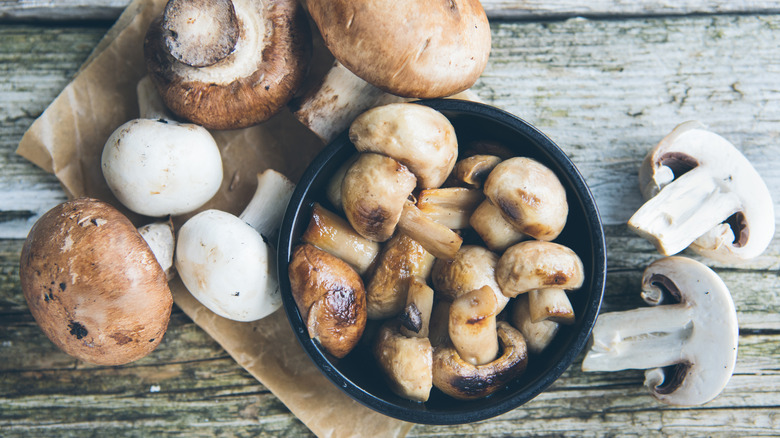
It might be easy to forget that a shiny red apple came from the earth — but not mushrooms. Namely, because they're covered in dirt. Whether you're a diehard forager of edible plants like mushrooms or your style falls into the store-bought camp, when you bring home a carton of fungi they're typically still wearing a visible outer layer of dirt. As a general rule, wild-foraged mushrooms require a little extra attention during cleaning to ensure they're safe to eat. The best tool for cleaning mushrooms is likely already stocked in your gadget drawer — a pastry brush.
While ultra-flexible silicone-bristled pastry brushes might perform well for delicately egg-washing pie crusts, when it comes to thoroughly cleaning a bowlful of mushrooms, a stiff-bristled pastry brush works best, like this Cuisinart GreenGourmet Bamboo Basting Brush ($4.99 via Amazon). Those firmer, thinner bristles can duck into all the nooks and crevices, grabbing dirt from mushrooms' harder-to-reach spots.
To do it, go in dry, scraping off all of the visible dirt from the entire surface of the mushroom, cap and stem. Then, gently spot-clean any stubborn leftover dirt using a damp paper towel, drying once more using a dry paper towel and a light rubbing motion. There's no need to peel those mushrooms pre-wash. After washing, the best way to dry those squeaky-clean mushrooms is to bust out another multipurpose kitchen device — a salad spinner.
Swipe away dirt with a stiff-bristled pastry brush
Cleaning with a pastry brush helps ensure dry mushrooms, facilitating better browning when it's time to cook. This cleaning method spares the mushroom's gills (which appear as tightly-packed folds on the underside of the cap in varieties like portobello and shiitake). In nature, those gills distribute the spores that help mushrooms reproduce. But, those densely-packed gills also tend to hold onto moisture — meaning it isn't a good idea to soak or submerge certain types of mushrooms when washing (no soggy mushrooms here).
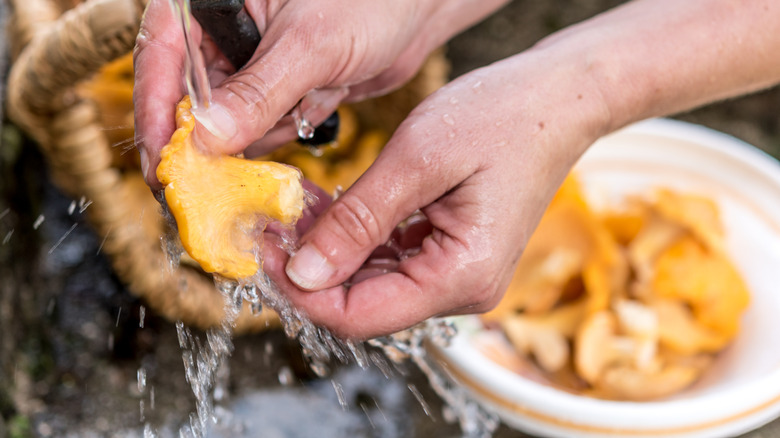
Mushroom types with less-prominent gills (such as cremini and white button mushrooms) are better suited to an under-the-faucet rinse in a colander. If you go this route, be sure to gently toss or shake them to remove excess water, before finally laying them atop a clean cotton towel and patting dry. This method can be a time-saver when prepping larger quantities of mushrooms for a recipe.
Of course, some exceptions apply. Wild-foraged morel and hen of the woods mushrooms require a quick swish in a bowl of salt water in order to clean the dirt out of their distinctive, irregular textures, for example. Here, a pastry brush likely won't cut it. But, for most common mushroom types found at the grocery store, a pastry brush spot-clean is the way to go. As always, be sure to clean your mushrooms right before cooking time; it minimizes the opportunity for excess moisture to soak in.