

How Homemade Pickles Sparked A Legal Debate In New Hampshire
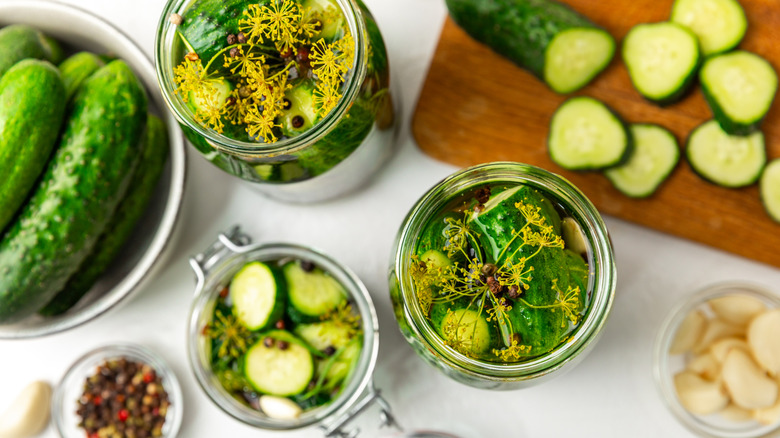
It's not often that pickle kerfuffles make the news cycle, much less in a way that spreads across state lines and becomes a symbol of self-sufficiency and cottage food regulations. But who can resist a story about homemade pickles, a local home-canner sharing the love, and a city council allegedly forced to action? It put them in a pickle, as the saying goes. The city is Manchester, New Hampshire, and the issue revolves around a newly coined term for an old-school practice called homesteading.
It was the summer of 2025, and longtime hobbyist canner Daniel Mowery was creating his beloved canned foods (something that has become far more accessible) — bread and butter pickles, jams, tomatoes, and other goodies — when he unintentionally landed in the spotlight. It wasn't for the deliciousness of his crunchy homemade pickles or his decades of gifting them to friends and neighbors, either. It was instead because the city's health department alleged that at least one jar was sold for cash, based on a social media post in which someone was inquiring about buying it.
This apparently triggered an enforcement mechanism intended to shut him down, completely — even for gifting to neighbors. A cease-and-desist letter made it formal, directing Mowery to stop distributing his canned goods unless he obtained a permit and got his kitchen commercially licensed. It's based on a local Manchester city statute that regulates home-based food production — even though the state itself would likely allow it under a certain type of so-called "homestead" law.
Homesteading and local laws
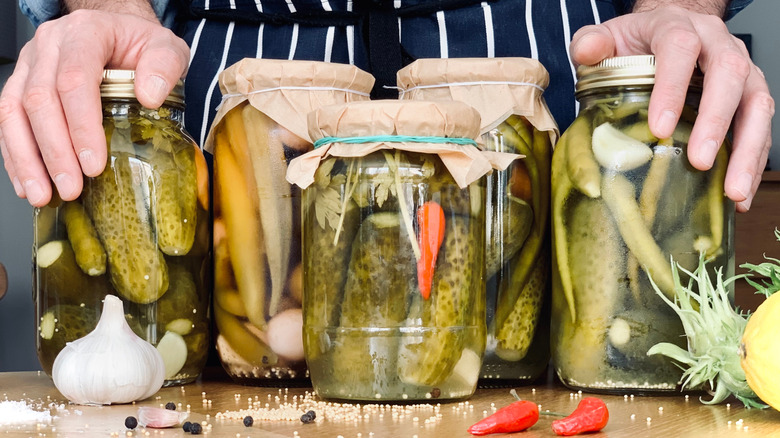
Homesteading is a trending lifestyle term gaining steam among young families in rural and urban communities. It basically refers to principles and practices of self-sufficiency, sustainability, and "slow living," which can include anything from making textiles to generational living on large parcels of land, or raising chickens — but especially growing or making your own food and preserving, sharing, or selling it. Cities and states across the nation are recognizing those who choose this lifestyle and putting laws in place to allow it with restrictions. That includes New Hampshire, which provides for it under its "homestead food operation law."
Daniel Mowery found himself swept up in debates over public health, and by extension, political clashes over how a city balances safety concerns with encouraging small, home-based businesses. It's caused quite a stir on social media, with users declaring passions such as "Pickle Power for the People!" Another raised concerns about school or church bake sales and fundraisers being affected by cottage food regulations.
Mowery says he's not backing down, sharing that he started pickling at the age of 20, learning the art from his grandmother's recipes. "We were brought up poor," he says, per the local WMUR9 news outlet, "so our family always canned everything that came out of the garden." He makes about 70 jars' worth of from-scratch food every year and gives it away — except for that one fateful time.