

The Nutritional Differences Between Freeze-Dried And Fresh Fruit
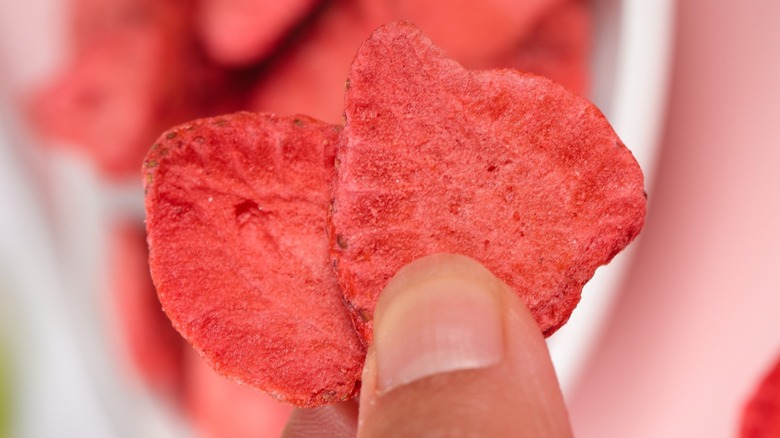
When you mention feeling under the weather, someone is bound to tell you to eat more fresh fruits. It's solid advice — they give you loads of essential nutrients, and the fruits that add more vitamins to your diet range from the tropical mamey fruit, down to your favorite apple variety. Problem is, many people don't find it convenient to stock fresh fruits at home. Far more convenient is freeze-dried fruit, which lasts far longer and still tastes somewhat fruity. But how nutritious it is compared to fresh fruit depends on a few factors.
Freeze-drying is actually pretty awesome at preserving the fruits' nutrients, such that research in Plants Journal described freeze-dried fruits as "a concentrated source of nutrients and phytochemicals." Aside from water, you're not missing out on much of the vitamins, minerals, and other beneficial compounds present in the fresh version. In fact, up to 90% of nutrients can be retained.
The catch? It depends on the fruit and how it's freeze-dried. Phenolic compounds (a class of antioxidants considered good for you) are a good example. In some fruits, levels drop after freeze-drying. But in others, like tomatoes, they actually go up — the rapid freezing breaks open cell walls and releases compounds that were trapped inside. If you're buying freeze-dried fruit for the nutritional benefits, check the label. While it probably won't list phenolic compounds, it will tell you how much fiber, sugar, and protein is in the snack.
Freeze-dried fruits can't fully replace fresh
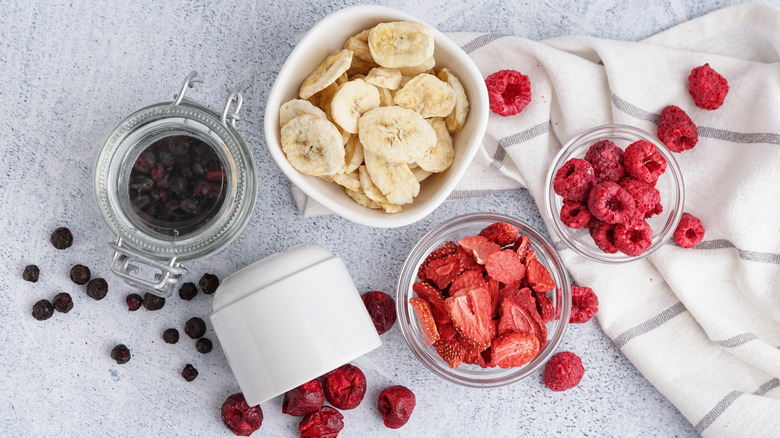
In an interview with "TODAY", dietician Theresa Gentile, RD, suggests that while there are plenty of nutrients in freeze-dried fuits, there are a couple of issues that could work against your dieting goals. The main one is that it's way easier to eat too many freeze-dried fruits compared to whole fresh fruits, therefore increasing your sugar and calorie load unintentionally. You can probably imagine gulping down a couple of packets of freeze dried fruit more easily than eating a whole bag of apples.
Freeze-dried fruits tend to contain a lot more sugar. Not because the manufacturers add more sugar into the package, mind you, but the freeze-drying process concentrates the natural sugar that's already within the fruit. As such, you'll get more calories and sugar per freeze-dried serving than fresh. Per Harvard Health Publishing, just a small handful of freeze-dried fruit can contain as much sugar as eating several pieces of fresh fruit, making it really easy to overeat and go over your sugar intake goal.
There's also how, to lots of people, freeze-dried fruit just doesn't taste nearly as good as fresh fruit. Freeze-dried fruits have a dry and often crispy texture (if you've ever tried astronaut ice cream before, it's very similar). If you like the way it tastes, great. But if not ... don't force it. Brush up on some simple tricks to pick the best fresh fruit every time, and make some time for it during your weekly grocery runs. They may be slightly less convenient, but food should be enjoyed, not suffered through.