

Hard-Boiling Eggs Past Their Expiration Date: Is It Safe?

There's a moment of doubt that happens when you pull a carton from the fridge, check the date, and hesitate. It's days past technically expired, but the eggs look fine from the outside. We're well-trained to respect expiration dates, so that stamp of ink can feel alarmingly final. But despite their notorious fragility, eggs are tougher (and a bit more forgiving) than we give them credit for. Most egg cartons expire before the eggs themselves do. The printed date marks peak quality and when a store should no longer sell them, not sudden danger, because refrigeration does most of the safety work.
According to the Egg Safety Center, when kept cold at about 45 degrees Fahrenheit or below (which most refrigerators are), fresh eggs stay safe for up to five weeks past the carton's "Julian date," which is the date it was packed. The "expiration" label marks peak quality rather than safety. Inside the shell, a natural protective layer and steady refrigeration keep bacteria at bay far longer than most people realize. The American Egg Board says that most cartons are still perfectly fine to eat two to three weeks past the date they were processed.
However, hard-boiling complicates things a little bit. When you boil an egg, you can't crack it first to check for cloudy whites or that signature smell. The shell's natural protective coating, called the cuticle, is compromised during hard-boiling, which shortens the eggs' shelf life. By contrast, proper commercial washing doesn't necessarily strip the cuticle, but poor washing practices can, which is why it's important to understand and follow safe handling and storage practices.
Why good eggs go bad
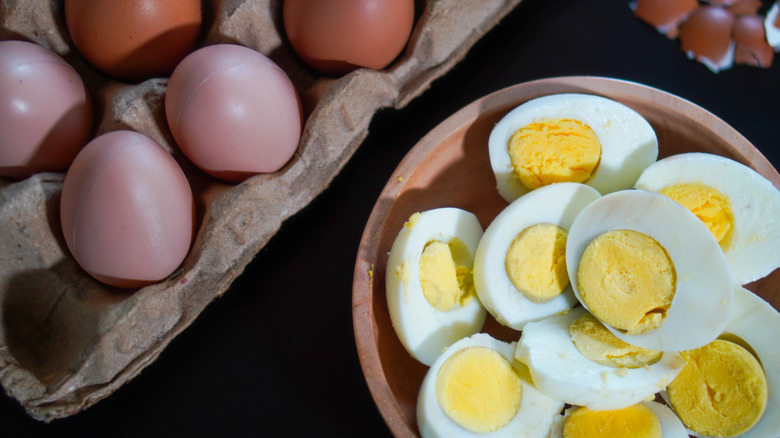
If you're not sure how long your eggs have been around, you can also try the simple float test by setting them in cold water to see if they sink. A sinking egg is fresh enough to boil, whereas one that floats has aged out of its usefulness. Boiling pushes moisture and gas through the egg's pores, thinning the natural barrier that once protected it and leaving behind moisture, in which bacteria can and will thrive given the right conditions — and a little time. The resulting hard-boiled egg is safe to eat, but only for a period of time, and the food-safety experts at the USDA recommend consuming hard-boiled eggs within one week of cooking.
After a week in the fridge, even a good-looking boiled egg inevitably starts to lose flavor and texture, so it's best to use truly questionably old eggs in recipes where you can see and smell them when you crack them open before the boiling water locks everything in place. A gray ring around the yolk is harmless; a putrid, sulfuric aroma is not. Expiration dates keep us cautious, but cooking well often means looking, listening, and noticing all the things a label can't do for us. With a little awareness, an "expired" egg can still become a soft and fluffy breakfast scramble or a flawless batch of deviled eggs. Refrigerate consistently, trust your senses, and when in doubt, crack and check before you commit.