

The 8 Best Canned Food Brands You Won't Find On Grocery Store Shelves
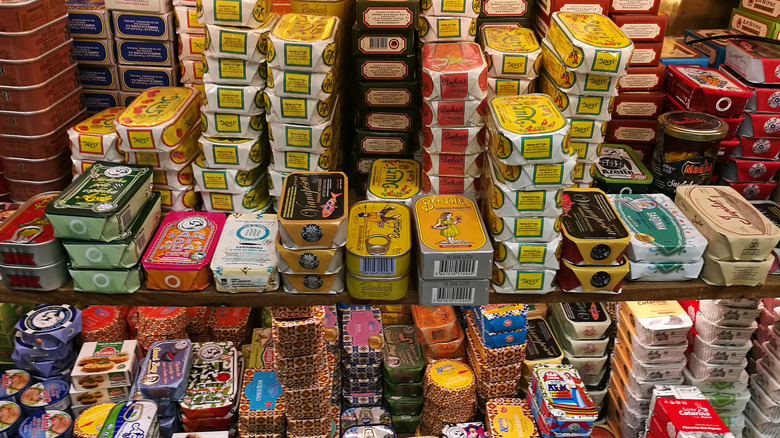
When we think of canned food, we often envision the recognizable offerings on supermarket shelves. But there exists another world of tins that never reach, or ever plan to reach, that stage. They are products of small companies, family businesses, and craftsmen who value quality rather than quantity. There are those who venture into hand-catching and hand-packaging tinned fish, while others trade in full-bodied meats canned by Mennonite farmers using techniques passed down over centuries. You won't find elaborate packaging or supermarket deals here, but plain and delicious food packaged for ease and longevity.
Some of these businesses operate outside the supermarket system entirely, selling only in specialty retailers or directly to devoted consumers online. Mainstream popularity is not their goal, but rather maintaining traditional ways of consuming that pay homage to simplicity and authenticity. For the daring taste buds, these elusive canned items are proof that true gastronomic craftsmanship can be achieved even in the humble tin.
Siesta Co.

These tins have won over European conserva-style fans as a top tin favorite with an emphasis on Spanish heritage methods and sustainable sourcing. The company partners with tiny fisheries along Spain's north coast to create premium tinned seafood that highlights quality and sustainability. Individual fish are hand-packed in extra-virgin olive oil (never industrial fillers or vegetable blends), and the result is a clean, subtle flavor with substantial texture. The company's tuna belly in organic extra-virgin olive oil is a decadent favorite among connoisseurs.
Siesta Co.'s cans are distinguished by their minimalist, contemporary packaging and adherence to the "slow life" philosophy, reminding consumers to appreciate their tins as an aesthetic experience, rather than as a convenience food. The company's small-batch model ensures traceability and transparency from ocean to can, a welcome effort for seafood companies. While Siesta Co. may not show up at chain grocers, the sardine, mackerel, and white tuna cans are now an unobtrusive luxury for people who seek restaurant-quality, ethically harvested seafood in the comfort of their own kitchen.
Wildfish Cannery
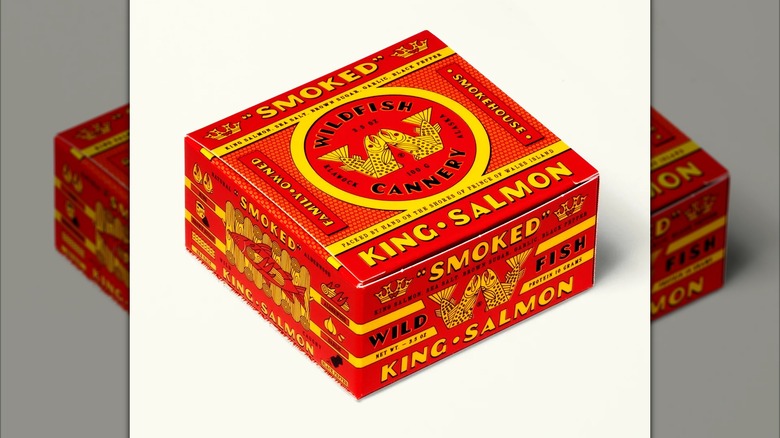
Wildfish Cannery has built a cult following of chefs and seafood eaters for its Alaskan small-batch canned fish. Wildfish Cannery was founded by a fishing family in 1987 and now continues to operate much as it did decades ago. Each catch is locally caught, hand-smoked, and hand-packed by a small team in the small fishing town of Klawock. The cannery's alderwood-smoked salmon, herring, and other seafood are renowned for their rich, full flavors, achieved through traditional brining and smoking methods that have been passed down for generations.
Wildfish's commitment to excellence has endeared them to culinary professionals who treat these tins as delicacies, not staples. Although you may not find the Cannery's tins readily available on grocery store shelves, it's sometimes carried by specialty delis like Zingerman's. By keeping operations small and sustainably sourcing its catch, Wildfish Cannery has managed to keep the integrity and essence of Alaskan seafood intact while turning canned fish into a gourmet endeavor.
The Craft Fish Company
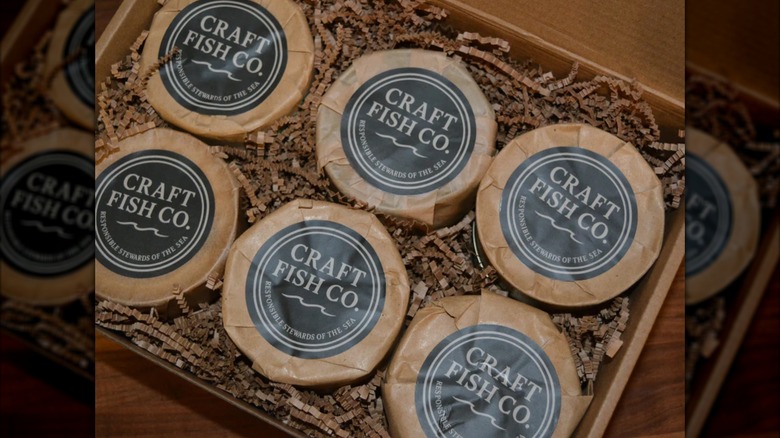
The Craft Fish Company is redefining what "American-made" canned seafood can be. Unlike most mass-market firms, this small American business does all phases of production — catching, cleaning, and canning — in-house. The founder of the firm still retains the vessel in his personal control, with every fish line-caught, processed, and packaged in the same building. This traceable process guarantees customers know exactly where their seafood comes from and under what conditions it was captured, a level of transparency largely absent for big suppliers.
These cans highlight freshness, purity of ingredients, and the uncomplicated flavor of the fish itself. The brand's albacore tuna in olive oil has been described as surprisingly moist and clean in taste. Additional customer reviews on the retail site call it the best albacore they've had. Labeling like "Responsible Stewards of the Sea" self-stylizes the company as a corrective measure to supply chains while quelling worries about overfishing on a global scale. Every batch looks to impart a respect for the environment and small-scale production that resonates with today's sustainability-minded consumers. The result is an array of canned seafood that is intimate and evocative — proof that small-scale curating can be a beautiful thing.
Ekone Oyster Company
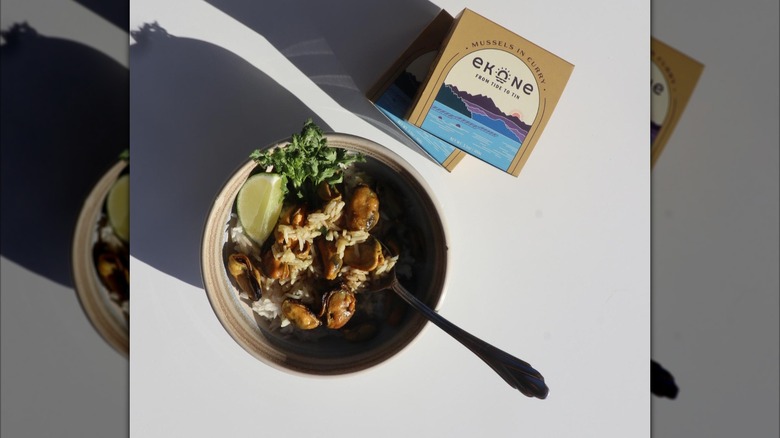
Renowned for elevating the humble smoked oyster to gourmet heights, Ekone Oyster Company is a Washington State-based company that farms its oysters on long-line farms in pristine, cold, coastal waters before smoking them over maple wood shavings in small quantities. Each tin contains solid, meaty oysters with that natural briny sweetness balanced by smoke and savoriness. No artificial preservatives are used by the company; the cans simply contain fresh oysters, natural spices, and smoke to achieve a long shelf life without compromising on flavor. Habanero, smoked lemon-pepper, and original flavors suit both traditional oyster lovers and boldly adventurous, umami-seeking snackers.
These tins have been described as spicy, though not overpowering, with a balance of both smoke and sweetness. Some have even called Ekone's mussels some of the best they've ever enjoyed, from the size to the level of smoke. Besides the signature tins, Ekone's ethical aquaculture systems and consistency in quality have made the brand a standard among American seafood lovers. The smoked oysters are the ultimate example of how artisanal methods can turn common ingredients into something great.
Henry & Lisa's Natural Seafood
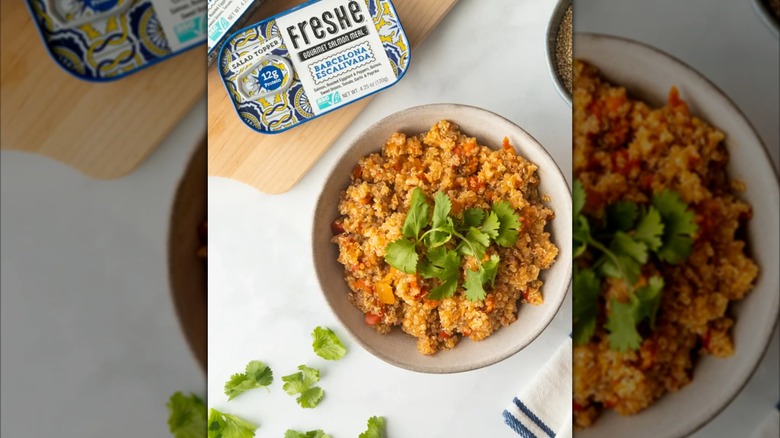
Described by reviewers as delicious and elite in quality, Henry & Lisa's Natural Seafood is one of the earliest efforts to bring sustainability efforts into canned seafood. Founded by environmentalists Henry and Lisa Lovejoy, it's owned by parent company EcoFish, the first in the U.S. to be Marine Stewardship Council (MSC) certified as sustainable. The MSC has described Henry & Lisa's initiative as, "...continued dedication to seafood sustainability and for going above and beyond the requirements of the MSC standards." The company boasts a lineup of wild Alaskan salmon, albacore tuna, and sardines — many of which are caught using more sustainable methods like pole-and-line fishing and trolling.
The cans are BPA-free, and the products themselves contain no preservatives or artificial ingredients. Once canned, the tuna is cooked to preserve as many nutrients as possible, such as the ever-popular Omega-3 oils. With these efforts at its core, Henry & Lisa's is still a conscientious option for industrial seafood, and a reminder that such efforts can still be indulgent.
Bar Harbor Foods
Based in Maine, Bar Harbor Foods brings the flavor of the North Atlantic seashore to the consumer in canned clam chowders and seafood. The company makes small-batch, all-natural canned foods from sustainably harvested ingredients like wild-caught shellfish and award-winning, MSC-certified seafood. The batches are made in small lots, hand-sorted, and filled to preserve texture and taste. The clam chowders and seafood stews are made with simple recipes that let the ingredients shine rather than processing them into bland nothingness.
The regional roots of the company give it a genuine sense of place; its product listing evokes the homely, traditional food of seacoast towns rather than factory-produced soups. Though you might find Bar Harbor in some natural foods markets, its limited distribution keeps it on the periphery of craft rather than in the supermarket mainstream. In a review of Bar Harbor's smoked mackerel fillets in water, a Redditor was in awe of what the cannery was able to achieve without oil, writing, "It has actual flavor and that flavor is delicious despite zero oil. I'm blown away by this." For canning enthusiasts, these tins are the epitome of local artisanship.
Werling & Sons
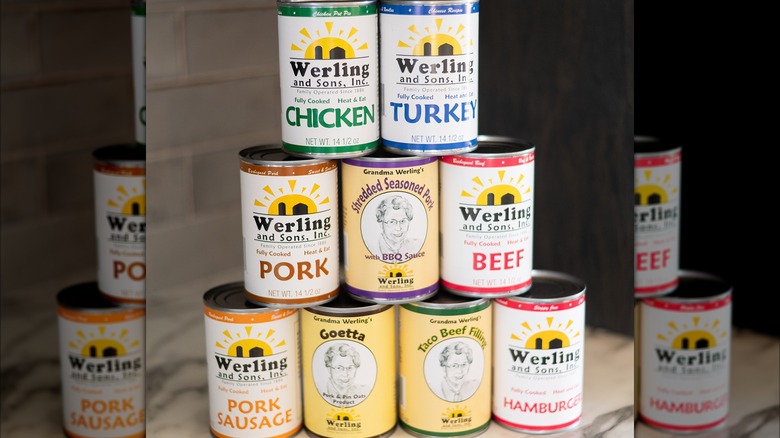
Originally a family-run butcher store in 1886 and now in its fourth generation, Werling & Sons operates out of Ohio and has become a well-respected niche canner of meat products. Beef, pork, turkey, chicken, hamburger, sausage, taco-meat filler, and even local German specialties like goetta are among the products available, all offered in shelf-stable cans that require no refrigeration.
What sets Werling apart is its preservative-free form and extended shelf life, with the company stating the product will keep for five years, if not longer. For cooks and pantry enthusiasts willing to step outside of big-box brands, Werling offers an authentic American canned-meat experience rooted in family tradition. The company's canned bacon sees a steady stream of positivity and ample praise regarding its portability for campers on the go who want a home-style breakfast. While the brand's taste and texture approach rustic, rather than gourmet seafood, the stews and meats embody the smaller-batch ethos we know and love: direct-to-consumer, small-volume, and locally renowned.
Underwood Spreads
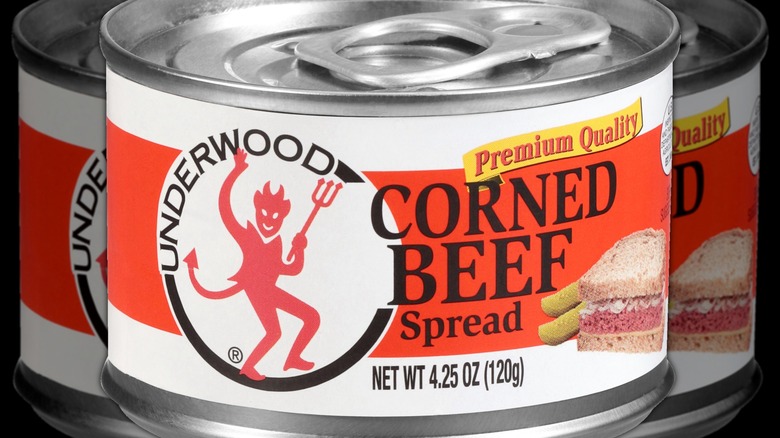
Underwood is an old name in canned meats, especially in the United States. The brand's devil-logo-marked deviled ham was trademarked in 1870, and the company remains active to this day. An actual, national record. Underwood meat spreads include deviled ham, white-meat chicken, roast beef, liverwurst, and corned beef — all sold in small cans and marketed as sandwich fillers, dips, or instant meals. Some buyers have noted that it seems the meat spread is especially popular in Hispanic American cuisine, and many recall sandwiches and wraps incorporating the product into meals. The most common method of preparation seems to be the deviled ham spread paired with a couple of slices of bread and some extra spice or mustard to cut through the richness.
Though perhaps more visible than purely boutique brands, Underwood still counts as a niche in today's canned meat landscape: The brand specializes in spreadable meat products instead of standard grocery-can meat chunks. It offers a contrast to the viral, modern, artisan canners you see all over your social media feeds (love a tinned-fish Tuesday video), yet still remains off the radar of many average grocery shoppers.