

The Simple Trick To Ensure Your Fillets Are Dry Enough For Crispy Fish And Chips
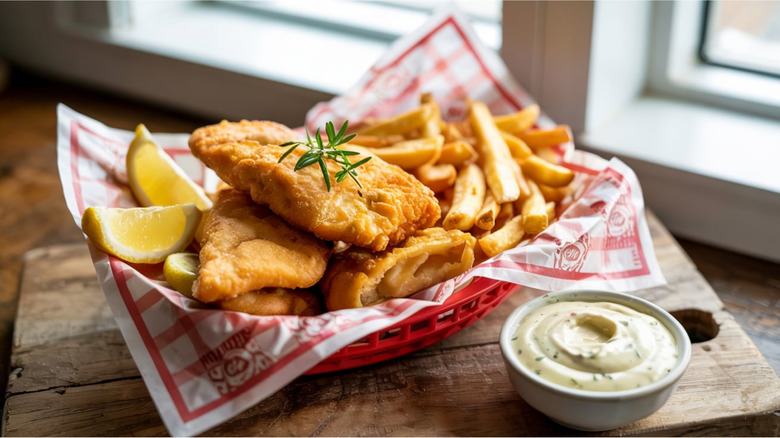
Before the flavors kick in and the freshly cooked warmth invades the senses, it's the crispness that determines just how good a classic British fish and chips recipe truly is. Unfortunately, it's not always a guarantee with every single batch you make. It all comes down to precision and patience, particularly as you're preparing the fish. A little bit of patting dry and a few hours of refrigerating can go a really long way in ensuring that perfect bite in the outcome.
Excess water not only makes it very difficult for the batter to stick, but it can also render the fish unappetizingly soggy. The moisture, trapped between the fish and the batter, will turn into steam when the fish meets the hot oil, thus preventing it from fully browning to a crisp. This is why patting dry with paper towel is the best way to keep the batter on fried fish from falling off.
However, another essential step afterward is air-drying the fish in the fridge for at least one to two hours. You can just leave it uncovered on a plate or a wire rack, but also consider sandwiching the fillets between several layers of paper towels to prevent the odor from seeping into other parts of the fridge. With even more time for the moisture to evaporate, the fish will become as dry as possible. When you finally take it out, the surface will be dry and just a bit sticky, all set for deep-frying.
It's just one small leap into dry-brining

With this air-drying method, you're only one other step away from dry-brining the fish fillets: rubbing kosher salt onto the fish. You can also layer in other spice blends if you're feeling adventurous, but sometimes, it's as simple as a combination of salt and sugar, following a 2:1 ratio. Even just an hour of this dry-brining can work wonders, but you can also leave it for four to eight hours in advance. Obviously, this does a great job of drying out the fish's exterior, and even firms up the flesh so you don't have to worry about it potentially falling apart in the pan. However, it's good for so much more than just improving the texture, including reducing albumen, a white liquid protein that often comes out while heating fish. Given hours upon hours to settle, the seasoning has enough time to fully seep into the flesh — although not in a way that distributes the flavor notes unevenly. Instead, it's a thorough yet subtle absorption that elevates the fish's taste without taking away its natural seafoody sweetness.
During the process, make sure to still adhere to the food safety tips every home chef should know, such as placing the raw fish at the bottom shelf of the fridge. This keeps it away from other cooked components, as well as limiting any potential drippings and other bacterial cross-contamination. You should also ensure the temperature remains at a stable range of below 40 degrees Fahrenheit, which is most sufficient for inhibiting bacterial growth.