

Ordering A Menu Item You Can't Pronounce? Here's The Proper Etiquette To Follow
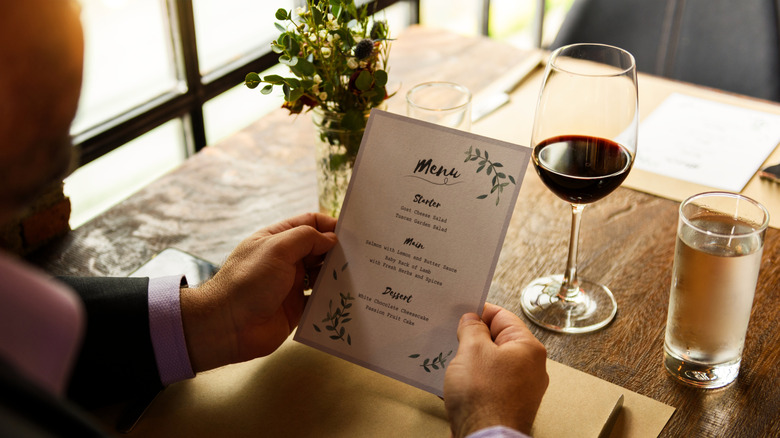
We've all been there, stumbling over words like "giardiniera," "vichyssoise," or "tteokbokki" when ordering at a restaurant. It's a humbling moment to be sure, and while it may seem like a fleeting mistake, tough-to-pronounce menu items can impact the hopefully pleasant experience when we dine out. These items can lead to anxiety around ordering when we'd rather feel comfortable and fast forward to the part where we're enjoying our food. To help tackle this awkwardness once and for all, we consulted an expert on good etiquette around ordering a hard-to-pronounce dish. That way, even when you indeed don't know the pronunciation, you'll feel confident in the conversation you can have with your server.
When Tasting Table caught up with Michael Cecchi-Azzolina, owner of Cecchi's Bar and Grill in New York City, at the New York City Wine & Food Festival, the restaurateur recommended the approach of honesty. "Just ask," says Cecchi-Azzolina. "Just say, 'Hey, sorry, I don't know how to say this.'" This breaks the ice with your server, who will understand that not everyone has said the name of every dish out loud before and be happy to help. There won't be any tension, intimidation, or need to put on airs and pretend to know something you don't. Once the server clues you in, you'll have learned something new you can use during future orders. "We'll help you through it," he adds.
Asking before pronouncing is the polite way to go

Fretting over mispronunciations can join the list of outdated restaurant etiquette rules to forget. This makes diners nervous and may even keep them from ordering the dish they want. Servers are there to help and want to help you explore the menu. It's all about simply being polite. When it comes to restaurant etiquette still considered vital, never being rude is paramount. But beyond that, start the conversation. Explain you're unfamiliar with a dish and would love to learn the right way to say it.
"I worked in French restaurants for a long time," Cecchi-Azzolina says. "Raoul's was one of them, and the menu was only in French. People had no idea what was on the menu, so we would explain it to them." The restaurant owner adds that he's especially familiar with pronunciation inquiries because of his own name, which gets pronounced as everything from "chi chi" to "cha cha." Instead of assuming, asking is the most polite approach. Cecchi-Azzolina emphasizes that people shouldn't feel timid, as no one should be punished for not knowing something.
This rule of thumb is good to remember even outside of restaurants — it's always best to err on the side of candidness and just ask people how to pronounce their names if you're unsure, for example. With a willingness to ask and learn, you'll be able to order that classic French bouillabaisse like a native French speaker in no time.