

Cook Salmon Steaks With Thin Ends More Evenly By Securing Them With This Easy Solution
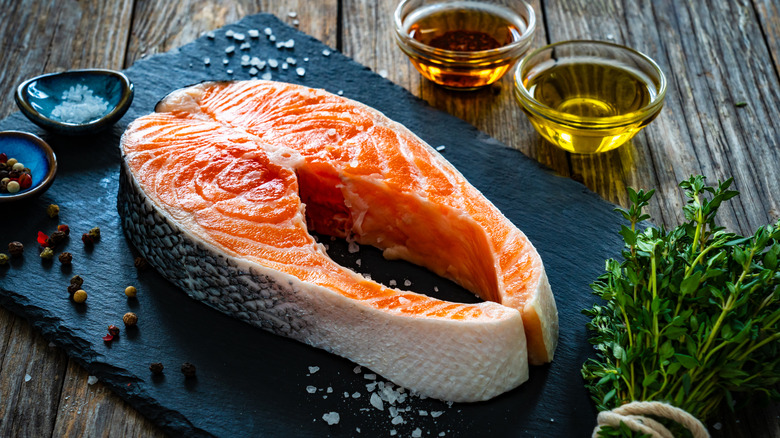
Salmon steaks are one of the more underrated dinner options, but they come with one small problem. As popular as salmon is for easy, healthy meals, almost all the salmon you see in stores or recipes is cut into fillets. Those are your classic long, flat pieces, usually with skin on the bottom, and they're made by cutting salmon parallel to the spine. Unlike fillets, salmon steaks are sliced across the bone, producing thicker cuts of fish with a bone in the center, and come in a horseshoe shape.
Salmon steaks include part of the belly, which means they have more fat than standard fillets and are more rich and flavorful. For a lot of people, that would make them more appealing. The rich interior is harder to overcook than salmon fillets, which is great, but the extra time they take to cook makes those thin ends at the bottom more likely to dry out faster and cook unevenly. Thankfully, all you need to fix that is a toothpick or some string.
The simplest solution to uneven salmon steaks is just pressing the two ends of the horseshoe together in the middle, then skewering them with a toothpick so they hold together. This creates more of a teardrop shape that eliminates the extra heat exposure at the ends, which means more even cooking.
Other ways to cook salmon steaks evenly
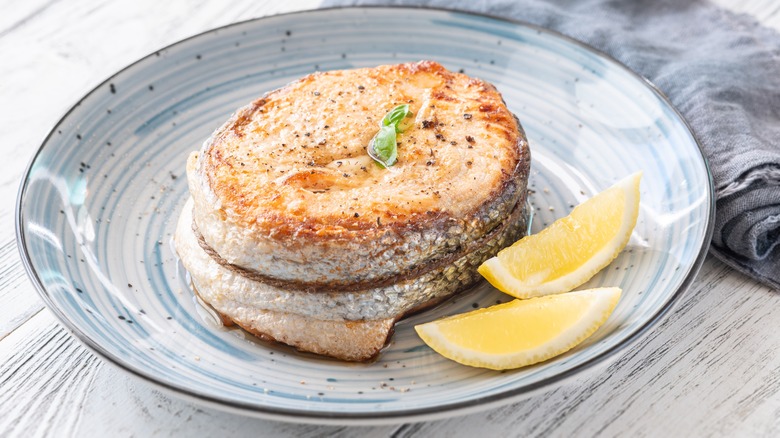
The second way to shape salmon steaks requires more effort, but produces a more even cut that's also very aesthetically pleasing. Instead of pressing the horseshoe ends together, curl one end up into the space below the central bone, then fold the other end over it, turning the steak into an imperfect circle. If you want, you can peel back the skin on the end you are tucking so there is no skin in the middle, then press it against the bottom one the salmon has been shaped, creating a solid ring of skin around the outside. To hold everything in place, tie some butcher's string around the outside to shape it into a more even circle. Now your salmon steak will cook perfectly evenly, and look the part too.
While they will cook differently than salmon fillets, salmon steaks will still work with any of your favorite grilled, seared, or baked salmon recipes. Over medium-high heat, they should cook after about five minutes per side, or at least 10 minutes total. If you are worried about cooking your salmon properly, use a thermometer and aim for between 125 and 135 degrees Fahrenheit, which will leave them cooked through but still a moist and tender medium rare. You'll be shocked at just how flavorful salmon steaks can be, and with these tricks, there won't be a bad bite in the whole meal.