

This Is How Long Homemade Mayonnaise Will Last In The Fridge
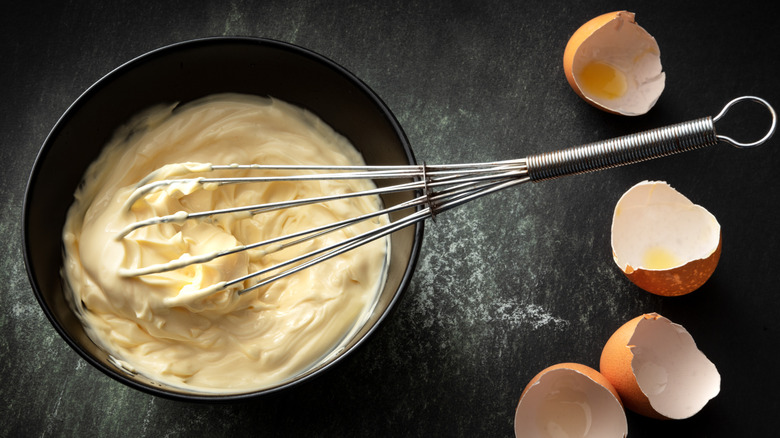
Creamy, tangy, and full of savory flavor, mayonnaise can be made at home in minutes with only a few ingredients. Just throw in a pasteurized egg (eggs that are treated with just enough heat to get rid of disease-spreading bacteria, but not so much that they end up cooking in the process), along with mustard, an acid such as lemon juice or vinegar, and gradually whisk in a neutral oil and voilà! You'll have thick, velvety homemade mayonnaise. But how long will it last?
According to the USDA, homemade mayo, when made with pasteurized eggs, will stay fresh for up to four days in the refrigerator. However, America's Test Kitchen tested a mayo recipe by pasteurizing the yolks in-house, heating them at 160 degrees and whisking in lemon juice along with water before doing so. They did this using a microwave and a digital thermometer. The temperature naturalized disease-causing pathogens and the acid helped preserve shelf life. The result was mayo that could successfully be stored in the fridge for a month, according to them. This is in contrast to mayo made from raw, unpasteurized eggs which a few sources suggest can last for a week or two. This may potentially give you more time to use up the sauce in your creamy egg salads. That said, if you want to err on the side of caution, it's a good idea to make small batches at a time and consume them within four days, as you'll note that those times are far longer than the USDA recommends.
Homemade mayo has the advantage of being free of any additives or preservatives. However, the lack of preservatives to increase its shelf life can also mean that there's a much shorter window to use up homemade mayo than a bottle bought from the store, which can stay fresh for two months in the refrigerator once opened.
Tips to store homemade mayonnaise
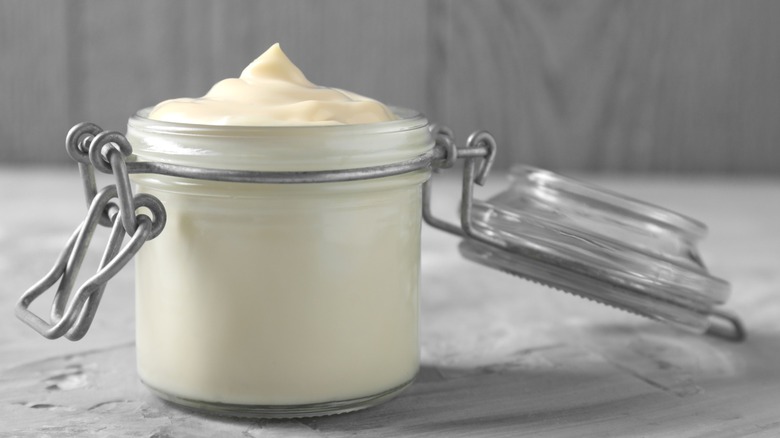
It's important to note that refrigeration is the best way to store homemade mayo. While you technically can freeze it to extend its shelf life to two months, doing so is not the best idea. One of many things to know about mayonnaise is that it gets its smooth creaminess from the emulsion of oil, water, and lecithin in the egg yolks. However, when it is frozen and thawed, this emulsion breaks down and separates, leading to a gritty, curdled, and watery texture. It is still safe to eat, but it's not going to have its desirable trademark qualities texture wise. So to make the most of your homemade mayo, spoon it into a tightly sealed container and pop it into the fridge as soon as it's prepared. Mayo should not be left at room temperature for more than two hours to prevent the risk of bacterial contamination.
Since homemade mayos do not have preservatives and stabilizers, it's important to keep an eye on them and always check for signs of spoilage before digging in. Some significant things to look out for are mold of course, but also any discoloration or lumpiness. It helps to give it a good whiff too — any sour or rancid odor is an indicator that the sauce has spoiled. If you spot any of these signs, sadly it's time to bin your old mayonnaise and whip up a new batch.