

Beating, Whisking, And Folding: How These Techniques Result In Different Textures For Your Cake
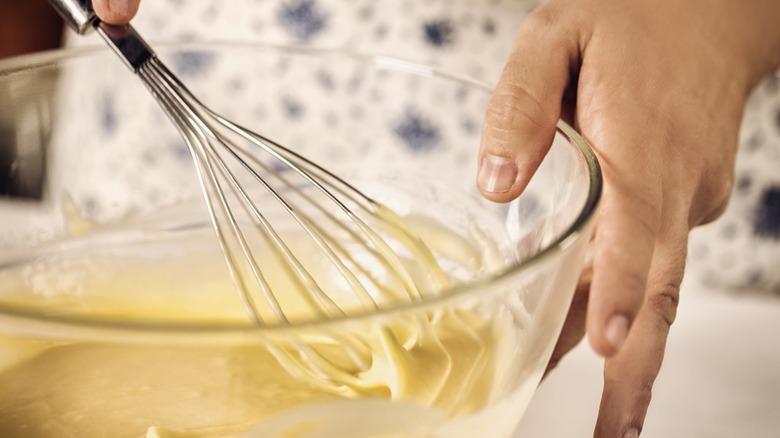
Baking and cooking are two very different things, as most home cooks discover the hard way. Baking is more of a science, where precision and technique are key. That's why Tasting Table spoke with Walleska Cianfanelli, the executive pastry chef at Wilton Sweet Studio, to learn the differences between beating, whisking, and folding eggs and how each method affects the texture of a cake.
Beating eggs means mixing them rapidly, usually with a mixer or a whisk. You want the eggs to thicken up and show an increase in volume. The point of beating is to both blend the eggs thoroughly and introduce some air. This is what is going to give structure to your batter. Beating eggs gives you a cake that is light, but has some good density to it. "This type of crumb cuts beautifully and produces very little crumbs," says Cianfanelli.
Whisking takes aeration to the next level and you don't want to do this one by hand. By whipping egg whites or yolks vigorously you'll create those stiff peaks that are a hallmark of dishes like meringue. You're adding a lot of small air bubbles this way, which turns your eggs into a stable foam. "This foam expands, giving the cake a light and fluffy texture," Cianfanelli explains. The result is a cake with impressive height and a delicate crumb.
Folding comes into play once the eggs have been whipped. The goal here is to gently combine them with the rest of the batter without popping those air bubbles. Bakers typically use a spatula to lift from the bottom and turn the mixture over itself. "Folding the eggs will prevent the batter from becoming dense and heavy and ensure the cake stays light and airy," says Cianfanelli.
Tailoring technique to the right cake
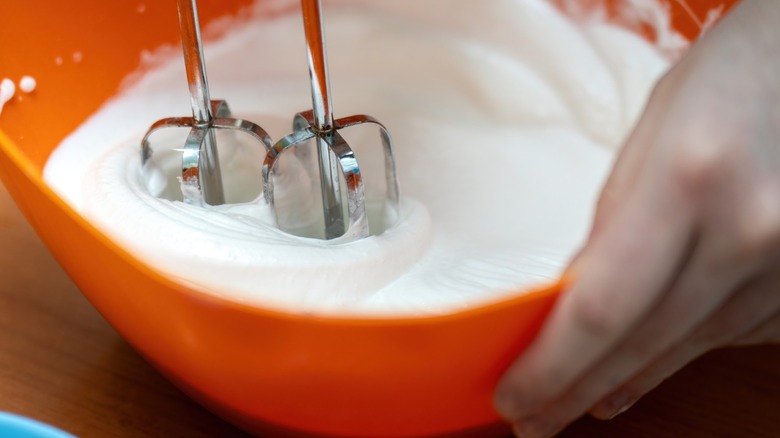
The right mixing method depends on the kind of cake you're making and how it gets its structure. The chef explains that butter-based cakes benefit most from beating, since creaming the butter and sugar already adds air before the eggs go in. The beaten eggs reinforce that base, while leavening agents like baking powder handle the rest of the lift. "The primary structure and lift come from creaming, and chemical leaveners like baking powder and baking soda," says Cianfanelli.
Whisking is better for lighter desserts like an orange chiffon cake. The foam created by the whipped egg whites serves as the main leavening agent. The recipe will call for very little baking powder. Once folded into the batter, that foam keeps the cake soft and bouncy. "Folding helps keep the air bubbles intact," she says, "which gives these cakes their airy, rich texture."
Beating builds structure while whisking and folding make for taller, lighter cakes. Both approaches can yield delicious results and which you use depends on the texture you're after. Understanding when to use each one helps bakers control the crumb, the rise, and even how cleanly a cake slices. Mastering these methods is the key to expanding any dessert repertoire.