

When Gas Stove Flames Turn Orange, How Long Is It Safe To Keep Cooking?
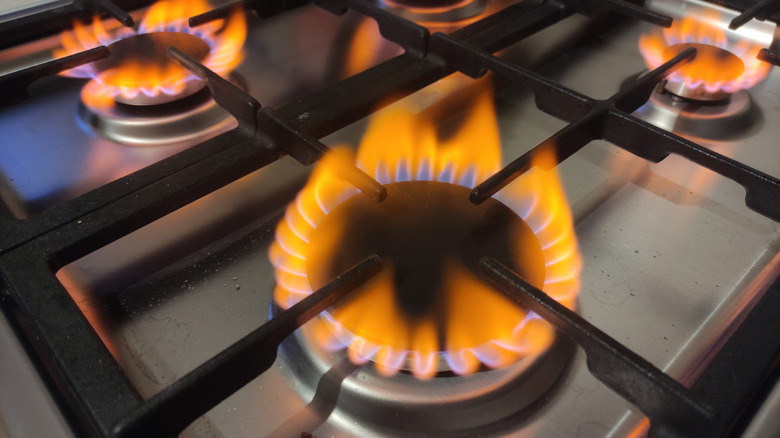
Gas stoves have come under a lot of fire in the past few years (excuse the pun). In 2023, New York state banned natural gas-powered stoves from being installed in the majority of newly constructed residential buildings, beginning in 2026. Your gas stove could be harmful to the environment, not to mention the micro-environment that is your home, especially when the stove isn't functioning properly. One major warning that something isn't quite right with your gas stove is the appearance of orange flames coming out of a burner. If you see these orange flames, you should stop cooking immediately and turn off the burner.
Seeing an orange flame coming out of your gas stove burners is a red flag. Normally, the flames should be a blue color, as opposed to the bright orange we normally associate with fire. Blue flames are an indicator that an exact amount of both fuel and oxygen are coming together to create a relatively safe flame. Seeing orange or even yellow present in your blue flame for longer than just a brief flicker is a warning that this precise ratio is off. This is known as incomplete combustion, and it has the potential to increase a buildup of carbon monoxide and even the risk of a house fire. High levels of carbon monoxide in your home can lead to carbon monoxide poisoning, which can be fatal in some cases, and is the reason that it's recommended to have carbon monoxide detectors in your home.
Orange flames are a sign that something is wrong
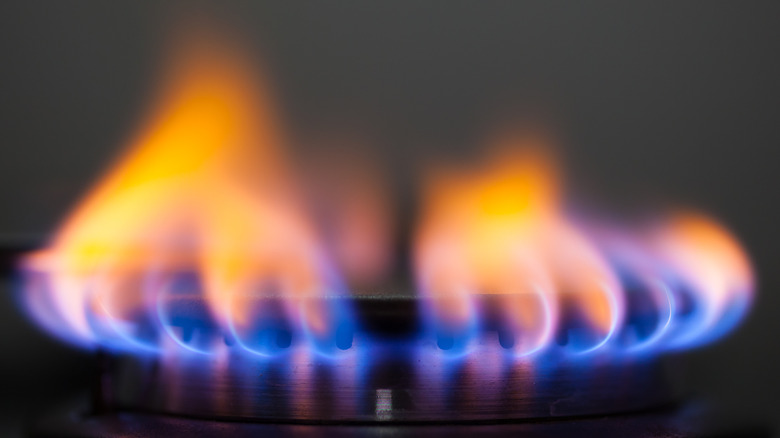
If you do see an orange flame underneath your pots and pans, the first thing you should do is carefully make sure that the burners are sitting properly on the stove, as sometimes they can come loose or get jostled out of place. You should also make sure that your stove burners are cleaned properly. If the burners aren't dirty and they're sitting correctly, move on to checking that all the connections to your stove are secure, like the shut-off valve and the regulator. It might seem unrelated, but higher humidity in your home can also lead to orange flames. Depending on the outside environment, you can usually lower the humidity in your home by opening doors and windows. If orange flames persist, it's best to call in a professional to inspect the stove.
Even when your stove is functioning properly, there are still dangers present in using a natural gas-powered stove. Cooking with open flame from natural gas can have negative health affects for those living in your home, especially from the nitrogen dioxide that's released into the air when the gas reaches high temperatures. Without proper ventilation, the nitrogen dioxide becomes trapped in the kitchen and home, greatly increasing the potential for respiratory illness, especially in children. No matter what color the flames coming out of your gas stove are, make sure your range's hood is functioning properly, as it plays a major role in removing harmful pollutants from your home — so be sure to keep it on whenever you're cooking.