

This Trendy Food Has More Magnesium Than Almonds
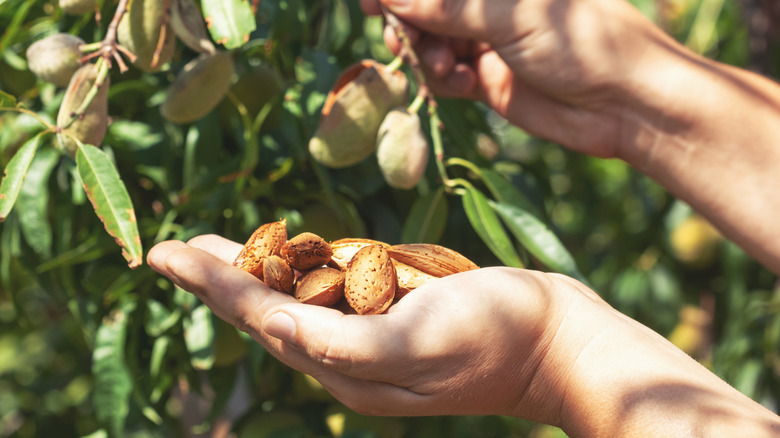
Grabbing a handful of almonds to snack on, or spreading slivered bits of the hearty nut over a salad or filet can add a significant magnesium boost to your diet. Just one ounce contains approximately 19% of your daily recommended intake. For a nutritious alternative, there's a grain-like seed that provides 28% of your daily requirement in each cup, and it may already be sitting in your pantry.
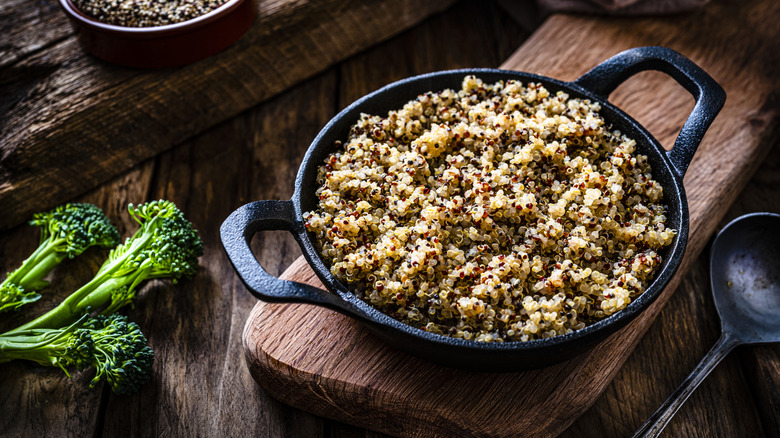
Quinoa, the edible seed that hails from the Andean region of South America, challenges the notion that nuts are the primary source of magnesium. It contains 118 milligrams of magnesium per one-cup serving and can be incorporated into a main dish for larger, more beneficial portions. This naturally gluten-free food can be found on most grocery store shelves thanks to its widespread popularity, and is shelf-stable for two to three years.
The South American grain offers more nutritional benefits than just magnesium, but a range of other minerals, including calcium, iron, potassium, and selenium. A 100-gram serving also provides 11.9 grams of protein, 6.6 grams of fat, and 6.3 grams of fiber, containing all the basic building blocks for a nutritious meal. Best of all, there are endless ways to prepare quinoa, from using it as an oatmeal substitute to creating a savory dish by cooking it in a broth.
Benefits of magnesium-rich foods
Magnesium stands out as a mineral that helps support more than 300 systems and metabolic functions in the body. It's best known for regulating blood pressure, blood sugar, and the nervous system. It can also help soothe the discomfort of constipation, decrease acid reflux, and support torsades de pointes, a type of irregular heartbeat.
Consuming magnesium through whole food sources, such as almonds or quinoa, is preferable to supplementation, as it can enhance the absorption of this essential mineral. Food-sourced magnesium also brings other benefits to the table, which contribute to the overall "food matrix," a scientific term describing the blend of macro and micronutrients in a given food or meal. And outside of the technical jargon, getting your daily intake of magnesium through food simply tastes better, so it's worth figuring out which of your favorite foods are full of the essential mineral.
Luckily, a broad spectrum of foods contains magnesium if almonds and quinoa aren't your cup of tea. Legumes are a popular source, including common foods like peanuts, black beans, pinto beans, and chickpeas. Well-known superfoods like kale, spinach, and collard greens also contain a significant amount of magnesium, while keeping your caloric and carbohydrate intake low. Fruit lovers can up their daily intake with bananas, avocados, and raisins. Even animal products contain a hefty portion of magnesium, and opting for tinned fish and dairy products can provide you with a fair amount of the mineral.