

The Country That Eats The Most Onions Per Capita
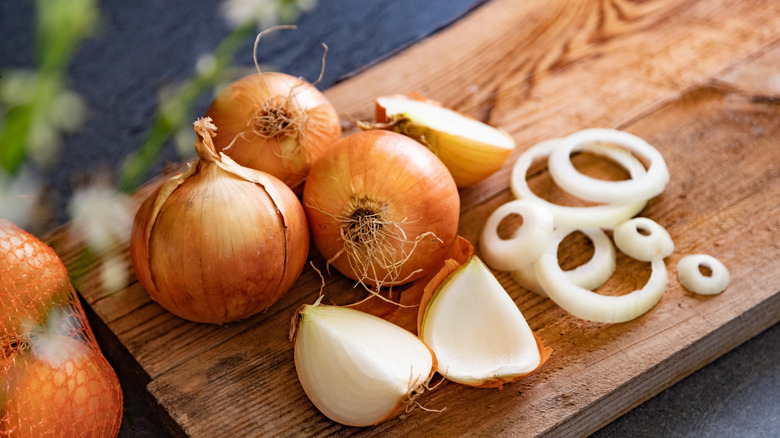
One hundred and ten pounds a year. That's how many onions the average person in Tajikistan eats — one and a half times more than the next country on the list, Libya, and more than six and a half times the typical American person's relatively modest 20-pounds-per-year intake. Although we can't rule out that there might be one guy in Tajikistan just eating an unbelievable number of onions, it likely breaks down to about one medium-to-large onion per day, per person, across the country's population of 10.59 million. Onions are so central to Tajik diets that their cultivation, trade, and cooking practices tell you a lot about how food, culture, and climate intersect in the Central Asian nation.
Historically, onions are among humanity's oldest crops. They've been cultivated for at least 7,000 years and likely were first domesticated in the part of the world where Tajikistan is now located. As such, Tajik's onion culture may be rooted in the same soil where early onion farming began. Given the climate extremes of the mountainous, landlocked country, onions are a hardy crop for Tajik farmers, storing well. This makes them usable across seasons, transportable, and essential for developing and carrying flavor. Culturally, they have become a staple, a foundational ingredient in everyday meals. All signs indicate that the country's love affair with the onion won't be disappearing anytime soon. Regional onion cultivation has even expanded in recent years; in Tajikistan's Jayhun district alone, production hit 222,000 tons, and the planted area grew by over 1,100 hectares in just two years.
Layers of culture and flavor
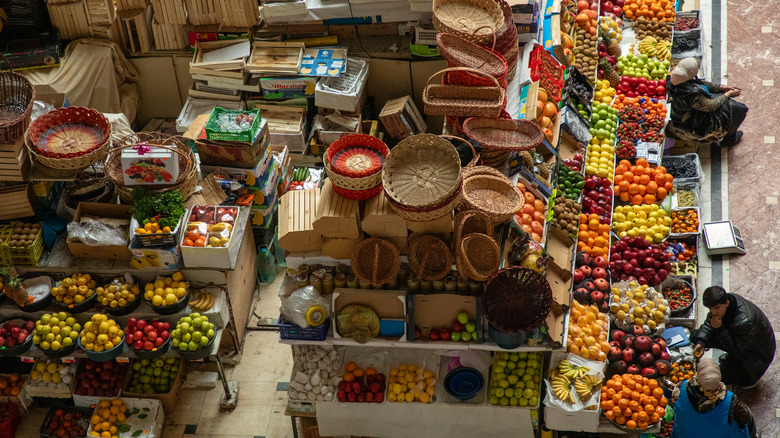
In the kitchens of Tajikistan, onions appear everywhere. The country's national dish, a savory rice pilaf called plov, is full of onions, carrots, tangy barberry, and meat like lamb or chicken — yum! Onions also appear in all the other savory dishes you would imagine, like stews, soups, sauces, breads, and meat dishes. Because rice and grains are often imported and thus expensive, cooks lean on flavor-forward ingredients like onion to bulk up and carry a dish.
Part of the reason for the high consumption also comes from the onion's role as a base ingredient. In many global culinary traditions, recipes start with a sautéed onion base before adding anything else, as in Italian soffritto and French mirepoix, and Tajikistan is no different. The resulting aroma and depth of flavor make dishes richer without the need for inaccessible, foreign imports. Basically, because various types of onions are easy to grow and cheap to buy, they become the seasoning backbone.
Export and trade patterns reinforce the onion's regional importance. Tajikistan exports onions to neighboring countries, and even in off-season periods, Kazakhstan imports Tajik onions to fill local demand. Farmers have incentives to expand onion plots because they're relatively resilient and yield multiple harvests in favorable districts. The production side also supports local consumption, because local supply and lower transport costs make onions inexpensive domestically, reinforcing high per-capita use. All of this caramelizing together — the culture, the onion's availability and flavor, and regional economics — make the onion practically inseparable from daily life in Tajikistan, explaining why people here eat ten times the global average of onions!