

The Trendy Plates Diners Love To Order But Chefs Secretly Dread

It's an open secret among most chefs that brunch is the worst shift to cook, and even Anthony Bourdain knew to avoid the dreaded Sunday brunch. A long, grueling weekend morning shift after working a busy dinner service the night before is bad enough, but when combined with sometimes rowdy or demanding customers, working brunch service is openly detested by chefs and restaurant workers. In addition to brunch, another trendy element that customers love but makes some chefs cringe is an elaborate charcuterie board.
As a former kitchen manager of a cheese store, I know all too well how time-consuming putting together an attractive and delicious charcuterie board can be. During a busy service, chefs are usually doing their best to get properly cooked food on a plate in a timely manner, as well as striving to make the presentation as appealing as possible. If a restaurant or bar has a dedicated station and person for making the elaborate platters, that takes stress off the rest of the kitchen. However, most restaurants cannot afford a single-purpose station or employee, so the task usually falls to the cook working the garde manger station, where preparation and plating of cold dishes takes place.
With so many elements necessary for a restaurant-worthy charcuterie board, crafting a visually appealing one takes time, focus, and both countertop and storage real estate, all of which are usually in short supply. Chefs constantly multitask, and plating beautiful charcuterie requires attention to detail as well as dexterity to delicately fold and place the sliced meats, cheeses, and accouterments. If a chef is pulled aside to build a charcuterie board, that is valuable time taken away from other stations, and it can lead to chaos or delays in the kitchen's workflow.
Charcuterie boards are time consuming
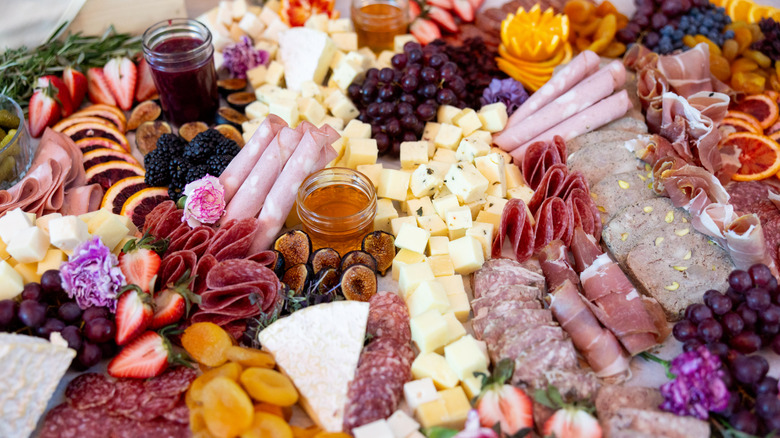
Building a charcuterie board can become more complicated if the menu allows guests to choose their own combination of meats and cheeses, rather than a set selection of items on offer. Making sure to provide the exact cheeses and meats that the customer ordered adds time and stress to an already time-consuming act. Additionally, any allergies, especially nut allergies, can throw a real wrench in the plating process, as the cook must be extremely careful to avoid any cross-contamination on their station.
Not only does the plating take time, but cutting cheeses and slicing meats on a deli slicer each day also takes a significant block of time from your pre-service prep work, especially if fresh fruits, vegetables, and fancy spreads like jams or mustards are also included. Larger trays that were sold for parties and catering would take me upwards of an hour, which included slicing the meats and cheeses freshly to order, while a la carte charcuterie boards took at least three minutes to build. Three minutes doesn't seem much, but when a stack of tickets is hovering above your head, those minutes add up very quickly and can lead to stress in the kitchen.