

Why You Should Never Get Rid Of Produce Stickers In The Sink
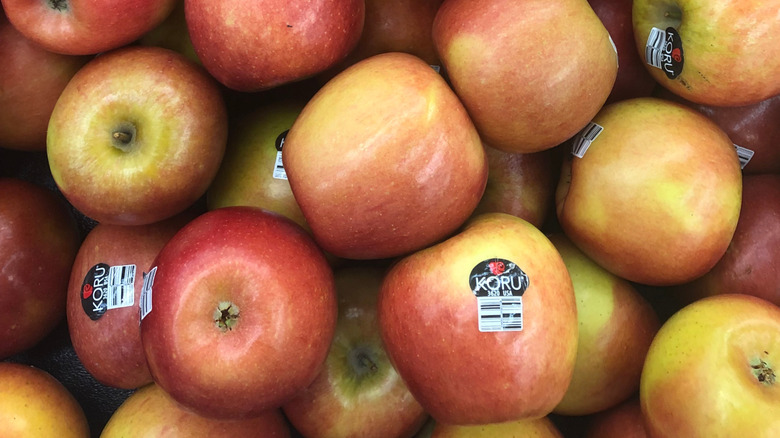
When prepping fruits and veggies, it's easy to toss the scraps, and even those pesky little produce stickers, down the sink. After all, that's what the garbage disposal is for, right? Wrong. Those produce stickers can be especially damaging to your sink's disposal and pipes. For one, they're not water-soluble, meaning they won't break down by running the water, not even if it's hot. To make matters worse, their adhesive can make them stick onto your disposal's blades and pipes, and even catch onto other food debris. If enough of them get down there, they can even cause a blockage, especially if you're liberal about tossing down other food scraps that are bad for garbage disposals.
Avoiding throwing produce stickers in your sink is not just about preventing headaches and a costly plumbing mistake. If they get past your property's plumbing, they can wreak havoc at wastewater treatment facilities. While these small stickers may seem harmless, if enough people toss them down the drain, like in high-population areas, they can stick onto the treatment plant's hoses, pumps, filters, and screens. This can lead to poor filtration and costly damages. Beyond that, produce stickers can end up in natural bodies of water. Over time, they can break down into microplastics, and can be eaten by native wildlife, in turn affecting their digestive system. And since these plastics can work their way back into our own food and water supply, it's a vicious circle.
What to do with produce stickers instead
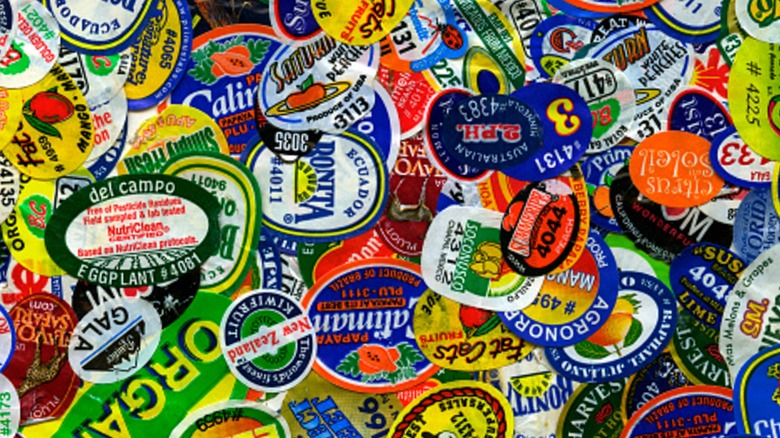
So, what's the best way to handle produce stickers? Throw them in the trash. The easiest way to do so is to remove them immediately from your entire grocery haul. Don't wash your produce first, though, as this makes the stickers harder to remove. This also helps you avoid accidentally eating a sticker, though swallowing one by mistake isn't necessarily harmful. While efforts are underway to make produce labels that are more environmentally friendly or get rid of them altogether, we're still a ways away from this being the norm. For now, it's still up to the consumer to manually remove stickers. Some people have even found creative uses for them, turning the colorful designs into sticker art.
If you'd rather skip the hassle altogether, your best bet is to grow your own produce or shop at a farmers' market. Grocery store produce stickers have a lot of information if you look close enough. They're used to help them manage inventory and look up prices at checkout. They may also be helpful during a recall to determine the origin of the contamination. Stickers can even let customers know the type of produce they're buying or if the produce is organic based on the digit code. Farmers' markets, on the other hand, usually have prices displayed on signs and deal with less stock that's easier to manage, which also reduces the waste. At the end of the day, those little labels are useful in the store, but once you're home, they're just another piece of plastic you'll need to deal with.